Platis Yialos
Platis Yialos, translated literally from Greek, means "wide beach": a practical, almost bureaucratic name that nonetheless describ...
Updated 8 July 2026
This season · July · Summer
What to do in Platis Yialos now
The story
The story of Platis Yialos
Mines, merchants and sailors: the history of Sifnos
Sifnos's wealth has its roots in the Bronze Age, when veins of gold and silver on the eastern coast drew the first miners and made the island one of the most prosperous in the Cyclades. With the proceeds of metal mining, in the 6th century BC the inhabitants had one of the most precious treasuries in the sanctuary of Delphi built, still remembered by archaeologists today as an example of archaic sculpture. The mines eventually ran dry, and the island passed under Byzantine control, then Venetian rule under the da Corogna family, who turned it into a fortified fiefdom, and finally Ottoman rule from the 16th century onward. Greek independence in 1830 opened a slow agricultural and maritime revival, while tourism, which arrived only in recent decades, has transformed without overturning a landscape that had remained faithful to itself for centuries.
Kastro, the capital suspended on the rock
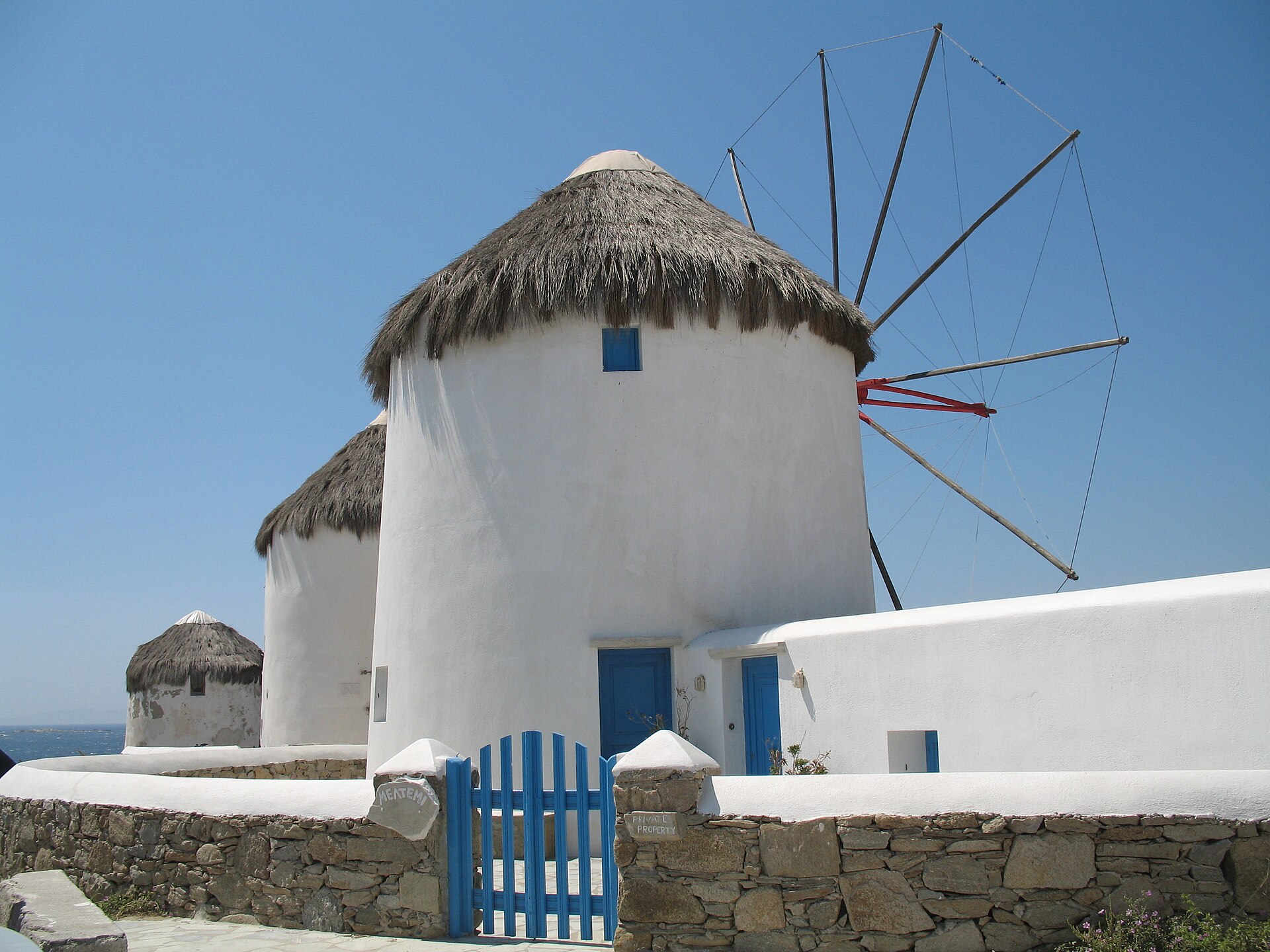
For nearly three thousand years Kastro was the seat of power on Sifnos, first as an archaic settlement and later as a fortified medieval capital. The houses, built one against the other along the edge of the promontory, still form an unbroken ring of walls that once defended the village from pirate raids. Marble-paved alleys, low arches and small Byzantine churches follow one another in a compressed space, while from the highest point the view drops sheer to the sea, with the ruins of the ancient acropolis still visible among the stones. The small archaeological museum houses finds ranging from the Bronze Age to the Hellenistic period, direct evidence of the island's long mining history. Kastro is best explored slowly, perhaps in the hour before sunset, when the white stones glow pink.
The chapel of Panagia tou Rematiou, sentinel of the bay
Seeming to close off Platis Yialos beach, on a small rocky islet linked to the mainland by a tongue of sand, stands the chapel of Panagia tou Rematiou. It is a tiny building, white and blue as Cycladic tradition dictates, but its position makes it one of the island's most photographed landmarks: from here the bay splits into two almost symmetrical coves, each with its own shallow water and sandy seabed. It is not an imposing monument, nor does it aim to be: its power lies in the way it marks the landscape, offering a fixed point from which to watch the fishing boats come and go in the morning and the sunset in the evening, when the low light casts sharp shadows on the whitewashed walls.
Chrysopigi, the monastery watching over the sea
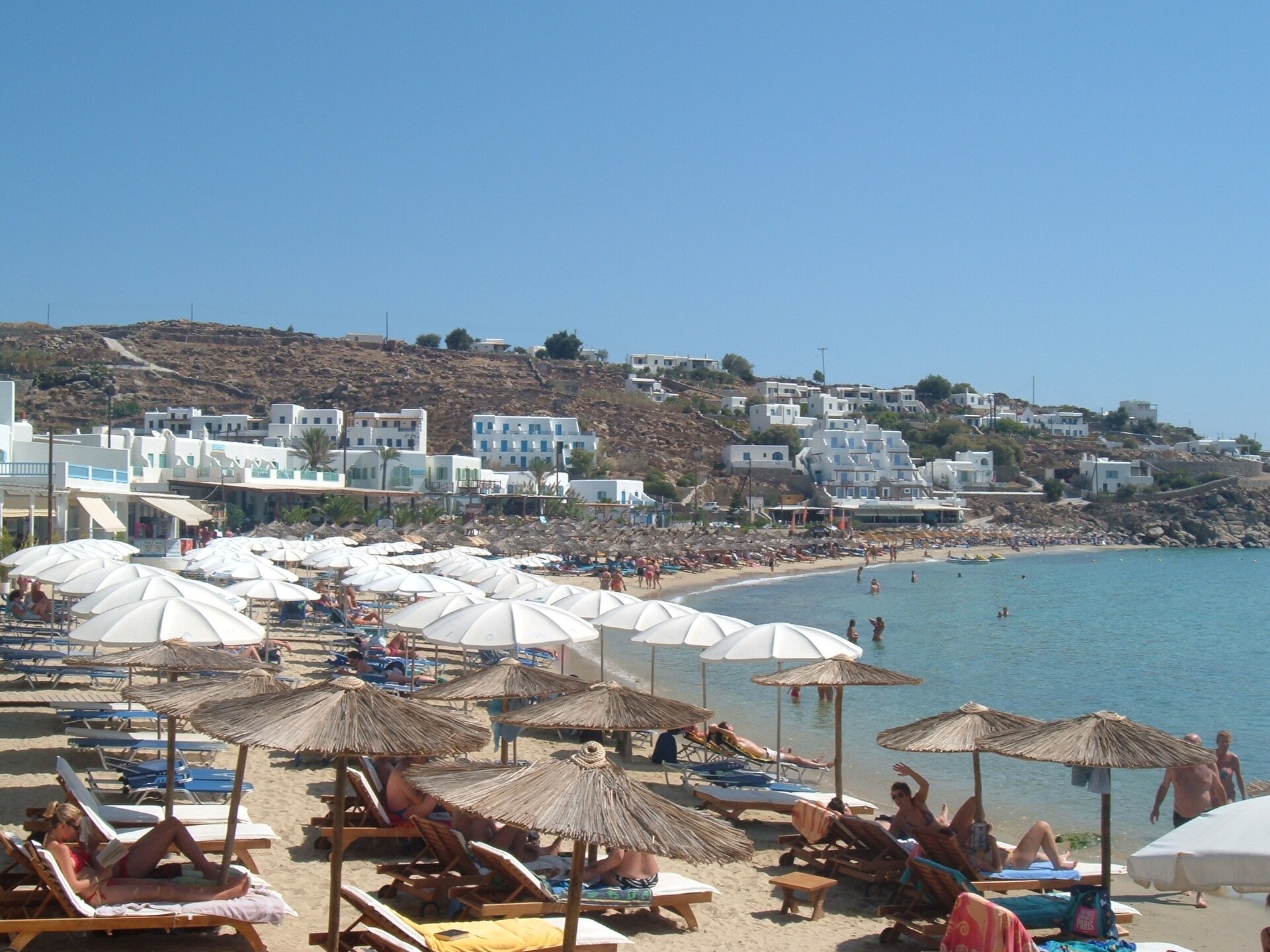
On the opposite side of the island, at its south-eastern tip, the monastery of Panagia Chrysopigi occupies a small rock joined to the coast by a stone footbridge, forming a composition that has become the most recognisable image of Sifnos. Founded in 1650, it takes its name from a miraculous icon found, according to tradition, at that very spot in the sea. A local legend tells that during a pirate raid the rock suddenly split in two to stop the attackers from reaching the fleeing nuns: from that breach came the channel that today separates the islet from the mainland. Patron saint of the island, Chrysopigi is at the centre of a great religious festival forty days after Easter, with vigils, songs and a procession that involves the whole Sifnian community.
Apollonia, Artemonas and the villages of the interior
Perched on three hills at the centre of the island, Apollonia is the administrative capital of Sifnos and the natural reference point for anyone staying in Platis Yialos. Its main artery, the Steno, is a narrow lane of shops, churches and bars that comes alive every evening until late at night. Not far away, Artemonas preserves neoclassical mansions built by nineteenth-century merchants and windmills, now silent but still perfectly visible along the hill ridges. Between the two villages runs a network of alleys and stairways linking Byzantine churches, still-active communal ovens and small ethnographic museums devoted to the farming and seafaring life of an island that, though small, has always known how to engage with the sea around it.
The landscape of the southern coast
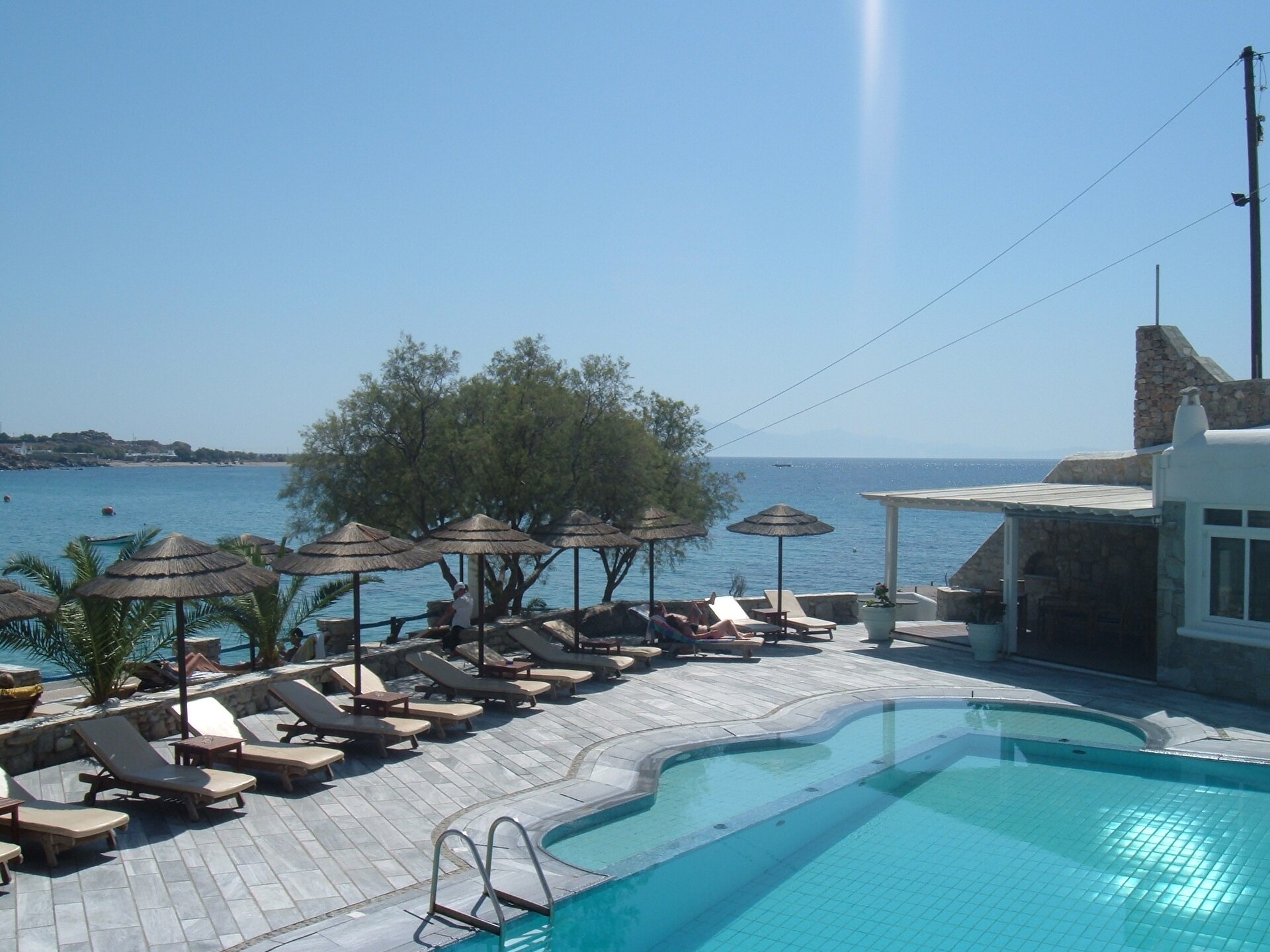
From Platis Yialos the coast slopes gently westward, tracing a sequence of smaller, more secluded bays such as Vathi and Faros, reachable by boat or along dirt roads that cross a terraced hinterland of olive trees and low vines. Vathi, enclosed in an almost circular gulf, has particularly calm waters and has become over the years a small refuge for those seeking a slower pace; Faros, once a fishing village, alternates fine sandy coves with low rocky shores ideal for snorkelling. The entire southern coast is crossed by marked trails that climb back into the hinterland, past dry-stone walls, isolated chapels and olive groves: a dry, luminous landscape, typical of the western Cyclades, offering sea views at every turn.
Flavours, pottery and crafts to discover
- Revithada: chickpea soup slow-cooked overnight in a terracotta oven, the signature dish of Sifnian Sundays.
- Mastelo: lamb or kid marinated in wine and cooked in a traditional ceramic vessel, customary for Easter and patron saint feasts.
- Manoura: sheep's milk cheese aged in grape marc, with an intense, spicy flavour.
- Melopita: a sweet pie made with local honey and fresh mizithra cheese, a recipe rooted in the island's monastic tradition.
- Sifnian pottery: jars, braziers and cooking vessels in red clay, still crafted today in the workshops of Vathi and Kamares following techniques handed down through generations.
- Thyme honey and wild capers, gathered on the slopes surrounding Platis Yialos and used throughout much of the local cuisine.
FAQ
Come si arriva a Platis Yialos?
Qual è il periodo migliore per visitarla?
Cosa vedere in una sola giornata?
Dove si parcheggia a Platis Yialos?
È adatta alle famiglie con bambini?
Quanti giorni servono per visitare l'isola partendo da qui?
Getting there
- Aeroporto Internazionale di Atene "Eleftherios Venizelos", collegato al porto del Pireo per l'imbarco verso Sifnos (circa 2h30-4h di traghetto a seconda della tratta).
- Da Kamares, unico porto dell'isola, una strada asfaltata di circa 8 km attraversa Apollonia e conduce a Platis Yialos in una ventina di minuti d'auto o con l'autobus di linea.
- In alta stagione i traghetti per Sifnos si riempiono rapidamente: prenotare il biglietto con largo anticipo, soprattutto nei weekend di luglio e agosto.
Perfect for
Acqua bassa, fondale sabbioso e mare calmo rendono Platis Yialos una delle spiagge più adatte a famiglie e nuotatori meno esperti.
Sifnos è considerata la culla della cucina greca moderna: qui si assaggiano piatti cotti in forno di terracotta come in nessun'altra isola delle Cicladi.
Kastro e Chrysopigi raccontano duemila anni di storia in pochi chilometri quadrati, tra rovine antiche e leggende di pirati.
Le botteghe di ceramica tra Vathi e Kamares mantengono viva una tradizione che risale all'età del bronzo.
Una fitta rete di sentieri segnalati collega cappelle isolate, mulini a vento e uliveti tra la costa e l'entroterra.
Routes · Trovido Route