Piso Livadhi
Along the eastern coast of Paros, where the rising sun tints the profile of nearby Naxos in pink, Piso Livadhi emerges
Updated 7 July 2026
This season · July · Summer
What to do in Piso Livadhi now
The story
The story of Piso Livadhi
Historical roots: from rural anchorage to tourist port
The history of Piso Livadhi is inextricably linked to that of the overlying village of Marpissa and Kefalos hill. Initially, this stretch of coast was merely the 'meadow at the back' (from which Piso Livadhi takes its name) used by inland inhabitants for agricultural activities and as a natural outlet to the sea. During the Byzantine period and subsequently under Venetian rule, the area assumed strategic relevance: the nearby Kefalos hill hosted one of the last Venetian fortresses to fall to Barbarossa's Ottoman siege in 1537. Over the centuries, the port became a crucial point for exporting the celebrated Parian marble, quarried at Marathi, and for trading agricultural products. Only in the second half of the twentieth century did the hamlet begin to transform, welcoming the first travelers attracted by the purity of its waters and the simplicity of community life, while maintaining its active fishing port function.
The Church of Agios Nikolaos: sentinel of the sea
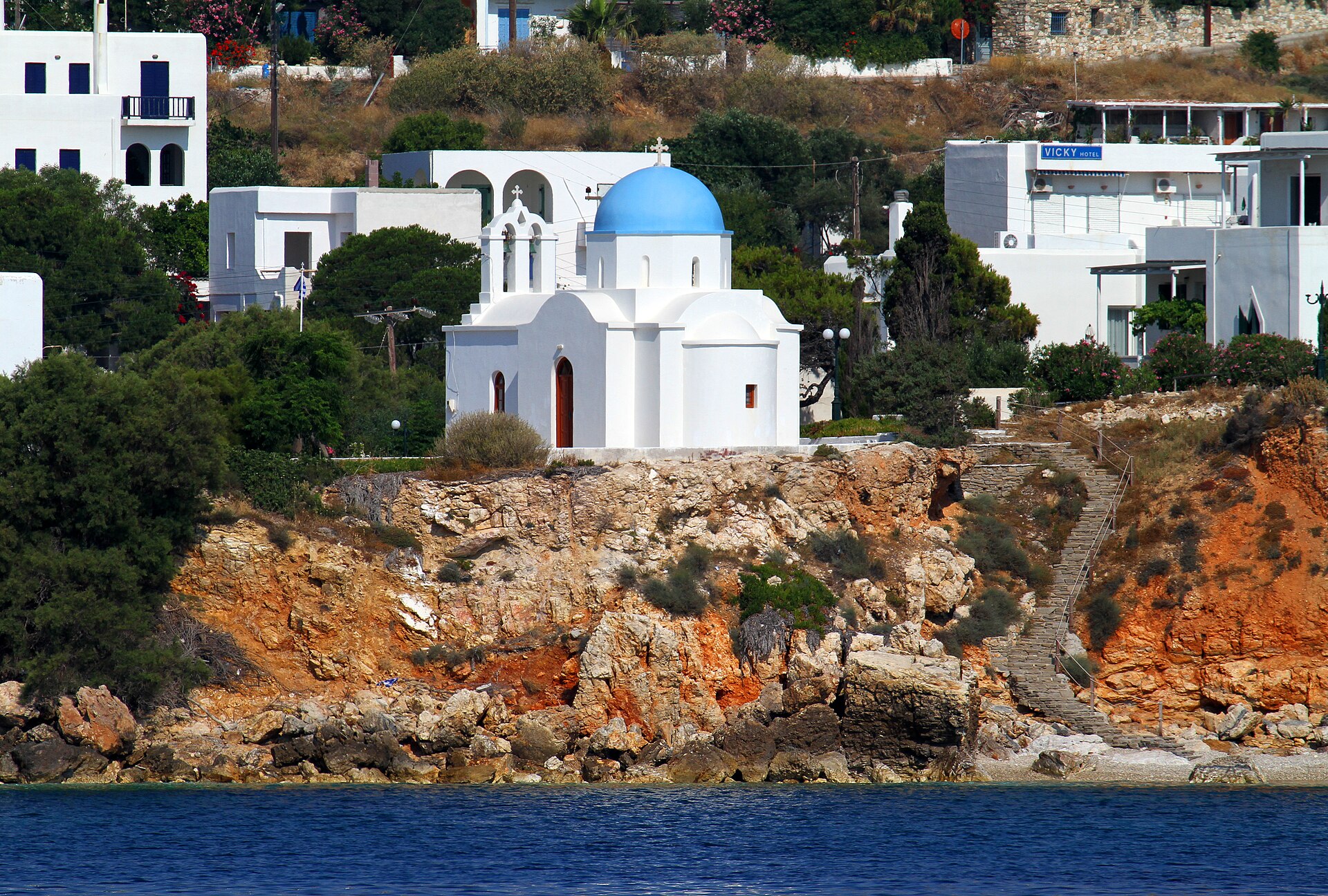
Dominating the left side of the harbor, the small church of Agios Nikolaos stands sharp against the azure of sky and sea. Built according to the classical canons of Cycladic architecture, with whitewashed walls and a blue dome echoing the color of the Aegean, this chapel is dedicated to the patron saint of sailors. Its foundation dates to times when life at Piso Livadhi was entirely dependent on the benevolence of the waters. Inside, the atmosphere is intimate and dense with spirituality, with wooden icons and silver lamps swaying gently. The church is not merely a place of worship but a fundamental visual reference point for those returning from the sea; its panoramic position offers one of the most striking views of the harbor, especially during religious celebrations when the community gathers on the forecourt, perpetuating rituals passed down through generations.
The Port of Piso Livadhi: beating heart of the hamlet
The harbor is not merely infrastructure but the true stage of the village's social life. Here morning activity concentrates, with fishermen unloading nets laden with mullet and bream, and evening vibrancy, when tavern tables fill with visitors. The dock has been wisely integrated with the urban fabric, allowing one to stroll mere centimeters from the water. Daily, vessels depart from the pier bound for Naxos, Delos, Mykonos, and the marine caves of Antiparos, making Piso Livadhi a fundamental hub for those wishing to explore the archipelago without the stress of major commercial ports. What makes this port special is its human scale: there are no large cruise ships, only boats that respect the landscape's proportion, maintaining a direct link between man and the marine element.
The Monastery of Agios Antonios on Kefalos Hill

A short distance from the settlement, Kefalos hill rises, and on its summit stands the Monastery of Agios Antonios, dating to the seventeenth century. This place represents an essential stop for those visiting Piso Livadhi, not only for the architectural value of the monastery, built upon the remains of an ancient Venetian castle, but for the extraordinary 360-degree view it offers of the entire eastern coast of Paros and the strait separating it from Naxos. The ascent on foot along the path is a sensory experience among aromas of wild thyme and oregano. Once at the summit, one can admire the interior frescoes and carved iconostasis, testimonies of a religious and defensive past that protected the local population from pirate raids for centuries. It is the ideal place to understand the island's morphology and its stratified history.
Marpissa: the ancient medieval village
Less than two kilometers from the port lies Marpissa, one of the most beautiful and characteristic villages of all Paros. If Piso Livadhi is the maritime soul, Marpissa is its historical and rural heart. Founded in the fifteenth century on a hilltop to escape pirate attacks, the village is a labyrinth of narrow alleys, stone arches, and white houses adorned with cascades of pink and purple bougainvillea. Walking through Marpissa means immersing oneself in pure Cycladic aesthetics, where every corner seems to emerge from a postcard. Here one also finds small local museums, such as the Perantinos Sculpture Museum, and silent squares where the elderly still sit outside their doors. The connection between Marpissa and Piso Livadhi is profound: once farmers came to the sea only to fish, today the two centers form a single travel experience between sea and history.
Landscape and Nature: between golden beaches and tamarisks
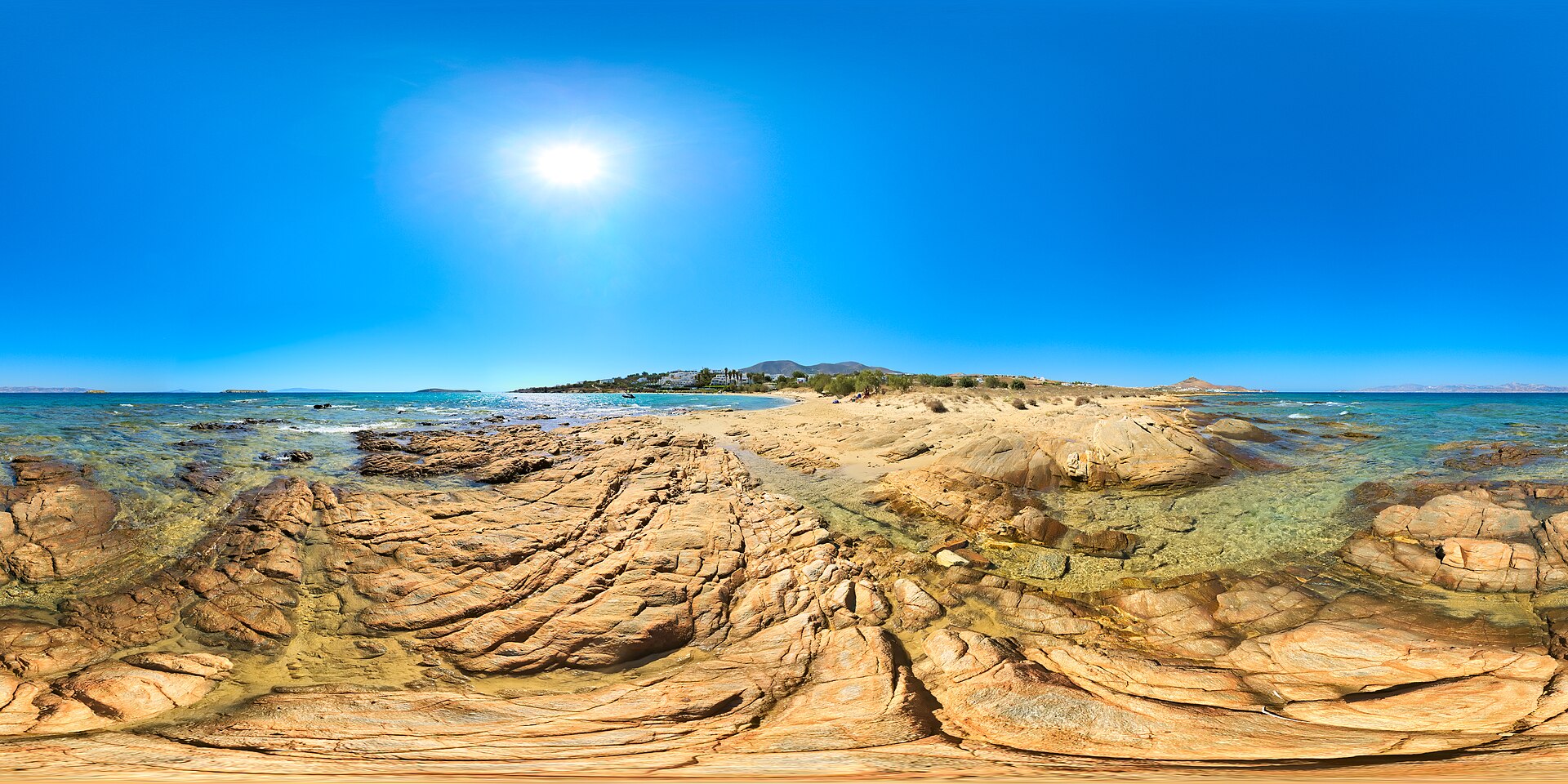
The natural landscape of Piso Livadhi is characterized by rare gentleness. The main beach of the hamlet is a crescent of golden sand bathed by crystalline, shallow waters, ideal for families. The constant presence of tamarisks offers natural shelter from the sun, often eliminating the need for artificial umbrellas and maintaining the wild character of the shoreline. Moving a few steps away, one encounters rock formations creating small natural pools. The surrounding vegetation is that typical of Mediterranean scrub, where arid land contrasts with the intense blue of the sea. Toward the interior, the landscape becomes more agricultural, with vineyards and olive groves drawing patterns on the hills, offering trekking routes connecting the coast to mountain villages through ancient mule tracks called 'monopatia'.
Nearby beaches: Logaras and Golden Beach
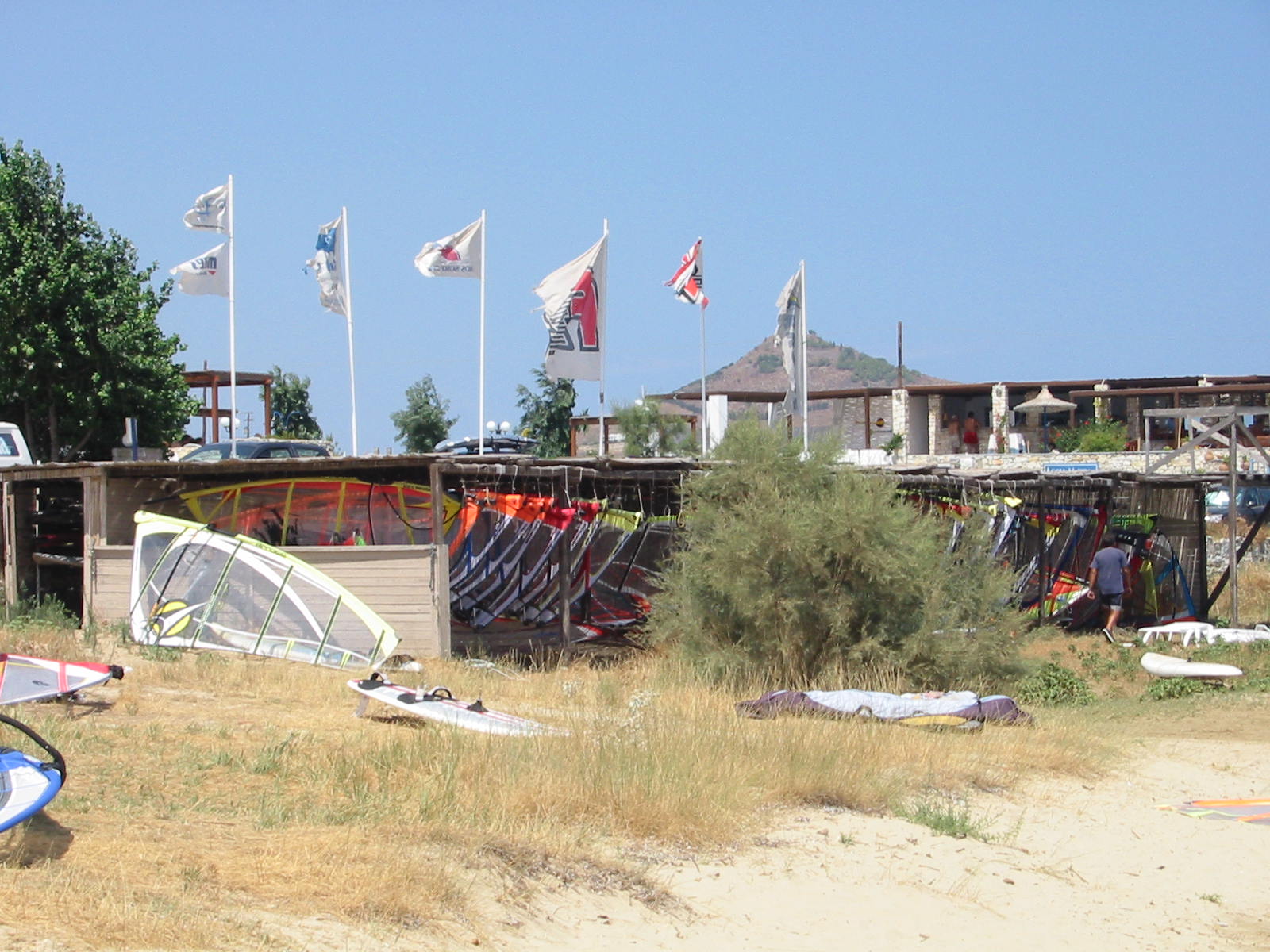
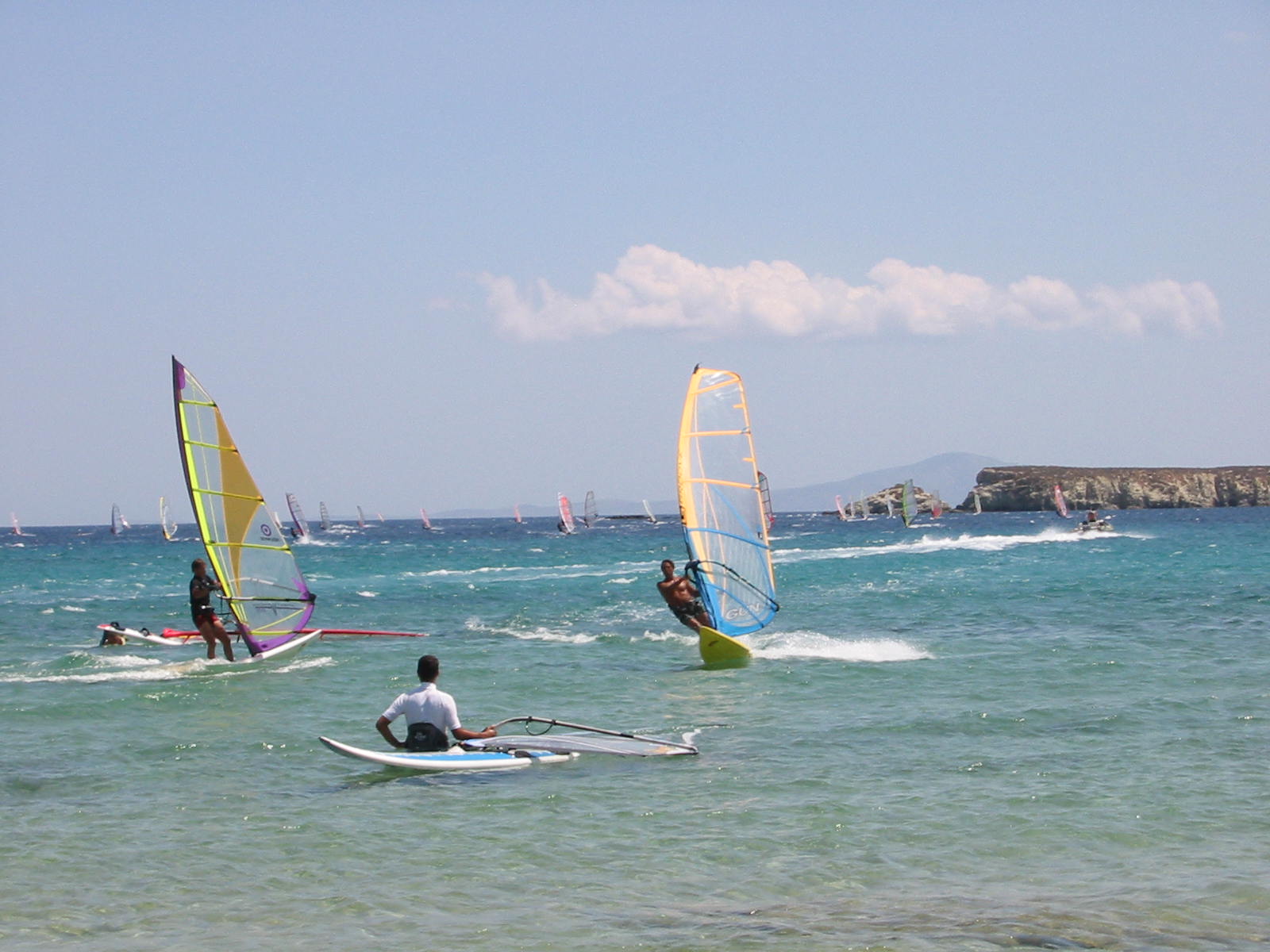
A short walk from Piso Livadhi lies Logaras beach, multiple times awarded the Blue Flag for water quality. It is an expanse of sand mixed with small pebbles, wider than that of the port, perfect for those seeking more space. Continuing southward, one encounters the celebrated Golden Beach (Chryssi Akti), considered one of Greece's finest beaches for windsurfing and kitesurfing thanks to the constant winds blowing through the channel between Paros and Naxos. These locations complete Piso Livadhi's offering, allowing one to pass in minutes from the quiet of a traditional fishing harbor to the energy of water sports or the relaxation of equipped beaches, always maintaining direct contact with powerful, pristine nature.
Traditions and Flavors: cuisine of the sea
The gastronomic culture of Piso Livadhi is a hymn to simplicity and freshness. The taverns overlooking the harbor are renowned throughout the island for fish quality, caught daily by locals. A symbolic dish is 'gouna', sun-dried mackerel then grilled, with intense, salty flavor, perfect if accompanied by 'souma', the local spirit produced from distilling grape must. There is no lack of inland specialties, such as chickpea meatballs (revithokeftedes) and 'xinomyzithra' cheese, with a tangy flavor. Traditions remain alive in popular festivals, such as the feast of Agios Ioannis at the end of June or the celebrations of Ferragosto in Marpissa, where one dances the 'ballos' to the sound of violin and lute, sipping the robust local red wine produced in the vineyards surrounding the hamlet.
Experiences not to miss at Piso Livadhi
- Dine in a waterfront tavern savoring the day's catch while boats sway meters away.
- Walk the Byzantine path connecting nearby Lefkes village to Marpissa, crossing centuries-old olive groves.
- Participate in a boat excursion to the marine caves of Koufonissi and the Little Cyclades.
- Attend the traditional festival of Agios Nikolaos, participating in local community celebrations.
- Take an early morning swim in the calm waters of Logaras before crowds arrive.
- Climb Kefalos hill at sunset to admire the breathtaking panorama of the Aegean.
When to go and how to experience the hamlet
The ideal period to visit Piso Livadhi spans May through late September. In spring, the island is an explosion of wildflowers and temperatures are perfect for hikes to Marpissa and Kefalos. July and August are the hottest and most crowded months, but the sea breeze (the Meltemi) keeps the climate always bearable; it is in this period that the hamlet shows its liveliest side. September is perhaps the magical month: waters are warmest, crowds diminish, and light becomes softer, ideal for photography. Living Piso Livadhi means abandoning the car and moving on foot, letting yourself be guided by the harbor's slow rhythm, dedicating mornings to the sea and afternoons to exploring the white alleyways of the surroundings, then concluding the day with a sea-view aperitif.
FAQ
Piso Livadhi è adatta alle famiglie con bambini?
Si può parcheggiare facilmente?
Quanto tempo occorre per visitare Piso Livadhi?
Ci sono collegamenti per le altre isole?
Getting there
- Aeroporto di Paros (PAS) - 20 km
- Non presenti sull'isola
- Da Parikia seguire le indicazioni per Marpissa/Piso Livadhi (circa 25 minuti). La strada è asfaltata e panoramica.
- L'autobus locale (KTEL) collega regolarmente Piso Livadhi con Parikia e Naoussa, ma noleggiare uno scooter è l'ideale per esplorare le spiagge vicine.
Perfect for
Atmosfera tranquilla, spiagge sicure e ottime taverne rendono il luogo perfetto per chi cerca una vacanza senza stress.
Un paradiso per gli amanti del pesce fresco e della cucina tradizionale cicladica più autentica.
Punto di partenza strategico per gite in barca verso le Piccole Cicladi e vicino ai migliori spot per il windsurf.
To see