Perissa
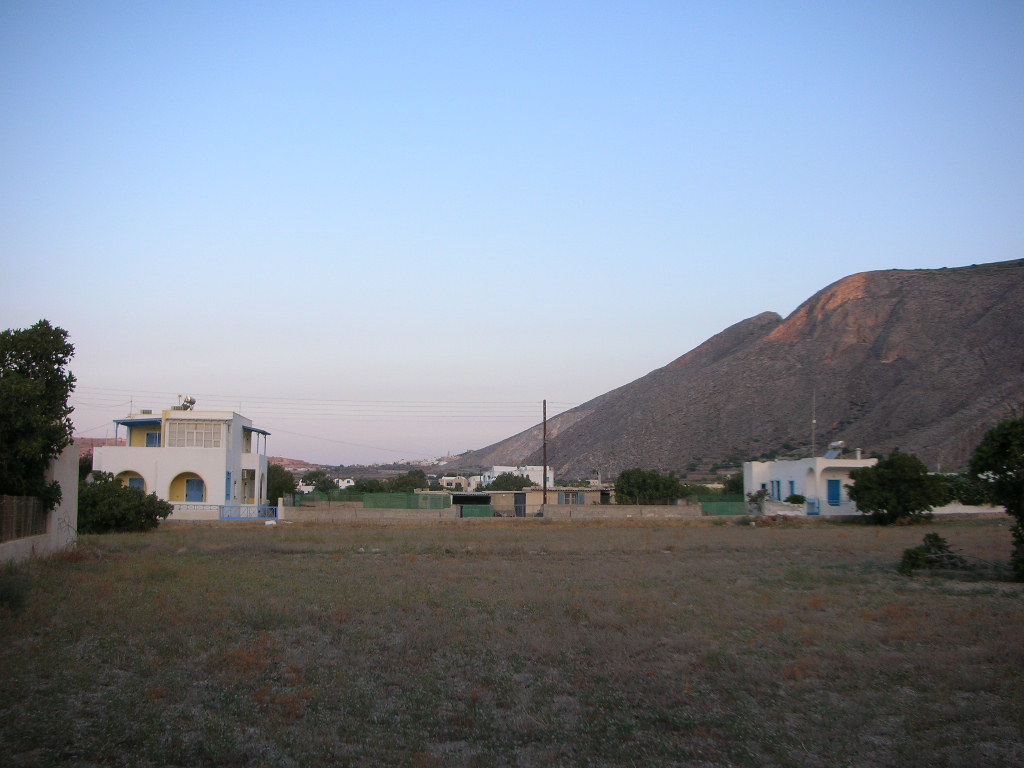
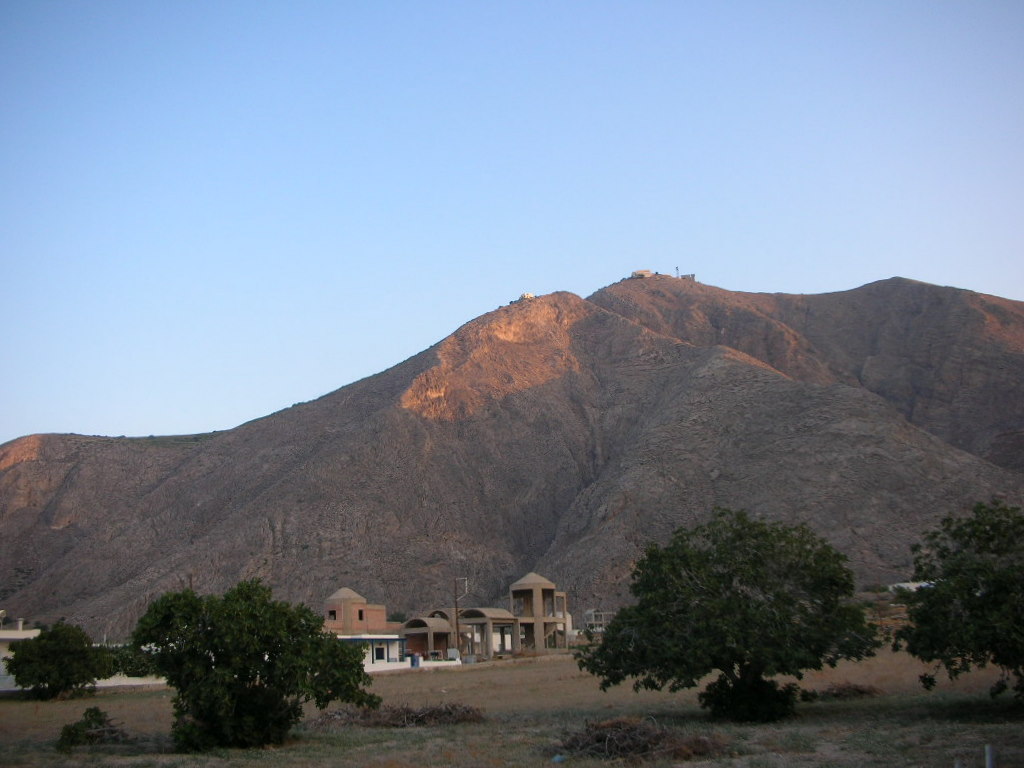
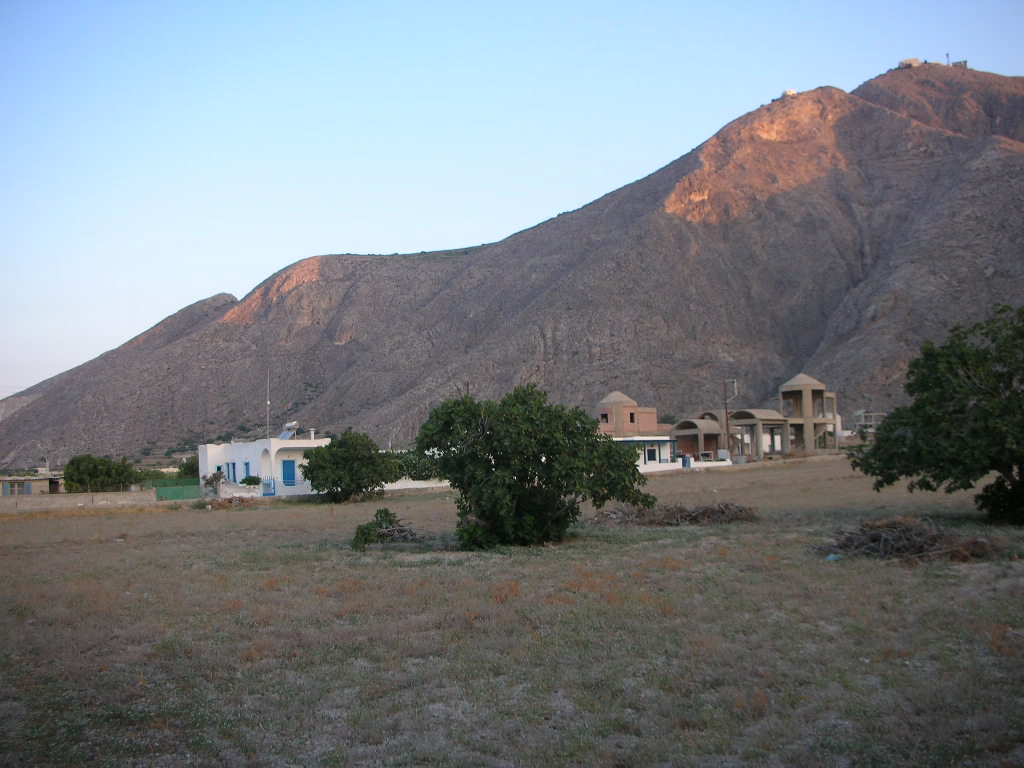
Nestled at the foot of the imposing Mesa Vouno massif, on the south-eastern coast of Santorini, Perissa reveals itself to the trav...
Updated 7 July 2026
This season · July · Summer
What to do in Perissa now
The story
The story of Perissa
A journey through time: from Doric origins to the name of Santorini
Perissa's history is inextricably linked to its strategic position and the protection offered by Monte Mesa Vouno. Though today a vibrant tourist destination, its roots run deep into antiquity, when the area served as a port for the city of Ancient Thera. During the Byzantine era, the village experienced a period of great splendour, as testified by the remains of imposing basilicas that once dotted the plain. A crucial event for the identity of the place and the entire island dates back to the period of the Crusades and Venetian rule: it is believed that the name 'Santorini' derives precisely from the Basilica of Agia Irini (Saint Irene), located near Perissa. Despite the numerous earthquakes that have shaken the archipelago over the centuries, the latest of which in 1956 reshaped part of the settlement, Perissa has managed to preserve its charm, rising again each time with a dignity that reflects the resilience of its inhabitants and the strength of volcanic earth.
The Church of Timiou Stavrou: the blue heart of the village
Dominating the main square of Perissa, the Church of Timiou Stavrou (of the Holy Cross) stands as one of the most imposing and photographed religious structures of Santorini. Originally constructed between 1835 and 1840, the church had to be almost completely rebuilt after the devastating earthquake of 1956, an operation that preserved its architectural magnificence. Characterized by the iconic blue domes that recall the colour of sky and sea, and by a finely crafted bell tower, the structure follows the classical canons of Cycladic architecture with dazzling white walls. Inside, the atmosphere is intimate and solemn, enriched by precious icons and decorations that speak of local devotion. Its position, right at the entrance of the path leading towards the mountain, makes it an essential landmark for anyone visiting the locality, serving as a visual compass between sea and rock.
The ancient Basilica of Agia Irini: where a name was born
At the foot of Mesa Vouno stand the archaeological remains of the Basilica of Agia Irini, a site of extraordinary historical importance dating back to the 5th century AD. This ancient early Christian church, now reduced to suggestive ruins, is considered by many historians to be the place from which foreign sailors, particularly Venetians, derived the name 'Santa Irene' for the entire island. Although only portions of the foundations, columns and apse remain visible, the site emanates an archaic charm that allows one to imagine the grandeur of the original building, which was once one of the largest basilicas of the Cyclades. A visit to these ruins offers a different perspective on Perissa, revealing how the village is not merely a beach destination, but a fundamental element in the mosaic of the Aegean's historical identity, where faith and navigation have been intertwined for centuries.
Panagia Katefiani: the refuge among the rocks
Set in a natural cleft in the steep walls of Monte Mesa Vouno, the small chapel of Panagia Katefiani represents one of the most evocative and spiritual corners of Perissa. The name 'Katefiani' derives from the Greek term 'katefygio', meaning refuge, testimony to the role this small church played in the past: during pirate raids or times of danger, the inhabitants of the village climbed up here to find protection among the rocky walls. Accessible via a steep but well-marked path that starts from the village, the chapel offers a breathtaking view spanning the entire southern coast of Santorini. It is a place of absolute silence, interrupted only by the sough of wind, where the simplicity of white architecture contrasts with the harshness of dark stone, creating an image of peace and devotion that remains imprinted on the memory.
Ancient Thera: the city suspended between sky and sea
At the summit of Mesa Vouno, at approximately 360 metres altitude, stand the remains of Ancient Thera, the city founded by Doric colonists in the 9th century BC. This archaeological site is a must-visit for those wishing to understand the greatness of Santorini's past. Walking among the ruins, one can distinguish the agora, temples dedicated to Greek and Egyptian deities, the theatre with a view of the Aegean, and ancient Roman and Byzantine dwellings. Its strategic position allowed its inhabitants to control much of the archipelago, and even today the sensation is one of standing on a natural terrace suspended in the void. The climb from Perissa, though demanding, rewards the hiker with the discovery of archaic inscriptions carved into the rock and the sight of monumental remains that tell centuries of dominions and commercial exchanges in the heart of the Mediterranean.
The black sand beach: a geological prodigy
The element that defines the landscape of Perissa more than any other is its beach, a stretch of about seven kilometres that merges seamlessly with nearby Perivolos. The sand here is not golden, but composed of tiny grains of black lava and dark pebbles, a legacy of past eruptions of Santorini's volcano. This geological characteristic makes the water incredibly clear and transparent, with hues that pass from turquoise to midnight blue as the seabed descends rapidly. Thanks to the protection offered by Mesa Vouno, the beach is often sheltered from the strong northern winds, the Meltemi, making the sea calm and ideal for swimming. Along the shore, rows of tamarisks offer natural shade, while modern beach clubs coexist with extensive stretches of public beach, allowing every traveller to find their own dimension of relaxation.
Must-do experiences in Perissa
- Walk the scenic trail that connects Perissa to Kamari crossing the saddle of Monte Mesa Vouno.
- Attend the traditional celebration of Timiou Stavrou on September 14, with religious ceremonies and folk music.
- Practice water sports such as windsurfing or diving to explore the volcanic seabeds rich in marine life.
- Enjoy a dinner of fresh fish in one of the seaside tavernas under the moonlight.
- Visit the Museum of Minerals and Fossils to deepen your knowledge of the island's geological history.
- Hire a bicycle to travel the flat seafront to Perivolos and Agios Georgios.
Volcanic flavours: the cuisine of tradition
The gastronomy of Perissa is a hymn to the products born from the arid and fertile soil of the volcano. One cannot say they have visited this place without having tasted the celebrated Fava of Santorini, a purée of chickling vetch with a velvety flavour, often served with raw onion and local capers. Cherry tomatoes, small and with thick skin, are another excellence: they are used to prepare 'tomatokeftedes', delicious spiced fritters that capture all the warmth of the Greek sun. In the tavernas overlooking the black sand, the freshest fish is the star, but local cheeses such as 'chlorotyri' are not lacking. Everything must be accompanied by local wines, such as Assyrtiko, a mineral and savoury white that perfectly reflects the character of volcanic soil, making every meal a sensory experience tied to the territory.
When to go and how to experience the place
Perissa reveals different faces depending on the season. Summer is the time of liveliness, with beach clubs animating the seafront and the waters of the Aegean reaching perfect temperatures for long swims. However, for those wishing to appreciate the wilder and quieter side of the place, spring (April-May) and early autumn (September-October) are the ideal periods. In these months, mild temperatures make excursions to Ancient Thera pleasant and the flowering of Mediterranean scrub colours the flanks of the mountain. Living Perissa means adopting a slow pace: waking early to see the sun rise directly from the sea, tinting the black sand pink, and dedicating the rest of the day to the alternation between the blue of the waves and the exploration of historic trails, lulled by the genuine hospitality of its inhabitants.
FAQ
La spiaggia di Perissa è adatta alle famiglie con bambini?
Quanto tempo occorre per visitare l'Antica Thera a piedi?
È facile trovare parcheggio a Perissa?
C'è vita notturna a Perissa?
Si può raggiungere Kamari da Perissa via mare?
Getting there
- Aeroporto Internazionale di Santorini (JTR) - 13 km
- Non presenti sull'isola
- Da Fira, seguire le indicazioni per Messaria e poi per Emporio/Perissa. La strada è ben asfaltata e il tragitto dura circa 20 minuti.
- Il servizio di bus locali (KTEL) è frequente ed economico, collegando Perissa a Fira con corse ogni 20-30 minuti in estate.
Perfect for
Ideale per chi cerca lunghe giornate in spiaggia su un litorale unico al mondo, con acque cristalline e servizi completi.
Perfetto per gli amanti delle escursioni che vogliono unire l'attività fisica alla scoperta di siti archeologici millenari.
Un paradiso per i gourmet che desiderano assaggiare i prodotti tipici dell'agricoltura vulcanica e vini di fama mondiale.
To see
What to see in Perissa
Routes · Trovido Route