Paroikia
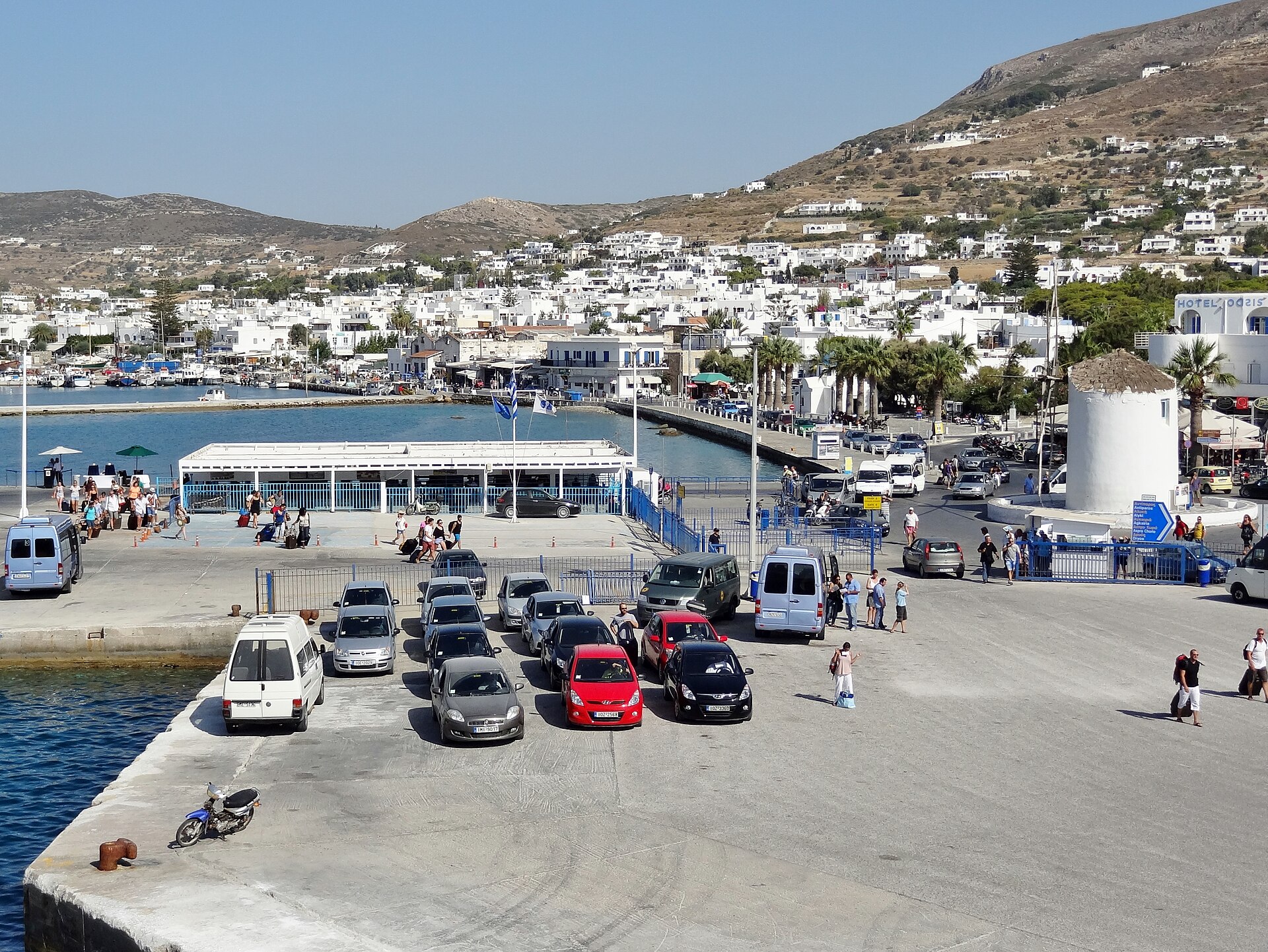
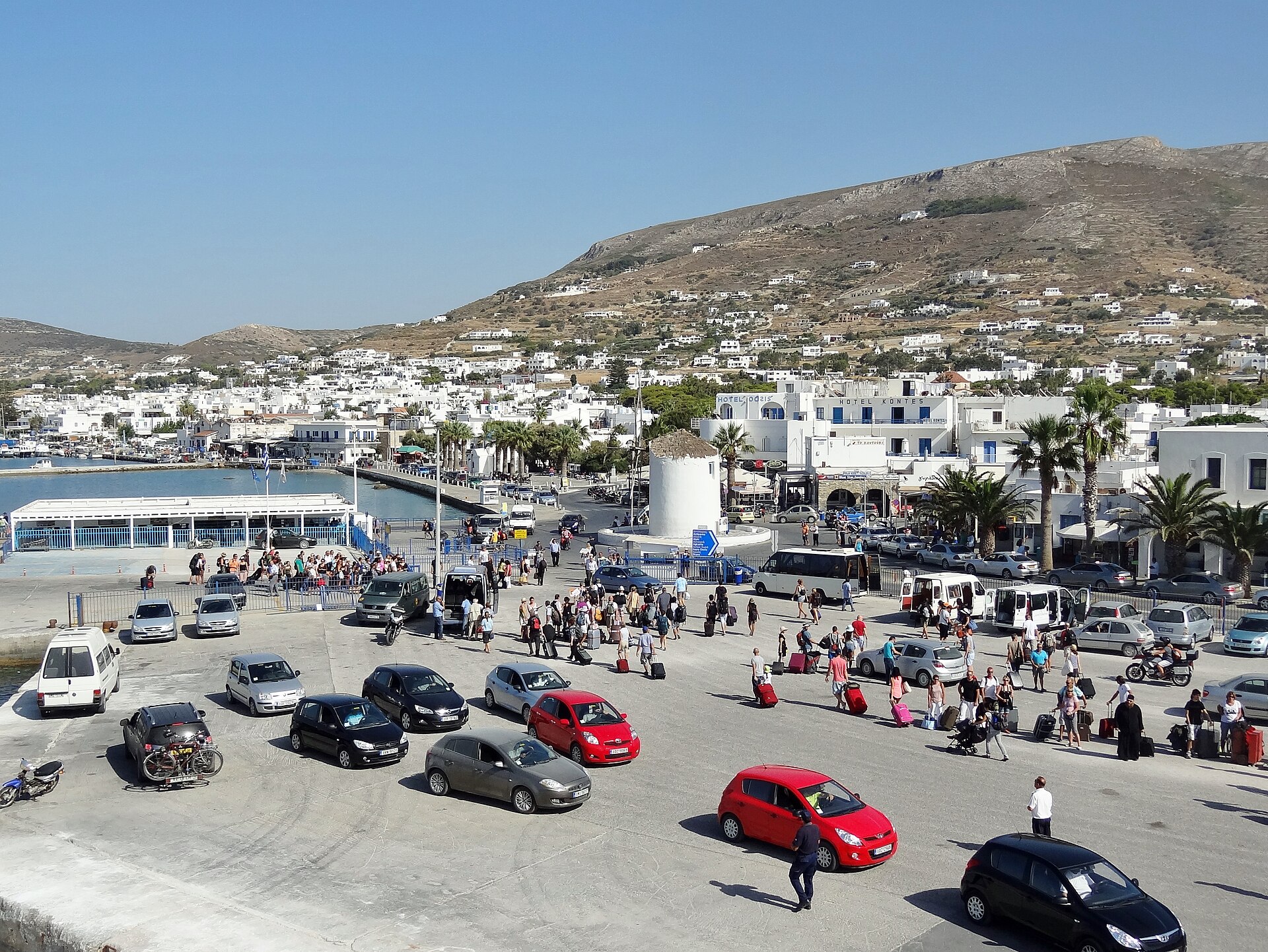
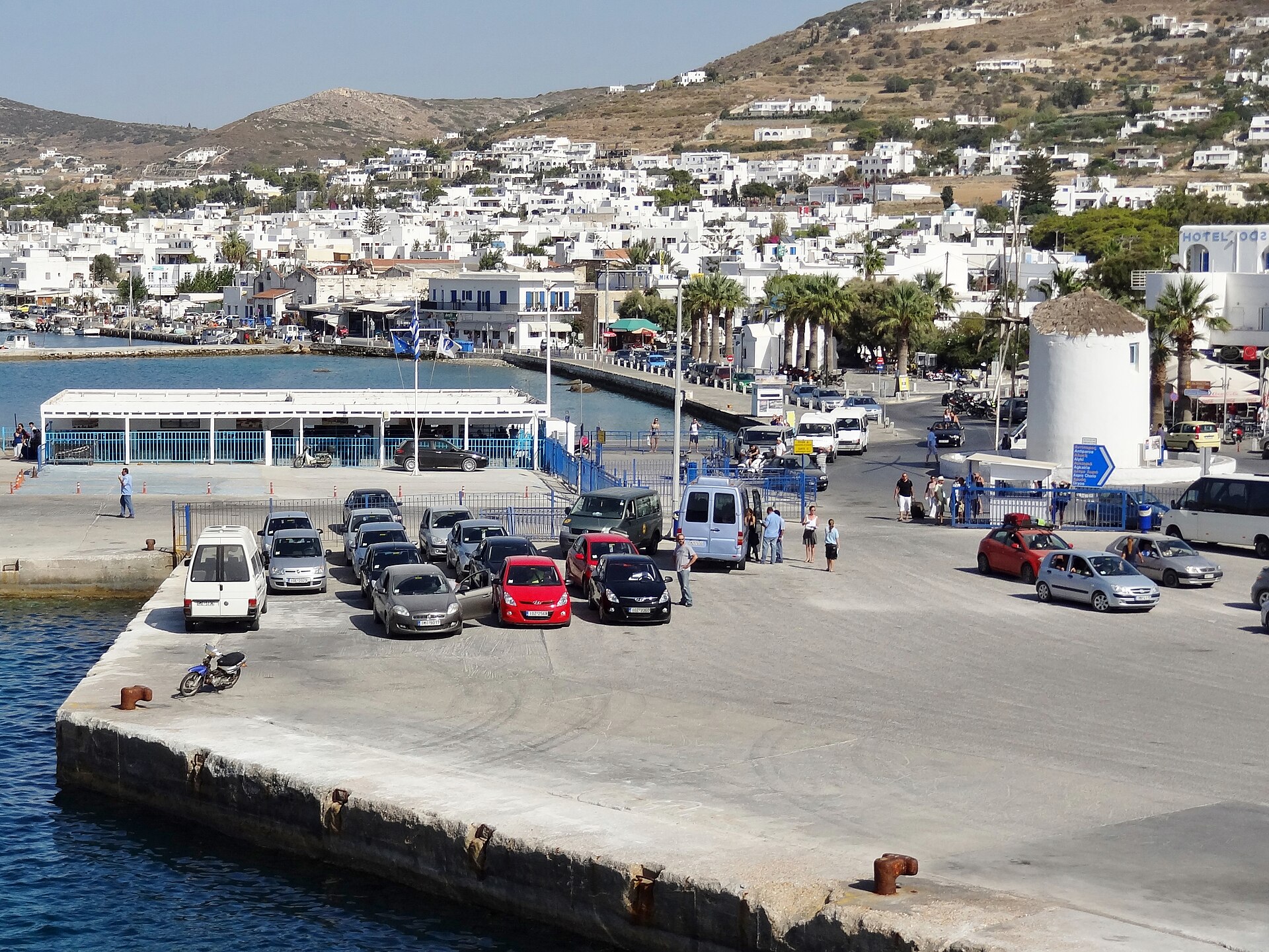
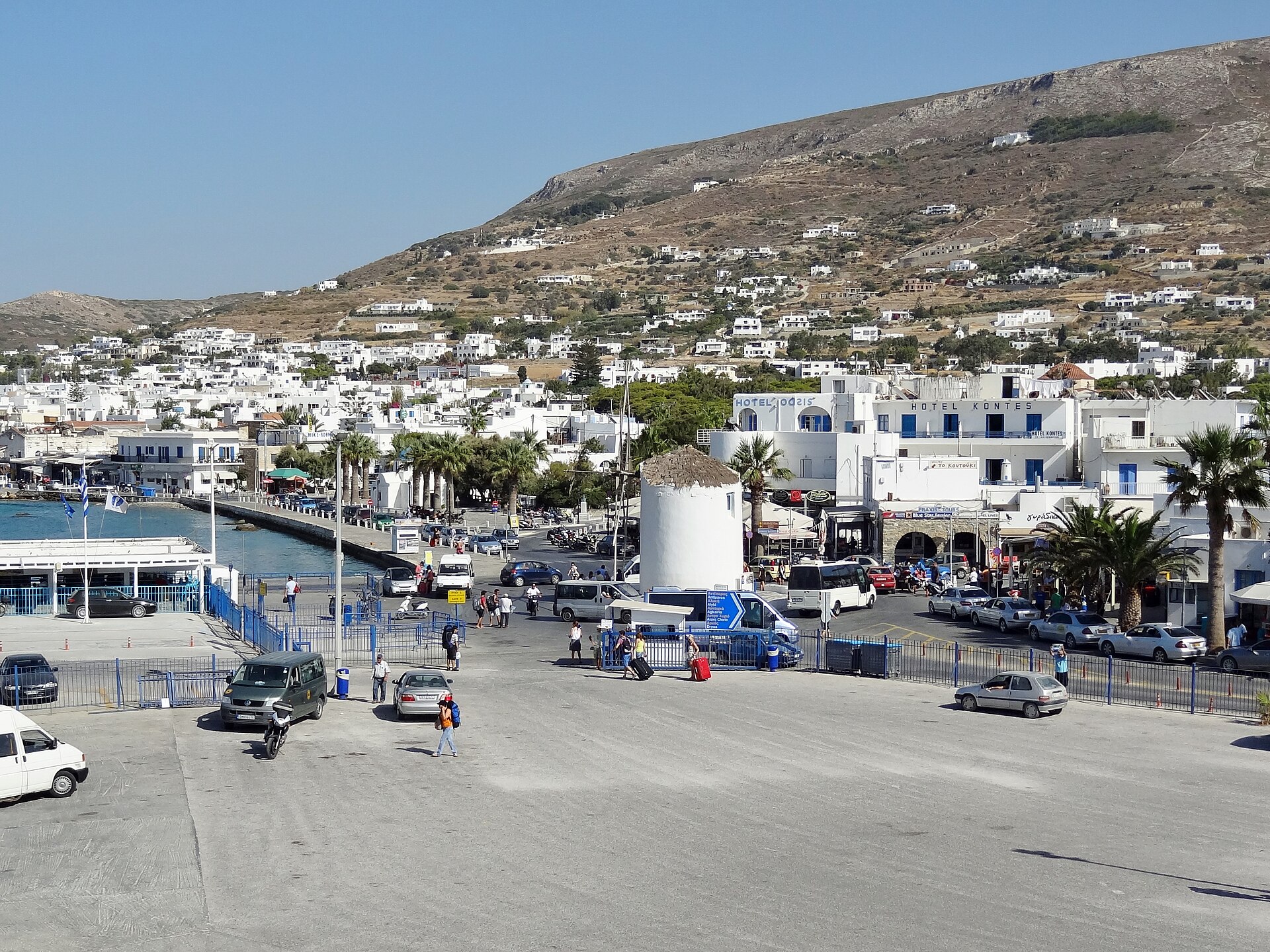
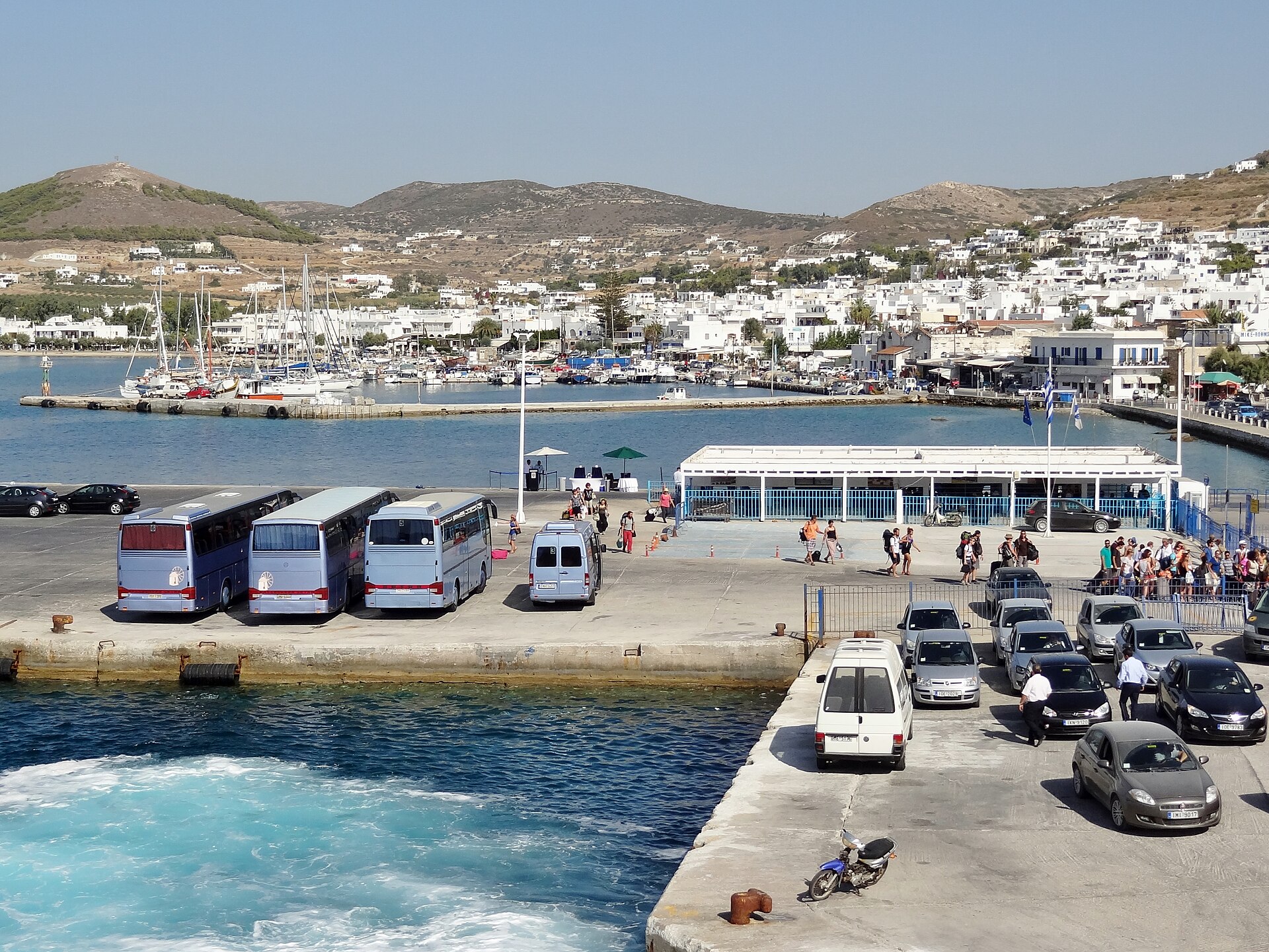
Landing at Paroikia means crossing the threshold of a world where the blinding white of lime encounters the deep blue of the Aegea...
Updated 7 July 2026
This season · July · Summer
What to do in Paroikia now
The story
The story of Paroikia
A history carved in the purest marble
The history of Paroikia is inextricably linked to its 'white gold': Parian marble, celebrated in antiquity for its transparency and finest grain. Inhabited since the Neolithic, as evidenced by finds on the islet of Saliagos, the city became a maritime and cultural power in the archaic and classical periods. It was here that the poet Archilochus was born, inventor of the iamb, reflecting the cultured and irreverent spirit of the island. During the Byzantine period, Paroikia maintained a central role, culminating in the construction of the majestic Ekatontapyliani. Subsequently, in the 13th century, the arrival of the Venetians under the Duchy of Naxos transformed the face of the city with the construction of the Kastro, using remains of ancient temples in a bold architectural recycling. Under Ottoman rule and until Greek liberation, Paroikia has been able to preserve its Cycladic identity, becoming today a model of aesthetic conservation and cultural vibrancy.
Panagia Ekatontapyliani: the church of the hundred doors
Considered one of the most important paleochristian monuments in all of Greece, the Panagia Ekatontapyliani is an architectural complex that takes the breath away for its solemnity. Founded, according to legend, by Saint Helena mother of Constantine the Great during his journey to the Holy Land, the current structure dates largely from Justinian's restorations in the 6th century. The name 'Ekatontapyliani' literally means 'from a hundred doors': tradition has it that ninety-nine were counted and that the hundredth will open only when Constantinople becomes Greek again. Inside, the atmosphere is charged with mysticism; you can admire the 4th-century baptistery, unique of its kind, and splendid wooden icons. Naked stone, imposing domes, and the silence of the inner courtyard offer a spiritual refuge of rare beauty, far from the bustle of the port.
The Frankish Castle: a puzzle of antiquity
In the heart of the old quarter, the Kastro (or Frankish Castle) represents one of the most curious and fascinating testimonies of Venetian rule. Built in 1260 by Marco Sanudo, Duke of Naxos, this fortification does not impress with its military might, but with the materials used. Its walls are indeed an incredible assemblage of columns, friezes, and marble blocks from ancient Greek temples, particularly from a temple dedicated to Athena. Observing the walls, you can clearly distinguish the drums of columns arranged horizontally as if they were bricks, creating a unique visual effect that blends classical aesthetics with medieval defensive necessity. Walking around the Kastro means literally touching the historical stratification of Paroikia, where the archaic past supports the dwellings of subsequent centuries.
The Archaeological Museum of Paros
Located a short distance from the church of Ekatontapyliani, this museum houses treasures that tell the artistic excellence of the island. The highlight is undoubtedly the 'Nike of Paros', a winged sculpture from the 5th century BC that enchants with the dynamism of its drapery, despite the ravages of time. Of enormous historical value is also the 'Marmor Parium' (Parian Chronicle), an inscribed stele that reports a chronology of historical and mythological events of ancient Greece, from the origins until the 3rd century BC. The halls also house finds from local sculpture workshops and artifacts from the Neolithic period, offering a complete vision of how Paros was, for centuries, one of the most important creative furnaces in the Mediterranean.
The Ancient Cemetery on the waterfront
Not far from the port, almost at the edge of the coastal road, there is an open-air archaeological site of great suggestion: the ancient cemetery of Paroikia. Used from the 8th century BC until the 3rd century AD, this burial site was brought to light only in recent times. Walking along the walkways, you can observe marble sarcophagi, pit tombs, and funeral urns that testify to the various burial rites that succeeded each other over the ages. The peculiarity of this site is its proximity to the sea; the idea that for centuries the inhabitants of Paros rested just meters from the waves gives the place an aura of solemn peace, making it a must-visit stop for those who want to understand the profound bond between the city and its vital element.
Exploring the Chora: the white labyrinth
The true essence of Paroikia is discovered by losing oneself among the streets of the Chora, the historic center. Here Cycladic architecture expresses itself at its best: cubic houses with colored doors and windows, external staircases adorned with pots of geraniums and bougainvillea that create patches of fuchsia color against the white walls. The streets are paved with stone slabs edged in white lime, following a traditional geometric design. Along the 'Market Street', the main street, craft shops, jewelry stores working in silver, and small cafés where life flows slowly follow one another. Moving away from the main axis, you discover quiet small squares and tiny votive chapels, each with its blue or white dome, recounting the daily devotion of the inhabitants.
The coastal landscape and city beaches
Although Paroikia is an urban center, it offers corners of nature and crystalline sea just steps from the center. The bay of Paroikia is wide and protected, characterized by calm waters ideal for swimming. Livadia Beach, located at the northern end of the waterfront, is the most frequented and equipped, perfect for those seeking comfort. If instead you prefer a wilder setting, with a short walk or a boat trip (the typical 'kaiki'), you reach the beaches of Krios and Martselo. The latter offer fine sand and a privileged view of the old town, with the water taking on emerald hues. The surrounding landscape is typically Mediterranean, with bare hills dotted with olive and tamarisk trees that bend under the Meltemi wind.
Surroundings: the Valley of Butterflies
About 5 kilometers south of Paroikia is one of the most unusual and green corners of the island: the locality of Petaloudes, known as the Valley of Butterflies. During the summer months, particularly between June and August, this lush valley, rich in plane trees, ivy, and fruit trees, becomes the habitat of thousands of moths of the species Euplagia quadripunctaria. Attracted by the resin of the trees and the freshness of the microclimate, the butterflies literally cover the trunks and rocks, creating a suggestive natural spectacle. It is an ideal place for a refreshing break, walking along the well-maintained paths that wind through this green lung, away from the solar glare of the coasts.
Flavors and local traditions
The cuisine of Paroikia is a triumph of straightforward flavors tied to land and sea. You cannot leave the city without having tasted 'Gouna', the mackerel dried in the sun and then grilled, a specialty that encapsulates all the flavor of the Aegean. Another iconic dish is 'Revithada', a chickpea soup cooked slowly in wood-burning ovens inside terracotta pots, typical of feast days. The taverns in the center also offer local cheeses such as 'Xinomyzithra' and 'Ladotyri', often accompanied by 'Suma', a grape distillate similar to grappa produced artisanally in homes. Popular traditions are still alive, especially during the feast of the Panagia on August 15, when the city fills with music, traditional dances, and processions that involve the entire community.
Experiences not to be missed
- Admire the sunset from the hill of the Kastro, when the sun disappears among the rocks of the Portes.
- Travel on foot the Byzantine road that connects the villages of the interior, starting just outside the city.
- Take a small ferry from the port for a day trip to the island of Antiparos.
- Search for artisanal ceramic workshops hidden among the alleys of the Chora.
- Dine in a tavern on the waterfront savoring grilled octopus and local Parian wine.
- Visit the Panagia Ekatontapyliani in the early morning hours to enjoy absolute silence.
When to go and how to experience Paroikia
The best time to visit Paroikia runs from May to June and from September to early October. In these months the climate is mild, the light is perfect for photography, and the city is not yet crowded by the large tourist flows of August. Spring, in particular, offers a flowered and fragrant island. Living Paroikia means adapting to its rhythms: waking early to see the port come to life, dedicating the hot hours to visiting museums or relaxing on the beach, and reserving the evening for aimless walks among the alleys. It is a city that lends itself very well to being explored on foot; once arrived, the use of a car is superfluous if you decide to stay in the center and nearby beaches, thanks also to the efficient bus network that connects Paroikia to the rest of the island.
FAQ
È possibile visitare Paroikia in un solo giorno?
Dove conviene parcheggiare l'auto?
La città è adatta alle famiglie con bambini?
Come si raggiunge Antiparos da Paroikia?
Getting there
- Aeroporto Nazionale di Paros (PAS) - circa 10 km
- Non presenti sull'isola
- Dall'aeroporto o dagli altri villaggi (Naoussa, Lefkes) seguire le indicazioni per Paroikia/Porto. La strada principale circonda l'isola.
- Il modo più suggestivo per arrivare è via mare con il traghetto dal Pireo o da Rafina; l'ingresso nella baia offre una vista indimenticabile sulla città bianca.
Perfect for
Un concentrato di storia che spazia dall'epoca arcaica al dominio veneziano, con musei e chiese di rilevanza mondiale.
Spiagge sabbiose e acque cristalline raggiungibili a piedi o con brevi tragitti in barca dal centro città.
Il classico labirinto di vicoli bianchi e fiori, perfetto per chi cerca l'estetica greca più autentica.
To see