Oia
Suspended between the cobalt blue of the Aegean and the blinding white of lava stone, Oia represents the very essence of Cycladic...
Updated 7 July 2026
This season · July · Summer
What to do in Oia now
The story
The story of Oia
From commercial routes to rebirth: the history of Oia
The origins of Oia lie in times when Santorini was a vital crossroads for Aegean trade routes. Under Venetian rule, the settlement was one of the island's five 'kastelia', fortifications built to protect the population from pirate raids. However, the period of greatest splendor came between the late nineteenth and early twentieth centuries, when Oia's merchant fleet dominated the seas, transporting precious local wine as far as Russia and returning with riches still reflected in the village's architecture. This 'golden age' was abruptly interrupted by the devastating 1956 earthquake, which destroyed much of the dwellings. The reconstruction that followed was not only an act of engineering but a wise recovery of local identity, transforming ruins into one of the world's most iconic and carefully maintained places, where respect for traditional proportions and colors became an unsurpassed aesthetic dogma.
The Castle of Agios Nikolaos and the ritual of the sunset
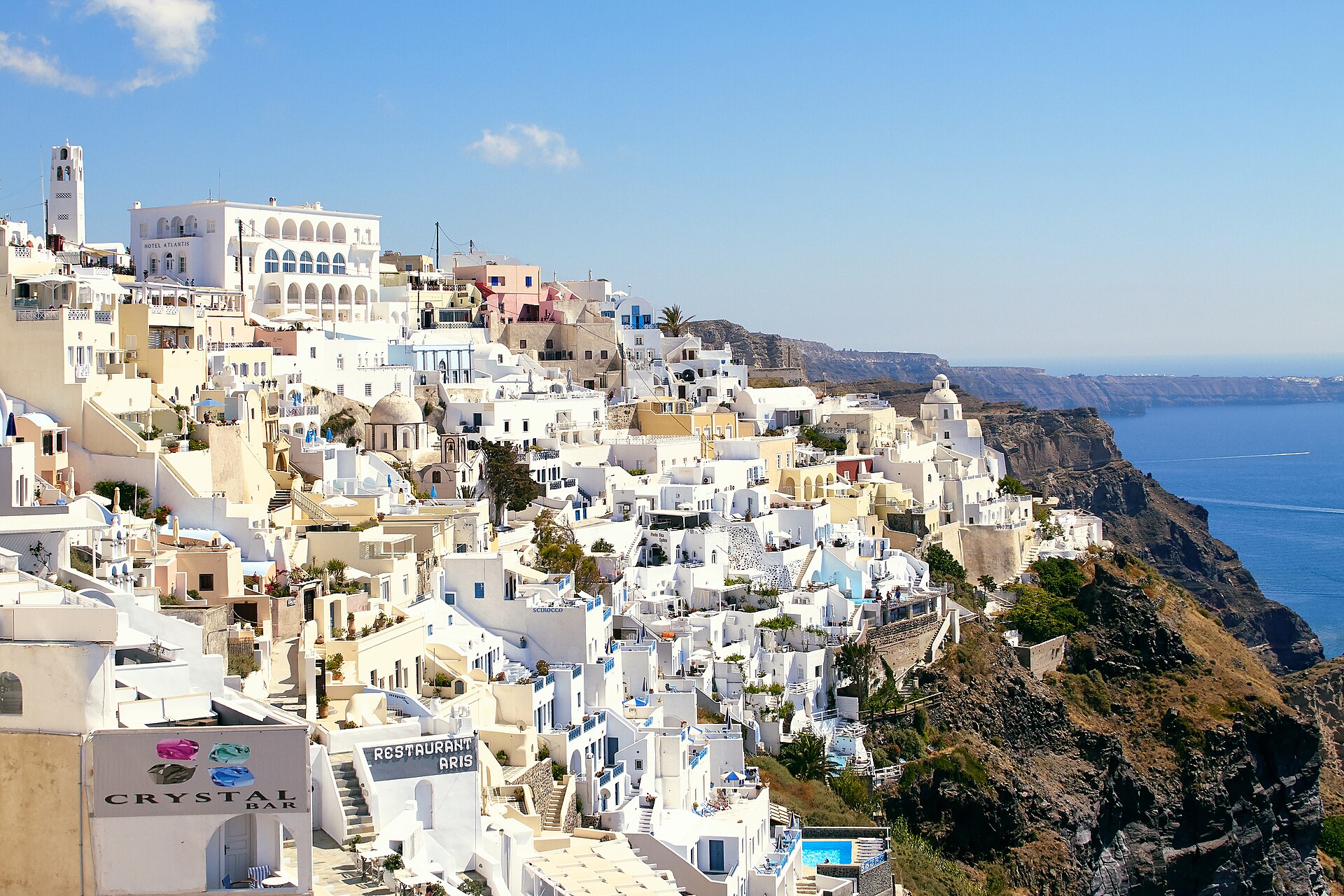
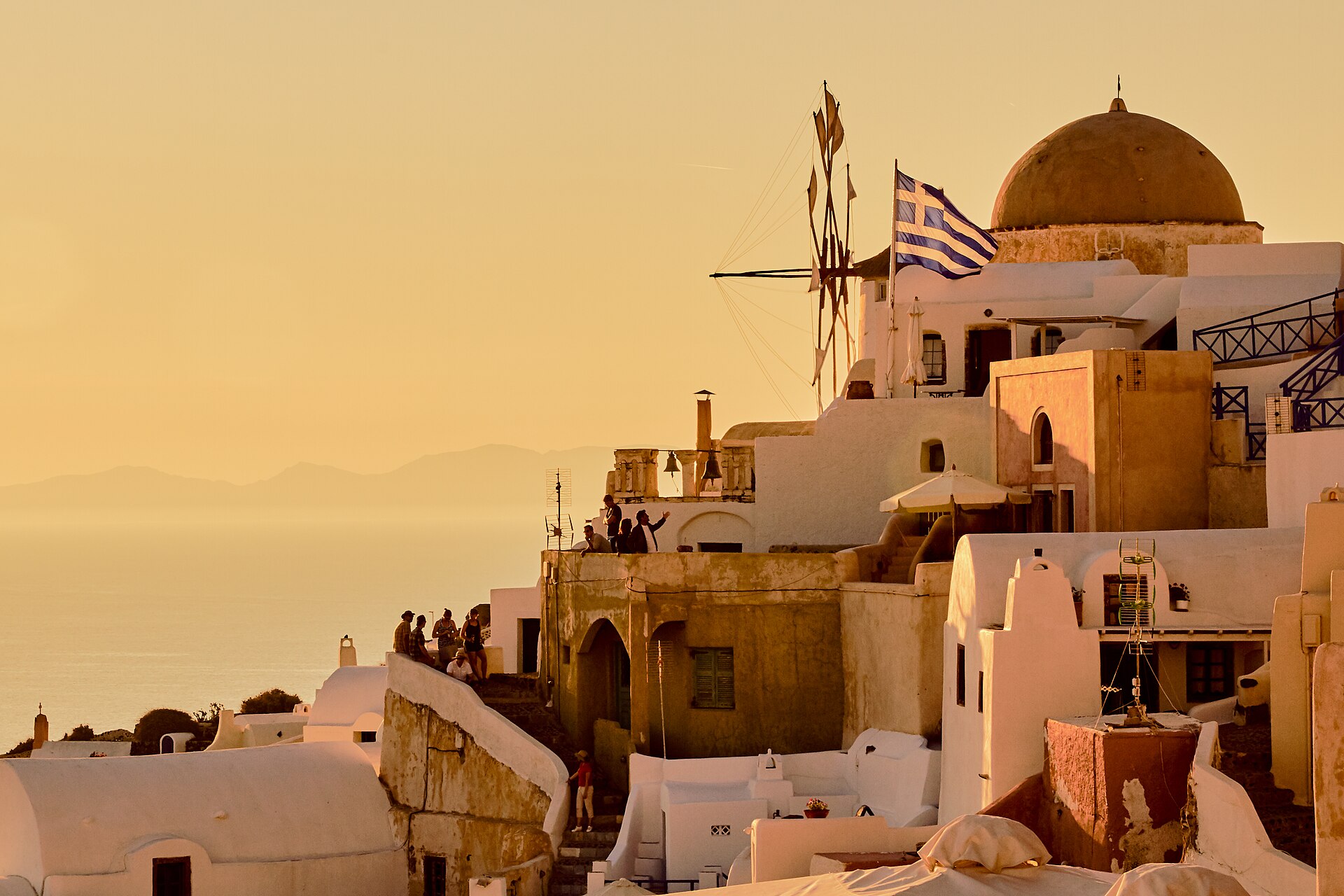
The remains of the Venetian castle of Agios Nikolaos, located at the village's extreme point, represent the historic heart and the most celebrated observation point of Oia. Built in the fifteenth century, it served as a watchtower and residence for local nobility. Though today only portions of the walls and tower remain, the site has become a veritable sanctuary for travelers from around the world who come here to witness the sunset. From this rocky spur, one can admire the sun diving into the sea, tinting the caldera walls and surrounding white houses in shades of orange, pink, and purple. It is a moment of collective communion that, despite the crowds, maintains its sacredness, celebrating the day's end in a natural scenario unmatched in chromatic intensity.
The Church of Panagia Platsani
At the center of Oia's main square stands the Church of Panagia Platsani, one of the island's most significant religious buildings. Originally built within the castle walls, it was razed by the 1956 earthquake and later rebuilt at its current location for reasons of ground safety and stability. The church is a splendid example of Cycladic ecclesiastical architecture, characterized by an immaculate white façade, a vibrant blue dome, and a sail-shaped bell tower with six bells. Inside, the atmosphere is intimate and solemn, enriched by precious icons and carved wooden furnishings. The community's devotion to the Virgin Mary is deeply felt, and the church serves as a point of reference not only spiritual but also social, being the focal point of all celebrations and processions that enliven the village throughout the year.
The Maritime Museum: guardian of naval memory
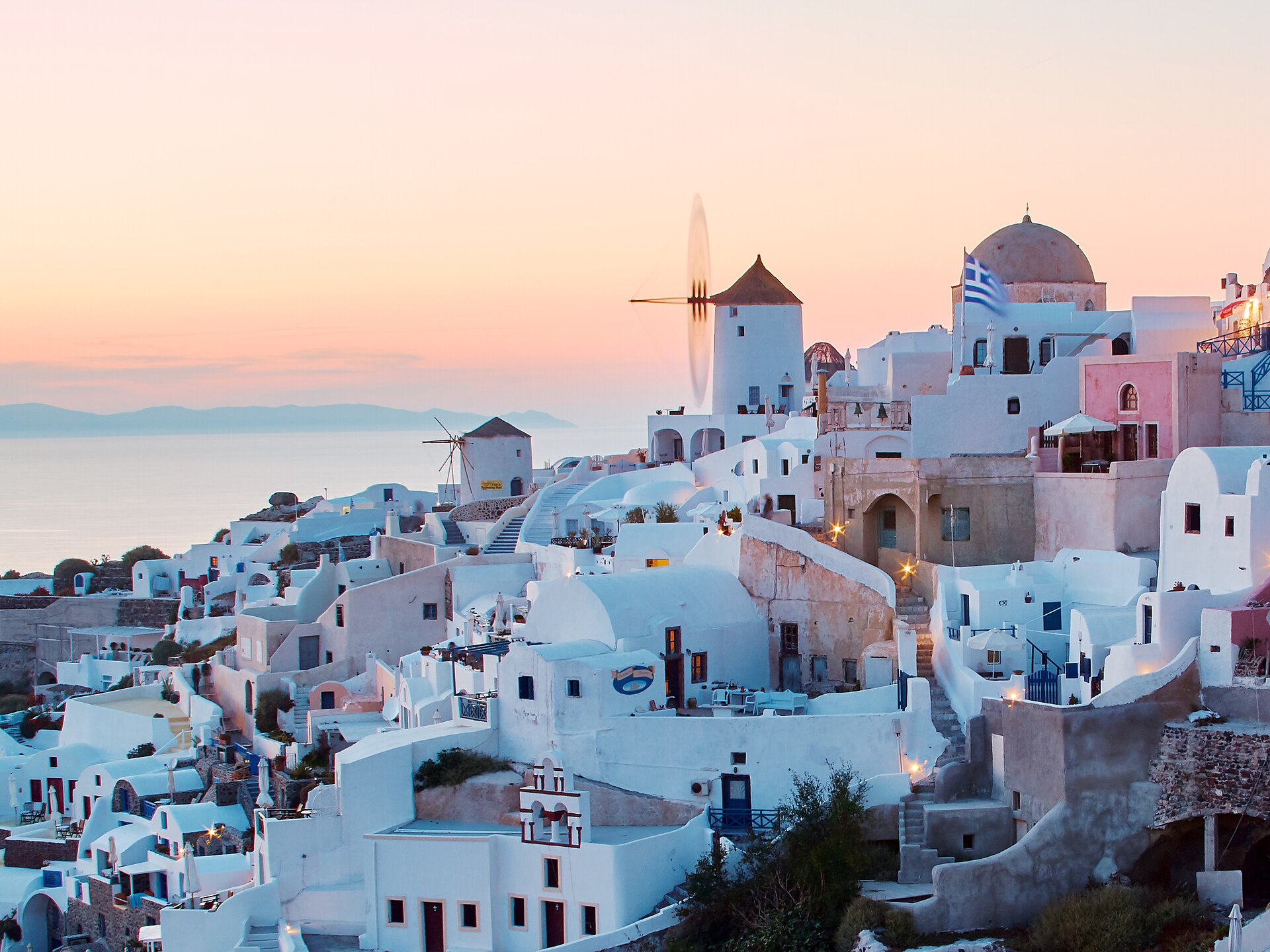
Housed in an elegant nineteenth-century villa that once belonged to a sea captain, Oia's Maritime Museum is an essential stop for understanding the profound soul of the place. This exhibition space recounts the epic of Santorini's sailors, who naviged the Mediterranean and Black Sea with their sailing ships. It preserves rare ship figureheads, period navigation instruments, old photographs, ship logs, and vessel models that testify to the economic power the village achieved through maritime commerce. The museum is not merely a collection of objects, but a tribute to the technical skill and courage of a community that transformed its geographic position into a strategic advantage, creating a class of shipowners and captains who shaped the very aesthetic of the 'Kapetanospita', the manor houses that still grace the upper alleyways.
The Windmills: icons of the horizon
The windmills of Oia are perhaps the most photographed structures in the entire archipelago. Located in the northern section of the village, these cylindrical buildings with conical roofs once played a vital role in the island's agricultural economy, grinding grain thanks to the constant force of the Meltemi, the wind that blows across the Cyclades. Today, though they have lost their original function, they have been skillfully restored and converted into luxury residences or private museums. Their presence lends Oia's skyline a romantic and timeless touch; seeing them silhouetted against a clear sky or illuminated by evening's golden light is an image that perfectly captures the harmony between human achievement and the wild nature of the volcanic landscape.
Dual architecture: Captains' Houses and Cave Houses
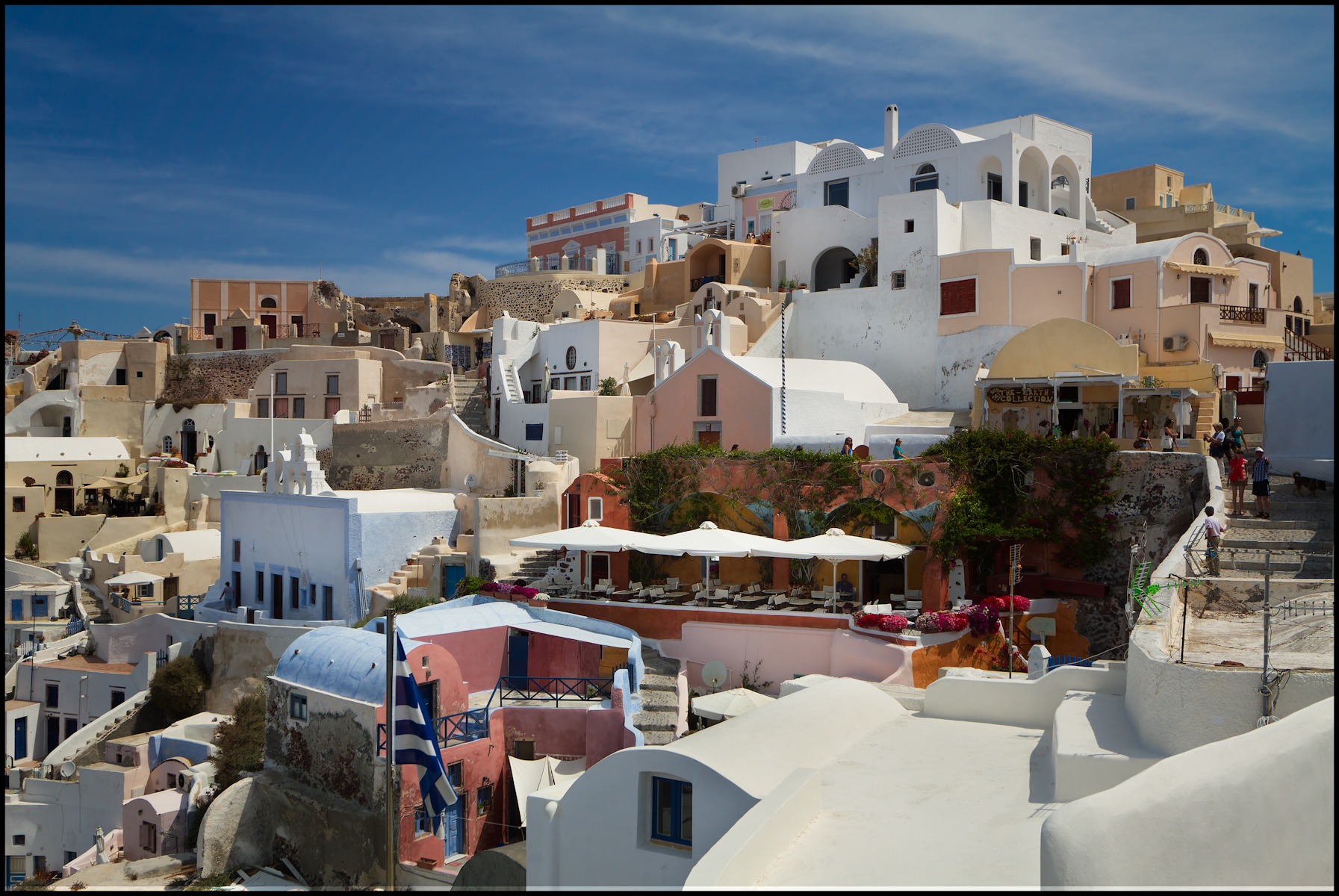
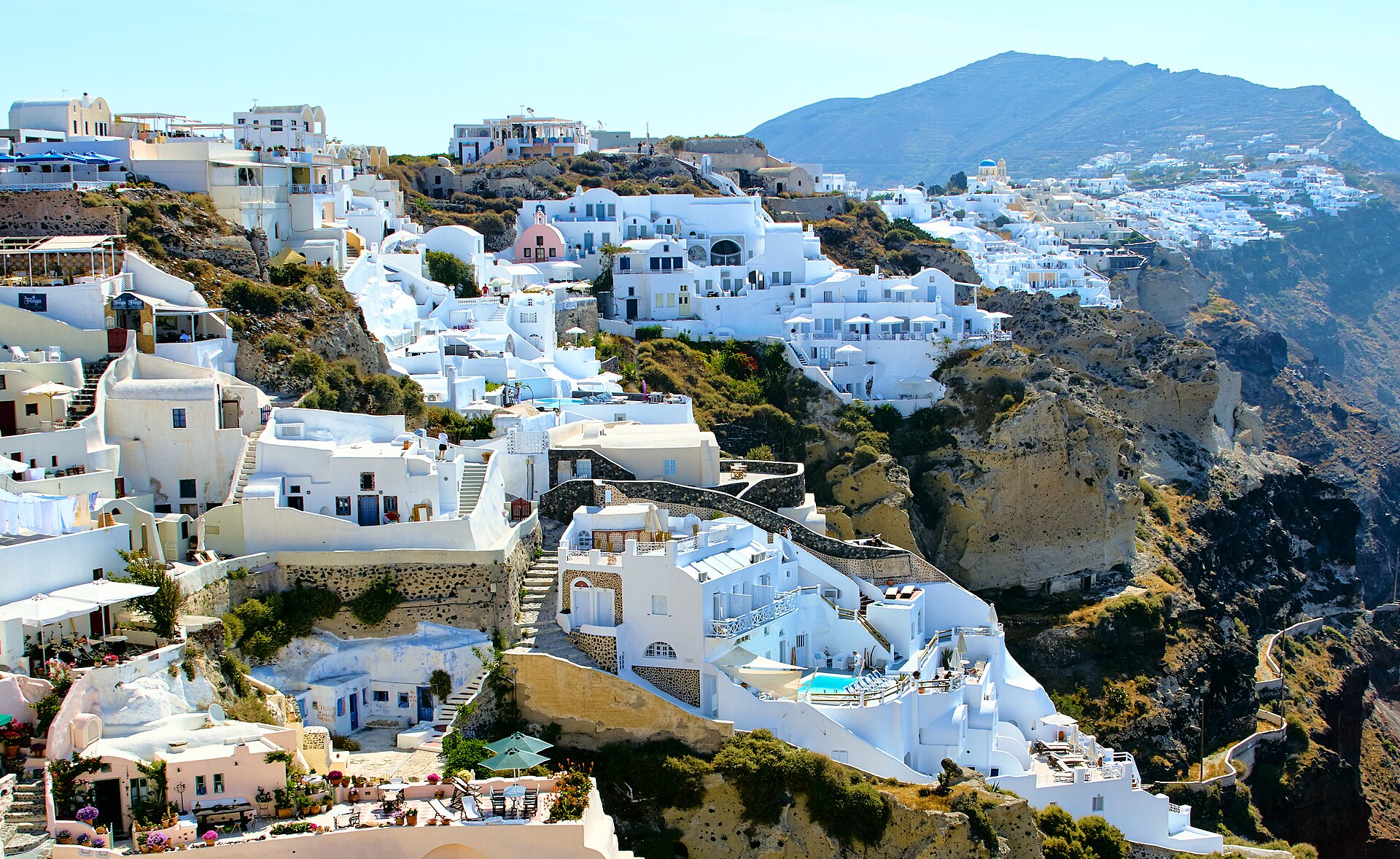
Oia's urban planning is characterized by a fascinating dichotomy reflecting the social stratification of the past. In the upper section, along the ridge, are the 'Kapetanospita', the captains' houses: imposing buildings influenced by Neoclassical and Venetian styles, with spacious courtyards and ochre or Pompeian red façades. In sharp contrast, clinging to the caldera's steep walls, are the 'Hyposkafa', the cave houses. Carved directly into volcanic rock to protect from winds and maintain constant temperature, these dwellings originally housed sailors and the less affluent classes. Today, these caves have been transformed into exclusive suites with infinity pools, yet they still preserve the organic structure and curved lines that make them a unique example of underground architecture adapted to the environment.
Ammoudi Bay: the port at the cliff's foot
Descending the stairway of over two hundred steps from the castle, one reaches Ammoudi Bay, a small harbor nestled between imposing red rock cliffs. Here the chromatic contrast between the rust-colored earth and the turquoise water is almost surreal. Ammoudi is famous for its fish taverns serving the day's catch meters from the sea. Continuing along an unpaved path that hugs the rock, one reaches an ideal spot for swimming, facing the islet of Agios Nikolaos. It is a vibrant place where the volcano's primordial energy is tangible and where the rhythm slows drastically compared to the frenzy of the upper alleys, offering a bottom-up perspective of the majestic caldera.
Armeni and surroundings: paths and silences
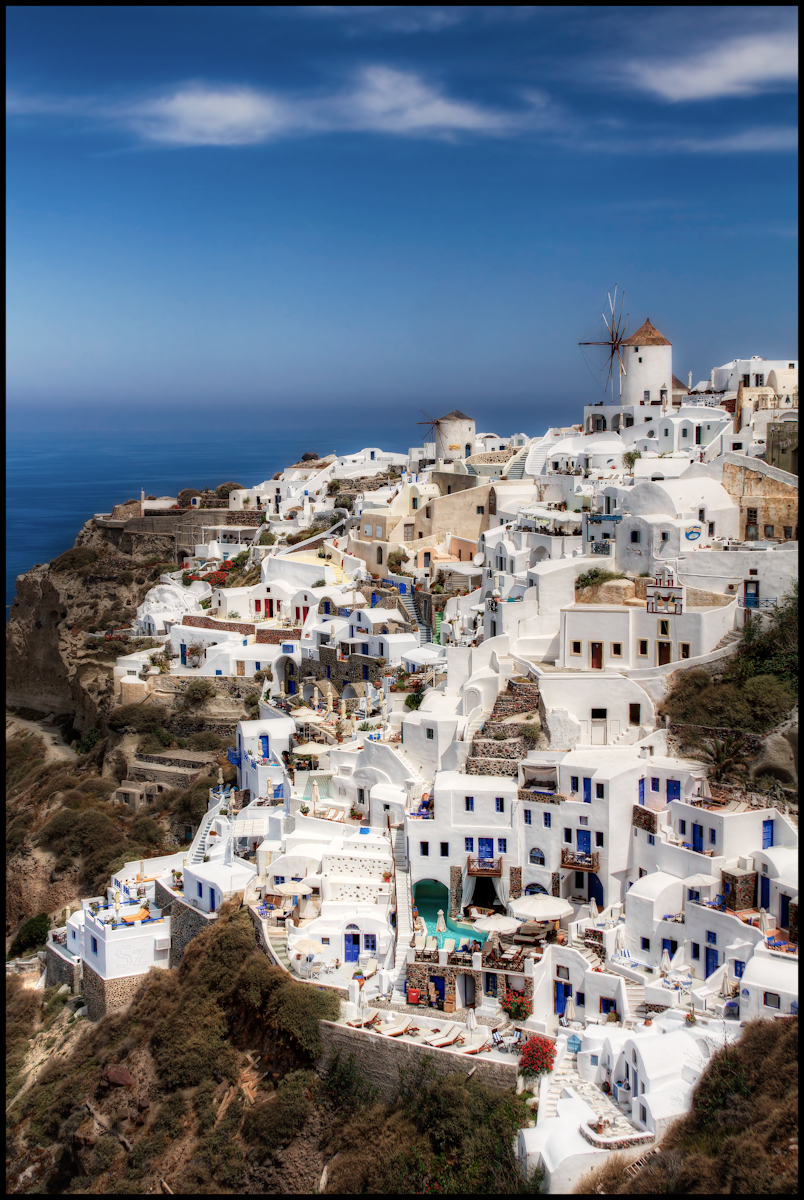
Less frequented than Ammoudi, Armeni Bay was once the main port for unloading heavy goods and building materials. It can be reached via another picturesque stairway or by sea. Today it is an oasis of peace, visited by those seeking more solitary contact with the Aegean. Not far from Oia lies the village of Finikia, a hamlet that seems to have stopped in time. Characterized by colorful houses (pink, blue, and yellow) and flowery courtyards, Finikia offers an authentic and less touristy alternative, ideal for a walk among the vineyards that produce the famous Santorini wines, away from the most beaten paths.
The volcanic landscape and resilient nature
The landscape surrounding Oia is dominated by volcanic geology. The soil, rich in pumice and ash, has created a unique ecosystem where vegetation must struggle against water scarcity and salt winds. The caldera itself is the result of one of the largest eruptions in human history, and its crescent shape embraces the sea creating a natural amphitheater. The cliffs display multicolored geological layers telling millennia of thermal activity. Despite apparent aridity, the land is incredibly fertile for certain specific crops: vines are cultivated 'in baskets' (kouloura) to protect the bunches from wind, creating an agricultural landscape that resembles an abstract work of art spread across the hills.
Traditions and flavors: cuisine of fire
Oia's gastronomy is a child of its volcanic land. The flavors are intense and concentrated: the famous Fava of Santorini, a creamy purée of yellow chickling vetch with velvety taste, the Tomatokeftedes (tomato fritters) made with small and flavorful local tomatoes that grow without irrigation, and white eggplants, sweet and seedless. But the true protagonist is wine. Assyrtiko is the quintessential white grape, capable of producing savory and mineral wines that reflect the volcano's essence. One cannot leave Oia without tasting Vinsanto, a dessert wine made from sun-dried grapes, whose amber color and hints of figs and spices provide the perfect conclusion to a dinner overlooking the caldera.
Experiences not to miss in Oia
- Watch the sunset from the ruins of the Venetian castle of Agios Nikolaos.
- Descend the 214 steps to Ammoudi Bay for lunch with grilled octopus.
- Explore the labyrinth of Finikia's alleyways to discover the Cyclades' rural architecture.
- Visit the Maritime Museum to learn the glorious history of Oia's captains.
- Taste a glass of Assyrtiko in one of the wine bars overlooking the caldera.
- Walk the panoramic path connecting Oia to Fira for breathtaking views.
- Photograph the blue domes of the Church of Agios Spiridonas and Anastaseos.
When to visit and how to experience the village
To fully enjoy Oia's magic without the pressure of mass tourism, the best periods are late spring (May and June) and early autumn (September and October). During these months the climate is mild, the light is clear, and the village breathes with a more human rhythm. During peak summer, the advice is to experience Oia 'in reverse': wake at dawn to explore the alleys in solitude, retire during the hot and crowded afternoon hours, and enjoy the evening when most day-trippers have left the village. Oia requires slowness: it is a place to discover on foot, guided by instinct through staircases descending toward the sea and paths that lose themselves among the vineyards.
FAQ
Qual è il punto migliore per vedere il tramonto a Oia?
Come si raggiunge la baia di Ammoudi?
È possibile parcheggiare a Oia?
Quanto tempo occorre per visitare Oia?
Oia è adatta a chi ha problemi di mobilità?
Getting there
- Aeroporto Internazionale di Santorini (JTR) - 17 km
- Non presenti sull'isola
- Da Fira seguire la strada principale verso nord per circa 20 minuti. Gli autobus locali (KTEL) collegano regolarmente il capoluogo a Oia.
- Noleggiare uno scooter o un'auto piccola è l'ideale per muoversi, ma i bus sono efficienti ed economici.
Perfect for
Oia è la destinazione per eccellenza per coppie e viaggi di nozze, grazie ai suoi scenari da cartolina e alle cene a lume di candela sulla caldera.
Un paradiso per i fotografi: la luce delle Cicladi e il contrasto tra il bianco delle case e il blu delle cupole offrono spunti infiniti.
Perfetta per chi ama scoprire territori attraverso il gusto, tra vini vulcanici unici al mondo e prodotti della terra a chilometro zero.
To see
What to see in Oia
Routes · Trovido Route