Naousa
Every year on August 23rd, the small harbour of Naousa lights up with torches, blank gunfire and burning boats: it is the reenactm...
Updated 8 July 2026
This season · July · Summer
What to do in Naousa now
The story
The story of Naousa
A harbour forged by history
Naousa's origins go back to the Byzantine era, when the small settlement began to develop around a sheltered inlet, ideal for mooring fishing boats. It was during the Venetian domination, however, starting in the 13th century, that the village took on a strategic role: the Venetians, settled across much of the Cyclades after the Fourth Crusade, fortified the harbour entrance to defend it from raids by Saracen and Barbary pirates who infested the Aegean. In the following centuries, under Ottoman rule, Naousa retained relative autonomy precisely because of its port function, also becoming a base for local piracy, an activity as feared as it was profitable. This dual identity, of refuge and outpost, has shaped the character of the village to this day.
The sunken Venetian castle
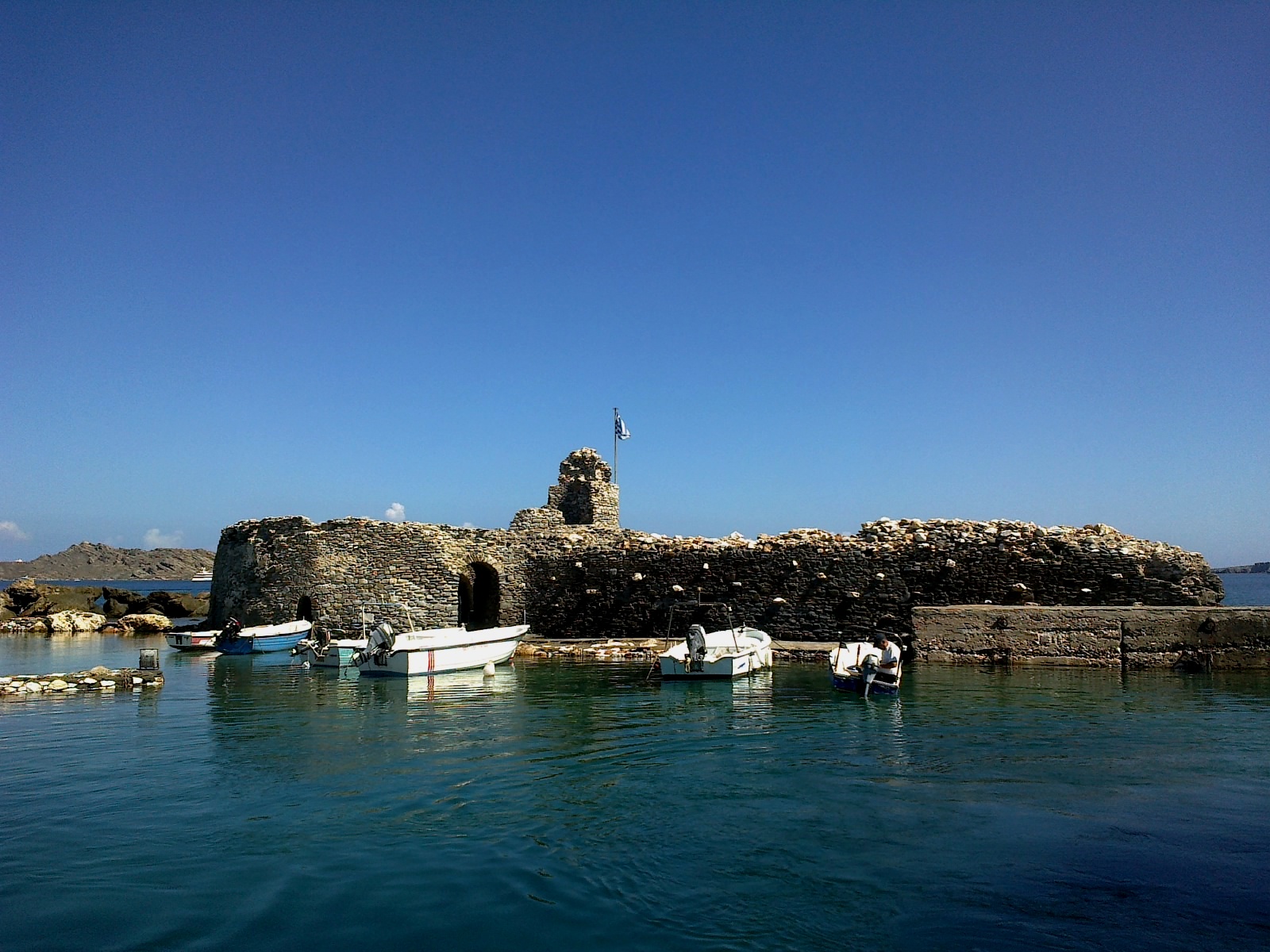
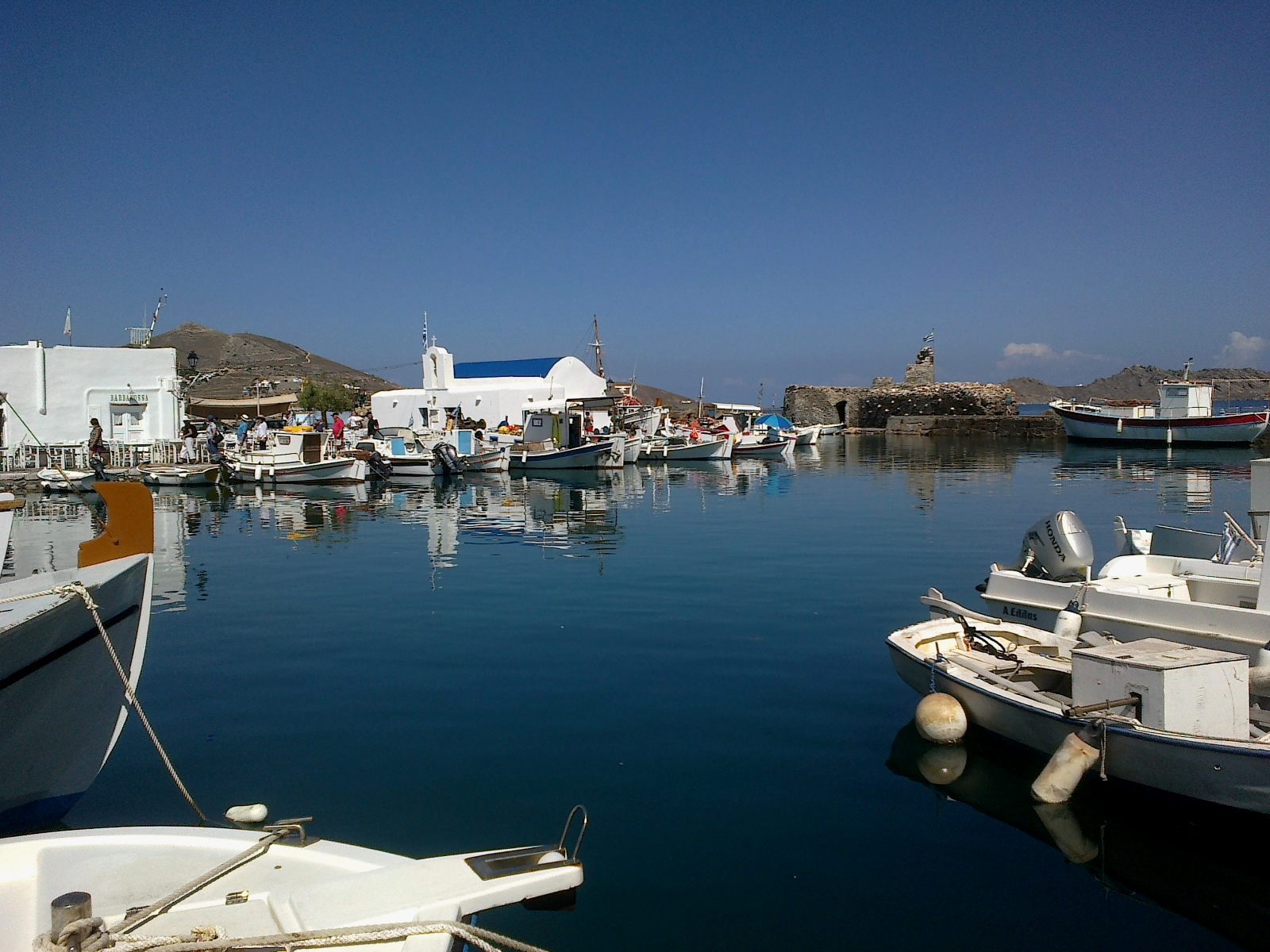
At the mouth of the harbour, the squared remains of a small Venetian castle emerge from the water, built in the 15th century to defend the inlet and partly swallowed by the sea in later centuries due to rising sea levels and the earthquakes that have shaken the island. Today its worn stones barely peek above the water's surface, clearly visible on clear days, and have become one of the village's most photographed symbols: at sunset, when the low light tints them pink and amber, the contrast with the moored boats and the white houses behind returns the most authentic image of Naousa.
The white and blue face of the old village
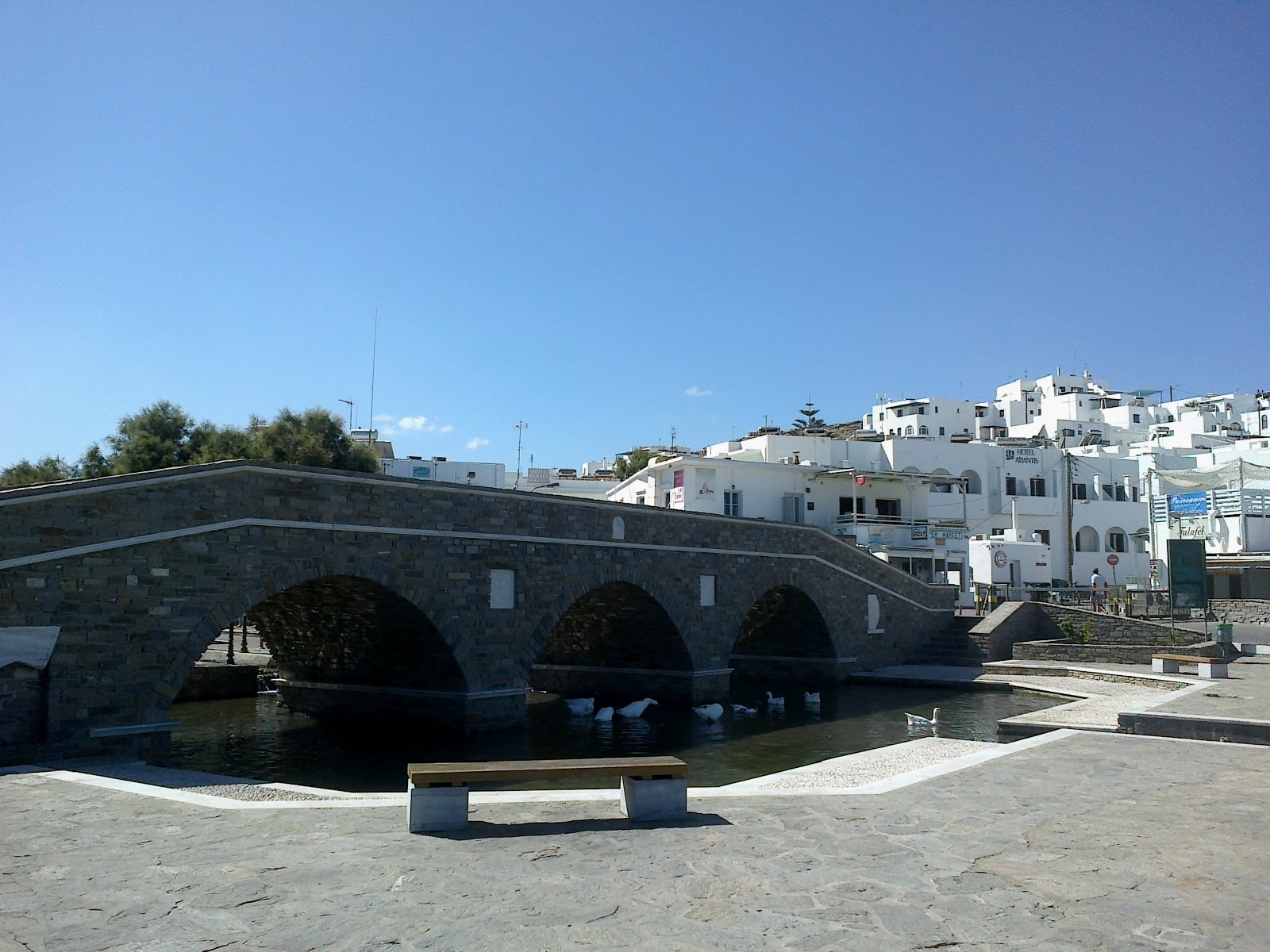
The historic centre unfolds in a maze of narrow alleys, originally designed to protect residents from the wind and from the gaze of raiders coming up from the sea. The whitewashed cube houses, the blue-painted steps, the bougainvillea spilling over the walls and the small hidden courtyards form a typically Cycladic urban fabric, but with a discreet elegance that sets Naousa apart from other towns in the archipelago: the wrought-iron balconies, the hand-painted wooden signs, the shop windows of ceramicists and silversmiths tell of a village that has managed to become a cosmopolitan destination without giving up its architectural identity.
The churches and religious heritage
As in much of the Cyclades, Naousa's urban landscape is also dotted with small white, blue-domed chapels, often votive, built by fishing families in gratitude for having survived a shipwreck. Among the main churches, Agios Ioannis stands out, to which the great patronal feast at the end of August is dedicated, along with the church of Agia Paraskevi, which houses fine icons and sacred furnishings. The relationship between the village and the sea is also reflected in popular devotion: many religious ceremonies end with processions to the harbour, in an interweaving of faith and seafaring life that still permeates the local calendar today.
Traces of the past: the Byzantine museum
Just outside the centre, the church of Panagia Ypapanti houses a collection of Byzantine and post-Byzantine icons, evidence of an artistic heritage often overlooked in favour of beaches and nightlife, but of great interest to those wishing to understand the island's religious history. The icons, some dating back to the 16th and 17th centuries, come from churches and monasteries in the Parian hinterland and show the influence of Cretan and Constantinopolitan styles that crossed the Aegean for centuries, enriching an island otherwise known mainly for its marble and its harbours.
Kolymbithres, rocks sculpted by the wind
A few kilometres west of the village lies one of the most singular beaches in the Cyclades: Kolymbithres, whose name literally means 'basins', owes its fame to huge granite boulders smoothed by wind and sea erosion, which form natural coves of very pale sand and shallow, transparent water, also ideal for families with children. The beach can be reached by car, by bus or with a short caique ride from the harbour of Naousa, a particularly evocative option that allows you to admire the jagged coastline from another point of view.
Lageri and Santa Maria: the turquoise sea to the east
On the eastern side of the gulf, the beaches of Lageri and Santa Maria follow one another, less spectacular geologically but much loved for their sandy seabeds and waters whose colours shift from turquoise to emerald. Santa Maria, in particular, has in recent decades become a reference point for water sports, thanks to the steady winds that blow across the Gulf of Naousa and make it one of the most appreciated spots in the Aegean for windsurfing and kitesurfing, thus pairing the calmer seaside soul with a more sporty and dynamic one.
The hinterland and the marble villages
Behind Naousa the landscape changes rapidly: terraced hills planted with vines and olive trees, abandoned windmills on the ridges and stone villages that tell of another Paros, more rural and quiet. Lefkes, the island's former capital perched halfway up the hillside to escape pirate raids, retains an intact medieval layout and one of the most beautiful churches in the Cyclades. Marathi, with its marble quarries exploited since antiquity and used even for famous sculptures such as the Venus de Milo, testifies to a quarrying tradition that made Paros famous throughout the Mediterranean.
Flavours of the sea and Cycladic cuisine
Naousa's cuisine revolves around the day's catch: octopus dried in the sun and then grilled, marinated gavros (anchovies), grilled lobster in the taverns overlooking the pier. Alongside these are products from the Parian hinterland, such as goat's cheeses, thyme honey and local wines made from native grape varieties like monemvasia and mandilaria. There is no shortage of traditional almond-and-honey sweets, often served at the end of a meal together with a glass of souma, the local grappa-like spirit, produced by hand in many island families.
The feast of Agios Ioannis and the naval reenactment
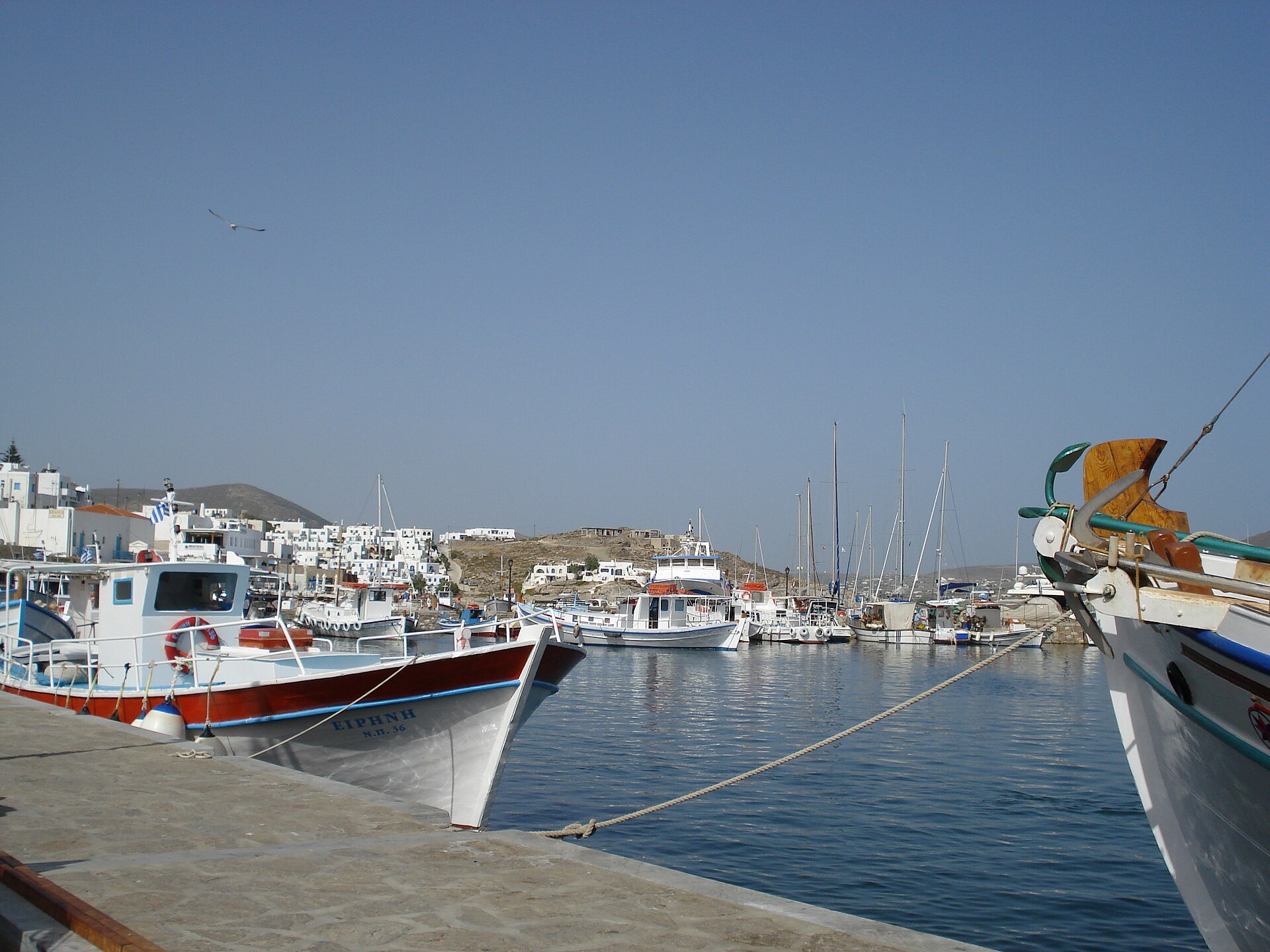
The most defining moment of the year remains the patronal feast of August 28-29, when the harbour reenacts the battle against the pirates with burning boats, blank gunfire and a procession that crosses the whole village to the rhythm of the local band. The evening traditionally ends with folk dancing in the main square and the tasting of fish dishes offered to the community, in an event that draws back residents and emigrants who return especially from abroad, as well as a growing number of visitors drawn by the spectacular power of the ritual.
Nightlife and cosmopolitan atmosphere
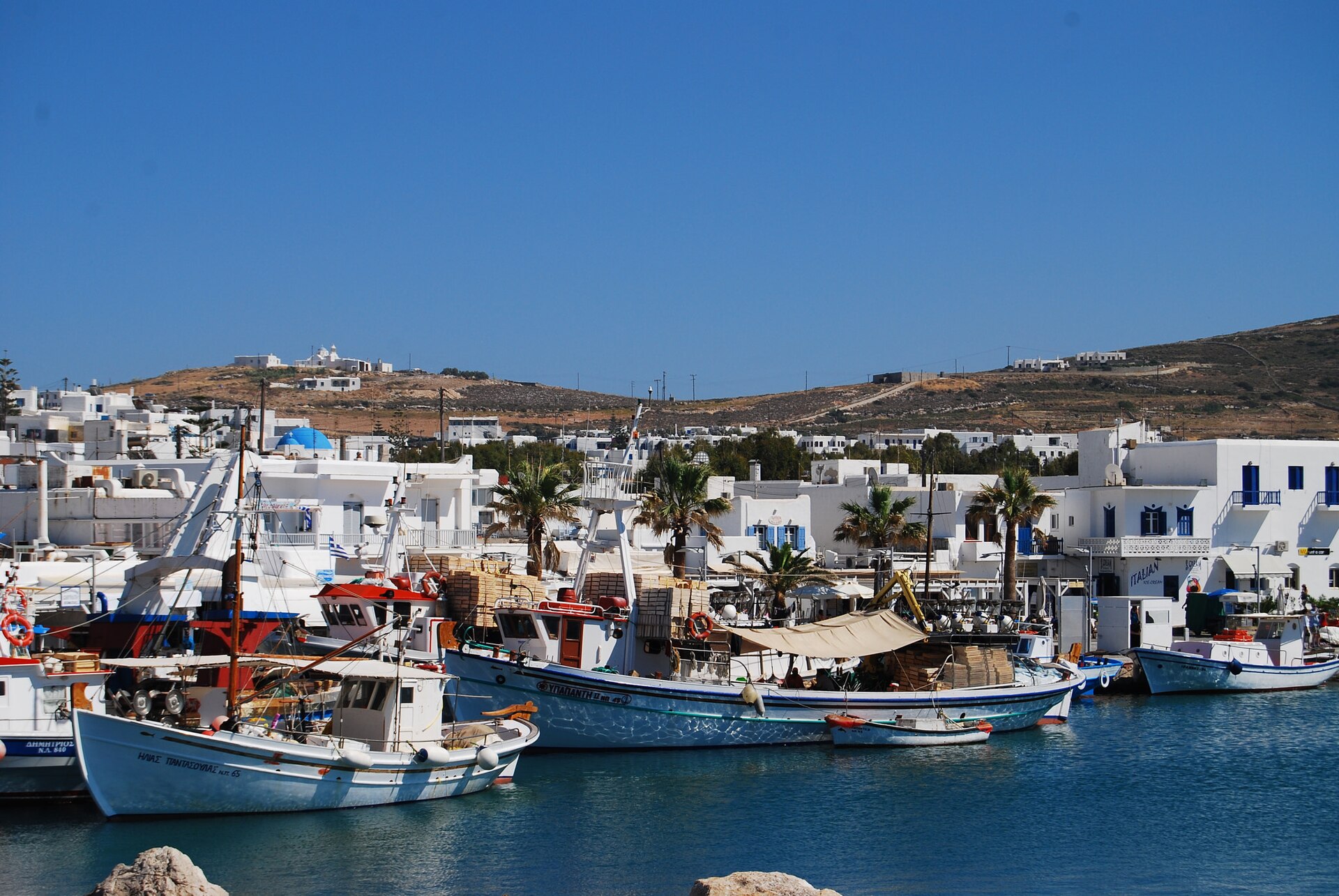
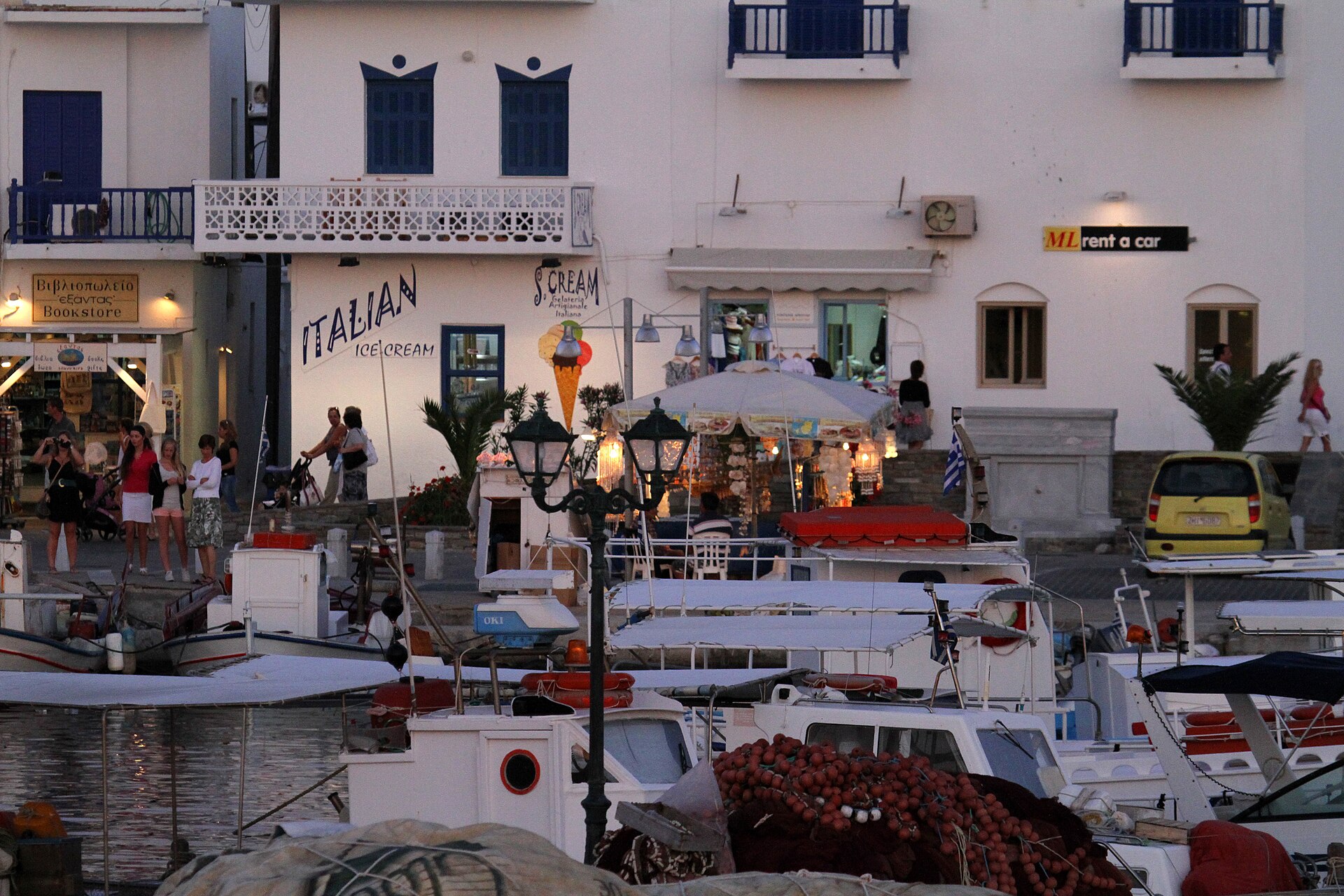
Since the 1990s Naousa has undergone a profound transformation, moving from a fishing village to a destination sought after by the international jet set without, however, losing its urban character. Around the old harbour, bars, starred restaurants and venues that stay open until dawn during high season are concentrated, while the streets of the historic centre host design boutiques and art galleries. This double soul, popular by day and worldly by night, coexists without friction, helped by the almost religious respect the inhabitants maintain for the village's architecture and traditional rhythms.
When to go
The best season to visit Naousa runs from late May to mid-October, when the weather is stable and most restaurants and accommodations are open. July and August bring the hottest days and the most intense nightlife, but also the greatest crowds and the highest prices; for those seeking a quieter atmosphere while still enjoying swimmable seas, June and September are the ideal compromise. In winter the village empties out almost completely and many businesses close, but those who love off-season places can still appreciate the authenticity of this fishing village.
- Stroll at sunset along the pier of the old harbour, among the colourful wooden boats
- Swim among the granite formations of Kolymbithres
- Take a caique to Santa Maria to try windsurfing or kitesurfing
- Dine on fresh fish at a taverna on the pier
- Climb up to the village of Lefkes among windmills and marble lanes
- Attend the late-August patronal feast with its naval reenactment
- Visit the Marathi marble quarries, source of the famous Parian stone
- Go shopping among the boutiques and craft workshops of the historic centre
FAQ
Come si arriva a Naousa da Atene?
Quanti giorni servono per visitare Naousa e dintorni?
Dove si parcheggia a Naousa in alta stagione?
Naousa è adatta alle famiglie con bambini?
Cosa vedere a Naousa in un solo giorno?
Naousa è adatta anche agli animali domestici?
Getting there
- Aeroporto di Paros (PAS) - circa 10 km da Naousa
- Aeroporto Internazionale di Atene - collegamento via traghetto o volo interno per Paros
- Naousa è collegata a Parikia e al resto dell'isola da una strada asfaltata di circa 10 km; in alta stagione è attivo un servizio di autobus KTEL frequente tra Parikia, Naousa e le principali spiagge.
- In alta stagione prenotare con largo anticipo traghetti e alloggi: i collegamenti verso Paros sono molto richiesti da luglio a fine agosto e i prezzi dei ferry veloci variano sensibilmente a seconda della compagnia e dell'orario.
Perfect for
Spiagge dalle acque cristalline, dalle rocce scolpite di Kolymbithres alle onde di Santa Maria per gli sport velici.
Un porto che porta i segni delle dominazioni veneziana e ottomana, con il castello sommerso e la festa che rievoca la lotta ai pirati.
Taverne sul molo, pesce fresco, formaggi di capra e distillati artigianali come la souma.
Bar e locali animano il porto vecchio fino a tarda notte in una delle mete più mondane delle Cicladi.
Un entroterra di vigneti, mulini a vento e villaggi di marmo come Lefkes, a pochi minuti dal mare.
To see
What to see in Naousa
Routes · Trovido Route