Megalokhori
Megalokhori, whose name literally means 'great village', is one of Santorini's best-kept secrets
Updated 7 July 2026
This season · July · Summer
What to do in Megalokhori now
The story
The story of Megalokhori
A Story of Merchants and Vineyards
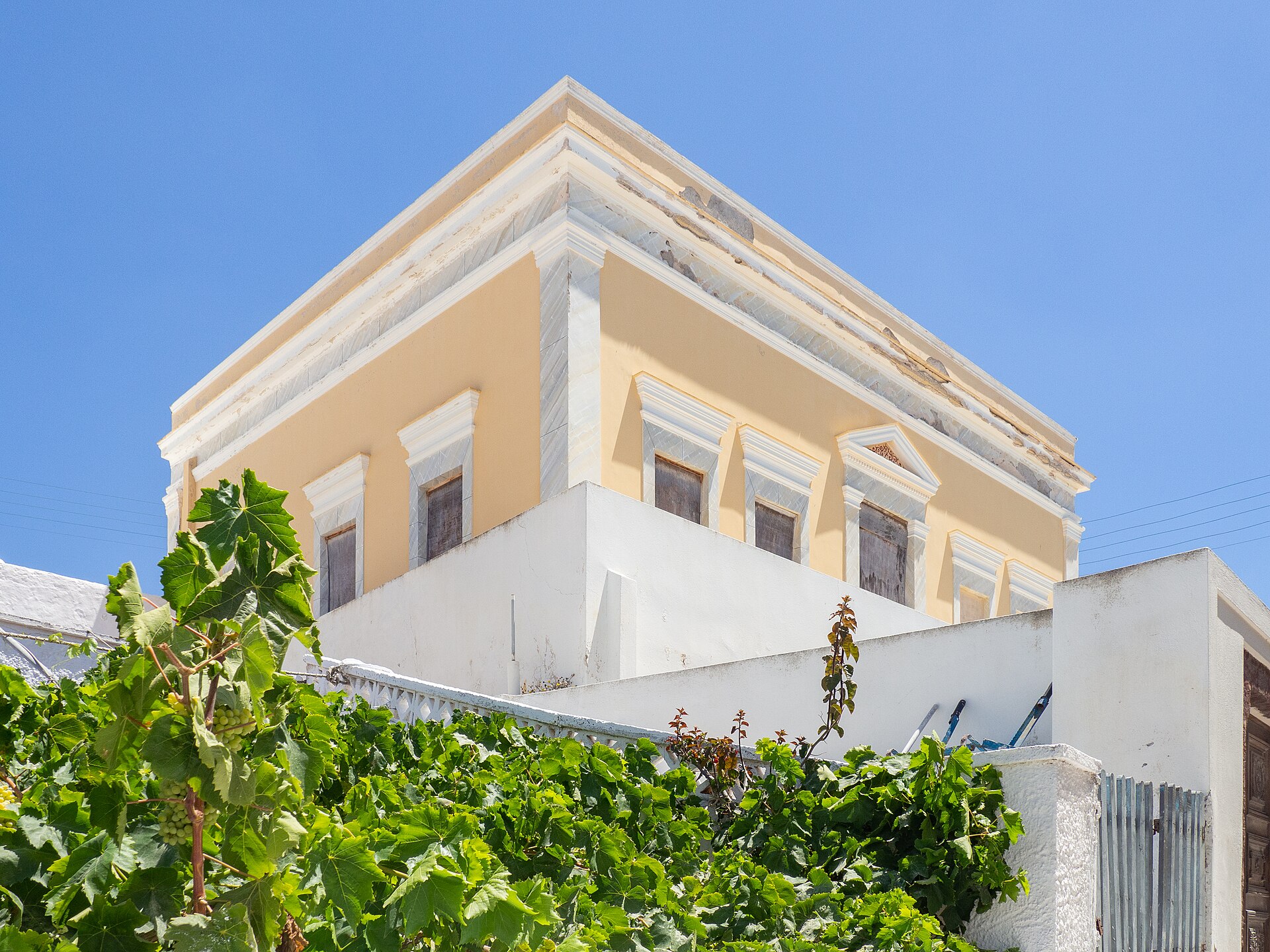
The origins of Megalokhori date back at least to the seventeenth century, a period in which the village began to prosper thanks to the production and export of Vinsanto wine to markets in Russia and continental Europe. Unlike coastal villages, Megalokhori stands in a slightly inland position, a strategic choice dictated by the need to defend itself from the raids of pirates that plagued the Aegean. This commercial wealth left an indelible mark on the urban fabric: landowners and merchants had imposing palaces built, characterized by neoclassical influences that blend harmoniously with the vernacular style of the Cyclades. During Ottoman occupation and subsequent periods of transition, the village maintained a strong Greek identity, centered around its numerous churches and religious congregations that managed much of social and agricultural life.
The Architecture of Historic Residences
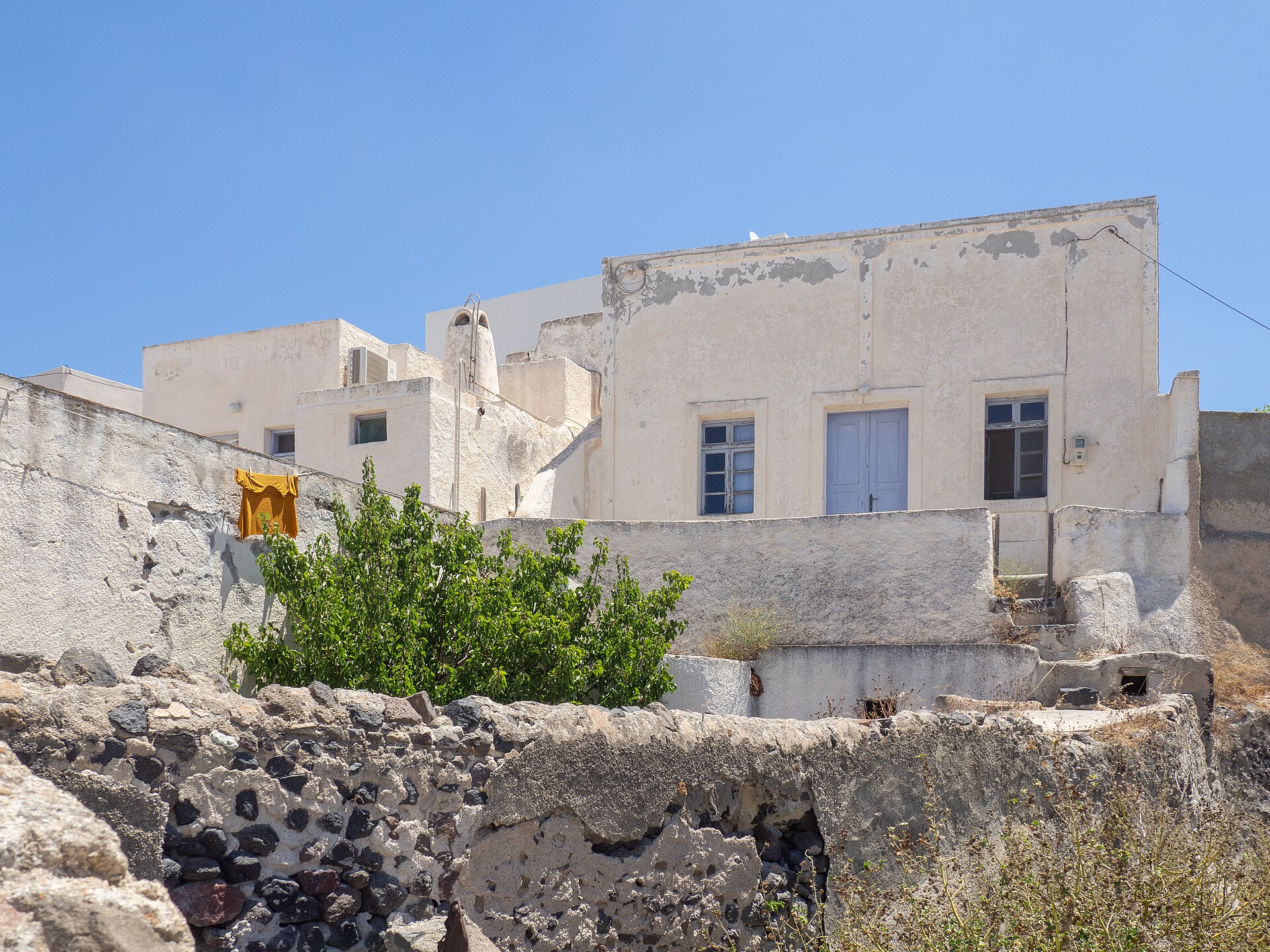
Walking through the center, one immediately notices the distinction between the 'canaves' (ancient cellars carved into rock) and the stately residences. The dwellings of Megalokhori are famous for their high boundary walls and heavy wooden gates, originally designed to protect families and wine reserves from ill-wishers. Many of these houses have been skillfully restored and transformed into boutique hotels or private villas, while keeping original details intact such as external stone stairs, vaulted ceilings and inner courtyards paved with sea pebbles. This architectural stratification makes the village an open-air museum, where every corner reveals a detail of the noble life of a bygone era, in perfect balance between opulence and Cycladic simplicity.
The Church of Panagia Eisodion
Located in the pulsating heart of the village, the main church dedicated to the Presentation of the Virgin Mary (Panagia Eisodion) is a masterpiece of popular devotion. The building stands out for its imposing bell tower that rises above the surrounding white roofs. Inside, the atmosphere is intimate and solemn, dominated by a magnificent intricately carved wooden iconostasis and a series of exquisite Byzantine icons. A curiosity that fascinates visitors is the so-called 'calendar of saints', a collection of 365 miniature icons, one for each day of the year, which testifies to the deep religiosity of the local community. The square in front of the church is the main gathering place, where locals stop to chat in the shade of trees, keeping the village spirit alive.
Arched Bell Towers: Symbol of the Borough
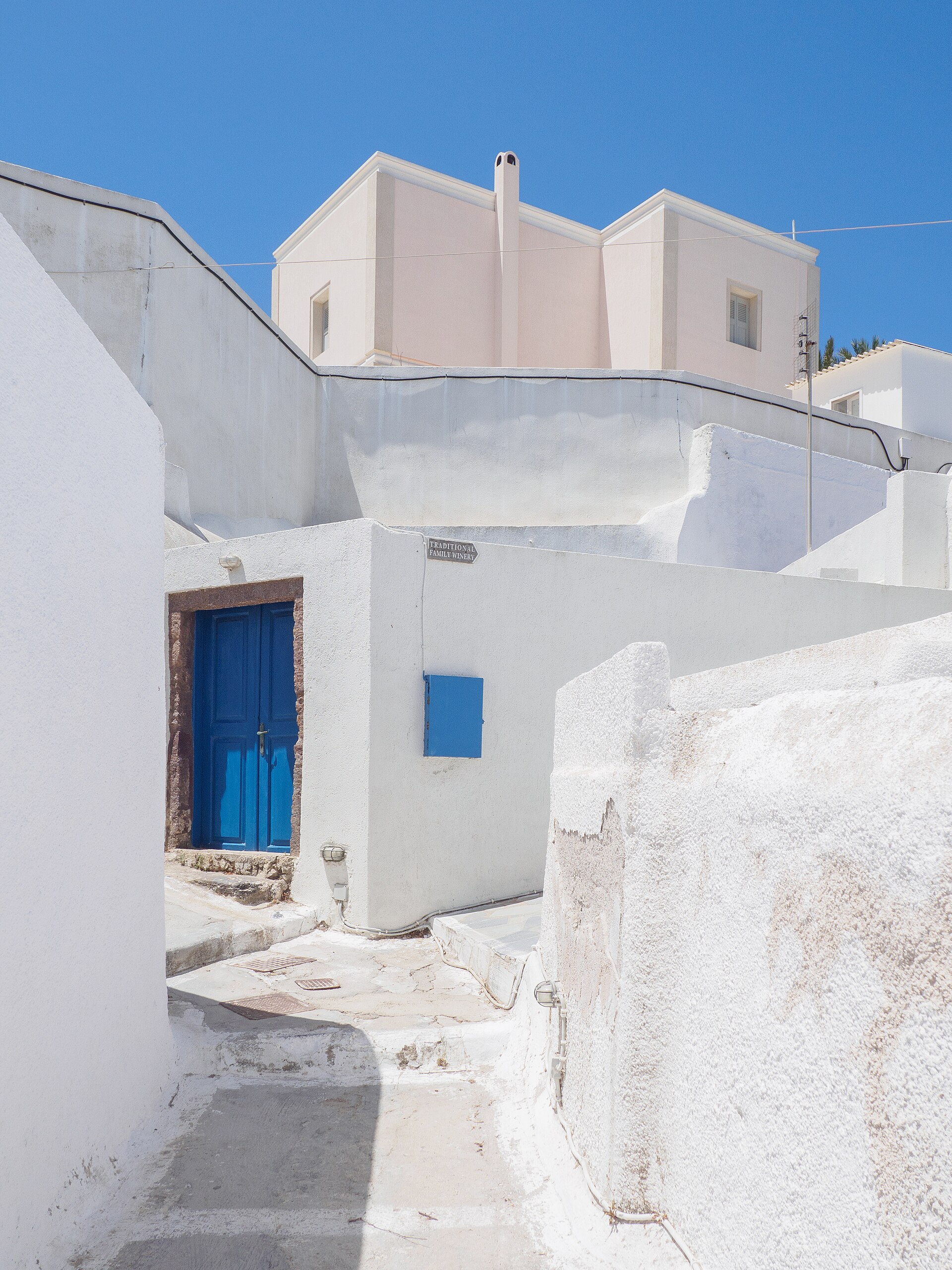
One of the most photographed and iconic elements of Megalokhori are its arched bell towers that span the narrow streets of the center. These structures, often painted in brilliant white that gleams under the sun, are not merely supports for bells, but true gateways that mark the passage between different quarters of the village. Their slender form and symmetrical openings create suggestive games of light and shadow, framing glimpses of blue sky and distant domes. They represent the ingenuity of local artisans who managed to transform a functional necessity into a decorative element of extraordinary elegance, becoming the trademark of Megalokhori's visual identity.
The Church of Agios Nikolaos on the Cliff
Just outside the inhabited center, following a path that winds toward the edge of the caldera, you reach the small church of Agios Nikolaos. This chapel is literally set into volcanic rock and offers one of the most spectacular and least crowded panoramas on the entire island. From here, the view spans the vastness of the Aegean Sea, the islands of Thirassia and Palea Kameni, and the submerged crater of the volcano. It is a place of absolute peace, where the sound of wind is the only companion. The descent to the church requires comfortable shoes, but the view of the sunset from this privileged point is an experience that well repays the short walk, away from the main tourist flows.
Historic Cellars and Santorini's Nectar
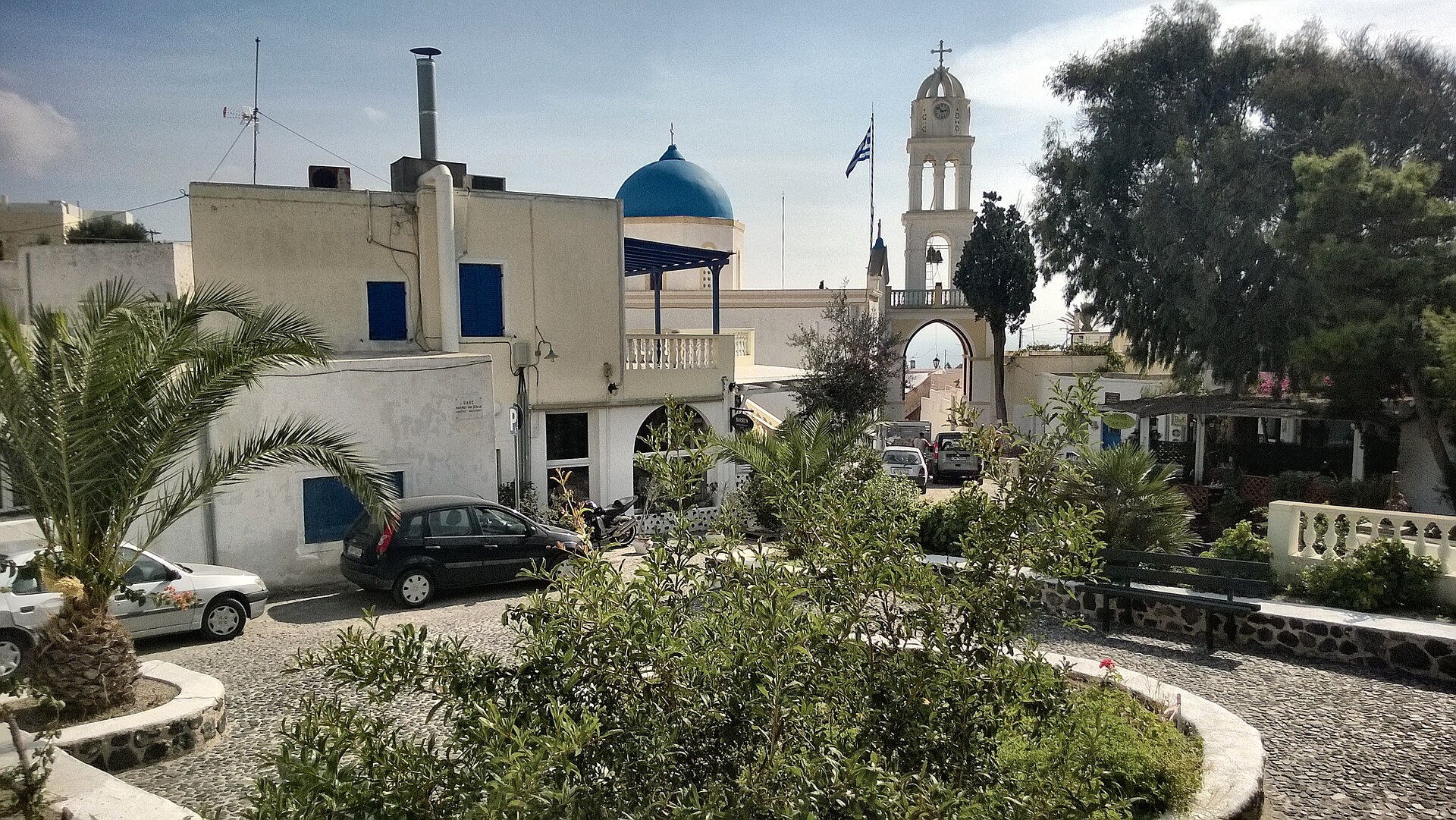
Megalokhori is considered the wine capital of Santorini. The village is home to some of the island's most renowned wineries, such as Boutari, Gavalas and Venetsanos. The Boutari winery, with its iconic white dome, offers tours explaining the particularity of volcanic 'terroir' and the 'kouloura' cultivation method, where vines are interwoven in a low basket shape to protect bunches from strong winds and drought. The Gavalas winery, on the other hand, preserves a more traditional and family charm, located right in the center of the village. Tasting a glass of Assyrtiko, a mineral and vibrant white, or the sweet Vinsanto directly in the places of production is an unmissable ritual for understanding the very essence of this land.
The Heart of Santorini
In the immediate vicinity of Megalokhori, along the road leading toward the cliff, there is a natural rock formation that has become famous as 'The Heart of Santorini'. It is an opening in the lava rock that, when observed from the right angle, takes on the perfect shape of a heart, framing the intense blue of the sea below. It is a magical place, often chosen for marriage proposals or simply to take a symbolic photograph. Beyond the geological curiosity, the surrounding area allows you to observe up close the layering of volcanic ash and pumice, visually telling the story of the eruptions that shaped the island over millennia.
Landscape and Volcanic Nature
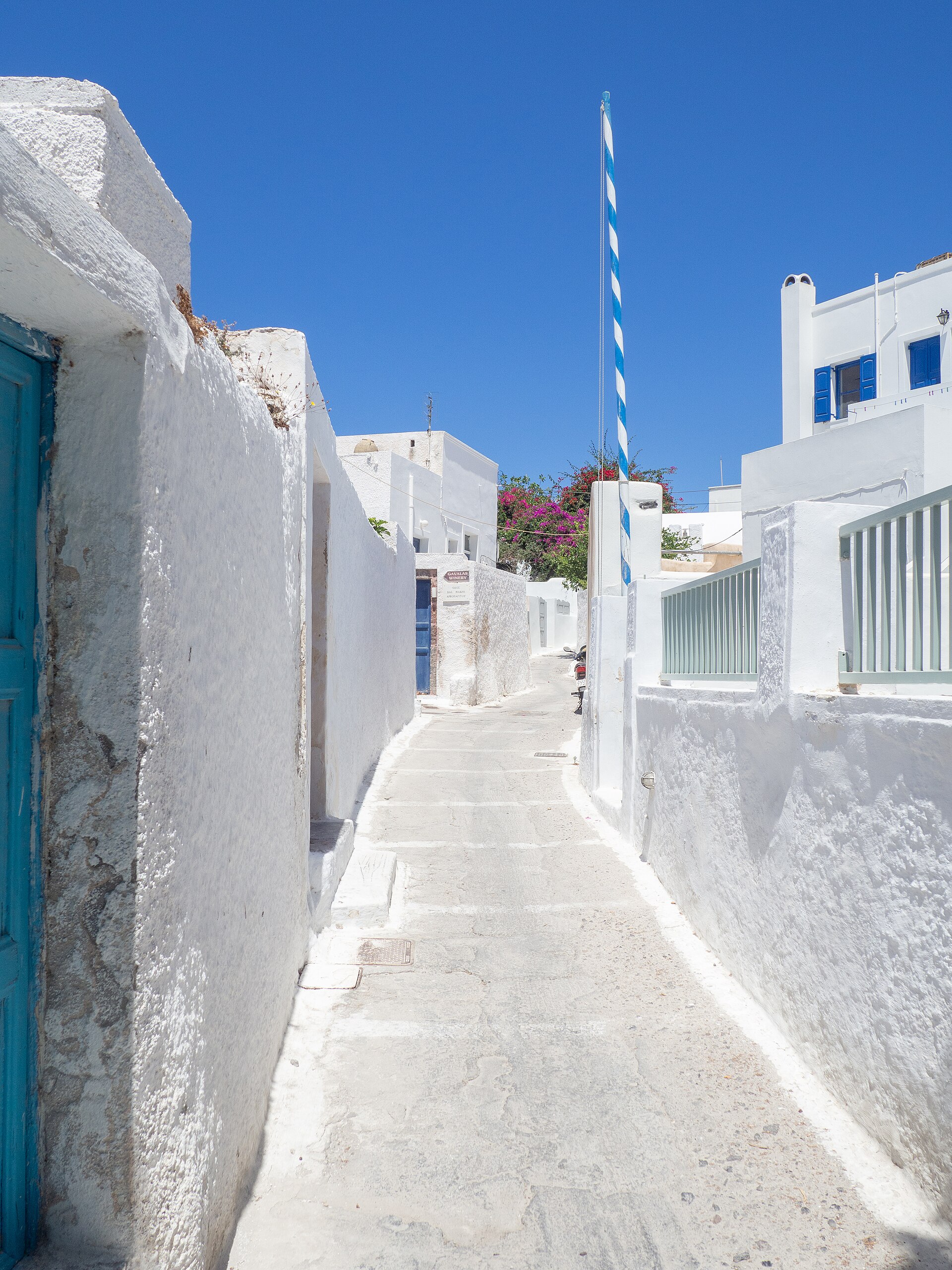
The landscape surrounding Megalokhori is dominated by gentle hills covered with vineyards as far as the eye can see. Here the soil is dark, porous, rich in minerals that give agricultural products unique flavors. There are no lush forests, but an arid and wild beauty made of prickly pear, wild capers that grow in the cracks of dry stone walls and small terraced gardens. Toward the coast, the terrain descends steeply into the sea with dark cliffs that show signs of primordial fire. Walking along the paths that connect Megalokhori to nearby villages, such as Pyrgos, allows you to appreciate the geological variety of the island and the tenacity of farmers who for centuries have cultivated these difficult but generous lands.
Traditions and Local Flavors
Megalokhori's culture is tied to religious festivals (panigiri) and traditional gastronomy. During celebrations, the squares fill with live music and communal meals. In the kitchen, the absolute protagonist is Fava of Santorini, a purée of cicerchia with a velvety flavor, usually served with chopped onion and capers. Equally famous are 'tomatokeftedes', fritters of local cherry tomatoes, incredibly sweet thanks to the volcanic soil. There are also white eggplants, unique to the island, and fresh fish that arrives every morning from nearby fishing ports. Concluding a meal with a glass of Vinsanto, accompanied by dry biscuits, is the best way to honor the village's hospitable tradition.
- Get Lost in the Alleys of the Historic Center to Admire Colorful Doors and Neoclassical Details.
- Visit the Gavalas Winery to Discover the Traditional Winemaking Process.
- Reach the Chapel of Agios Nikolaos at Sunset for a Breathtaking View of the Caldera.
- Search for the 'Heart of Santorini' Along the Paths Leading Toward the Cliff.
- Dine at One of the Taverns in the Main Square Under the Branches of a Large Plane Tree.
- Participate in a Pottery Class or Visit Local Craft Shops.
When to Go and How to Experience It
The best time to visit Megalokhori is undoubtedly spring (April-June) or early autumn (September-October). In these months the temperatures are mild, ideal for walks, and the village is not yet too crowded by day-trippers. Summer is hot and vibrant, perfect for those wanting to enjoy outdoor life, but it is advisable to explore the village in the early morning hours or after sunset. To experience Megalokhori at its best, the advice is to stay in one of the restored ancient 'canaves': waking up to the sound of bells and having breakfast in a secret courtyard is the most authentic way to connect with the deep spirit of Santorini.
FAQ
È possibile parcheggiare all'interno del villaggio?
Quanto tempo occorre per visitare Megalokhori?
Il villaggio è adatto a persone con mobilità ridotta?
Megalokhori è una buona base per esplorare l'isola?
Getting there
- Aeroporto Internazionale di Santorini (JTR) - 7 km
- Non presenti sull'isola
- Dalla capitale Fira, seguire la strada principale verso sud in direzione Perissa/Akrotiri; il villaggio è ben segnalato lungo il percorso.
- Il bus locale (KTEL) che collega Fira a Perissa o Akrotiri ferma regolarmente sulla strada principale di Megalokhori.
Perfect for
Il paradiso per gli amanti del vino, con cantine storiche che offrono degustazioni di vitigni autoctoni unici al mondo.
Un'atmosfera intima e silenziosa, perfetta per coppie che cercano scorci pittoreschi e tramonti privati lontano dalla folla.
Un viaggio nell'architettura delle Cicladi, tra palazzi neoclassici, chiese bizantine e antiche tradizioni contadine.
To see
What to see in Megalokhori
Routes · Trovido Route