Imerovigli
Suspended between the cobalt blue of the sky and the deep azure of the Aegean, Imerovigli rises on the highest crest of Santorini'...
Updated 7 July 2026
This season · July · Summer
What to do in Imerovigli now
The story
The story of Imerovigli
A tale of rocks, knights, and earthquakes
The history of Imerovigli is inseparably linked to its dominant geographical position. During the Middle Ages, under the rule of the Duchy of Naxos and the Republic of Venice, the village became the nerve center of Santorini's defense. The cornerstone of this power was the fortress of Skaros, a fortified settlement considered impregnable. For centuries, Imerovigli hosted Venetian nobility and Catholic authorities, serving as the political and religious capital of the island before the center shifted toward Fira. However, the volcanic nature of the territory profoundly shaped the village's fate: the violent earthquakes of the 18th century and finally the devastating 1956 earthquake forced inhabitants to abandon the ancient structures on the rock and rebuild the village on the caldera's crest. This resilience gave birth to the current urban layout, a skillful recovery of local traditions integrated with modern requirements of high-end hospitality.
Skaros Rock: the ancient sentinel
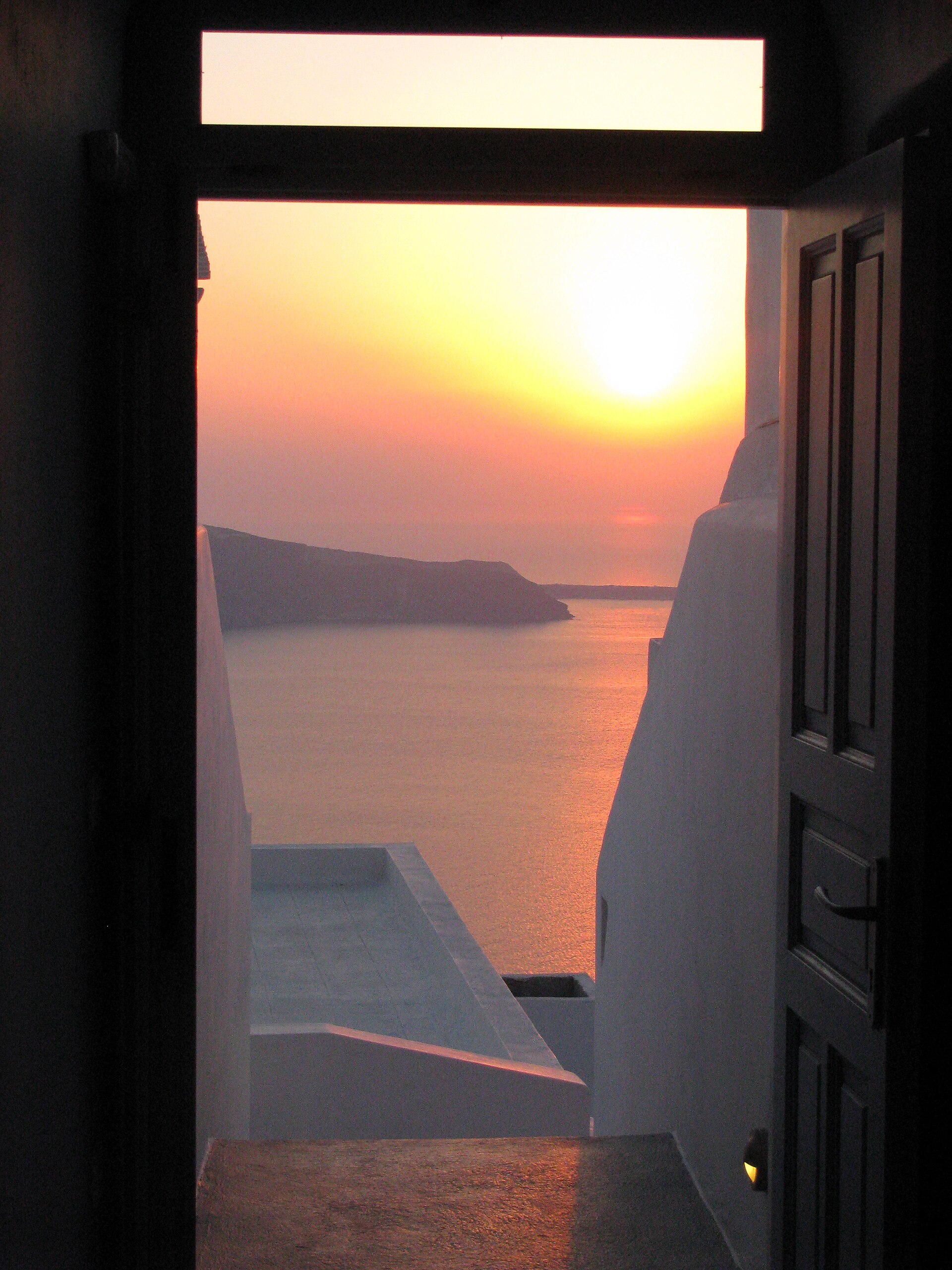
Skaros is not merely an imposing rocky promontory jutting into the sea, but the historical and symbolic heart of Imerovigli. In the 13th century, the Venetians built a fortified castle within it, complete with palaces, churches, and dwellings, making it the principal of five 'Kastelia' of Santorini. Its position was so advantageous that it was never conquered by force during over six hundred years of history. Today, following the path that descends from the village, you can still glimpse the remains of foundations and dry stone walls that once protected hundreds of people. Reaching its summit provides a vertiginous and powerful sensation, offering a 360-degree view that helps explain why Venetian dukes chose this lava spur as their favorite residence.
The Church of Panagia Maltesa
Situated at the highest point of the village, the Church of Panagia Maltesa is one of the most significant religious monuments in Imerovigli. Its architecture is an excellent example of Cycladic style with neoclassical influences, characterized by an immaculate white façade and a finely worked sail-shaped bell tower. The church's name derives from a legend according to which its main icon was found at sea by a captain traveling toward Malta. The interior preserves a wooden iconostasis of fine craftsmanship, testament to the devotion and wealth of the local community in the 19th century. The square before the church is one of the privileged observation points for admiring the entire caldera, offering an ideal rest spot during afternoon strolls.
Theoskepasti: the church hidden by the sea
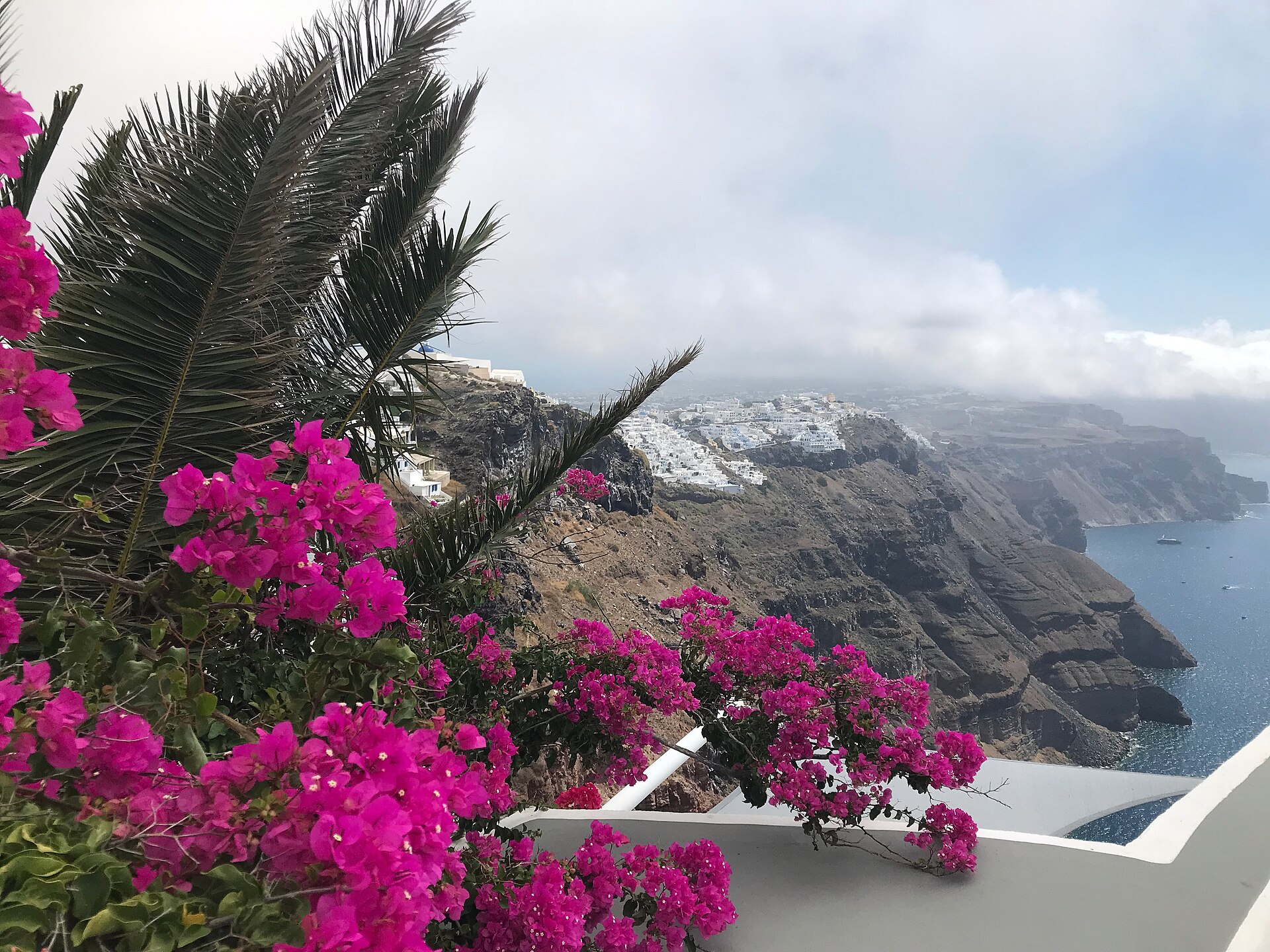
Continuing beyond Skaros rock, along a steep path descending toward the sea, you encounter the evocative chapel of Theoskepasti. Its name, meaning 'sheltered by God', evokes its sheltered and nearly invisible position from the village above. This small white church with its blue dome seems to defy gravity, perched on a natural terrace overlooking the marine abyss directly. It is a place of intense and solitary spirituality, far from main tourist flows. Here, the contrast between the pristine white of lime and the reddish-brown of volcanic rock creates an extraordinary visual impact, making it one of the most beloved subjects for photographers seeking the most authentic and wild essence of Santorini.
The Church of the Resurrection (Anastasi)
The Church of Anastasi is perhaps the most photographed building in Imerovigli, thanks to its iconic blue dome silhouetted against the horizon. Located in a central position, the church is surrounded by panoramic terraces offering an uninterrupted view of the volcano. Its structure is a compendium of the island's aesthetic: curved lines, softened angles, and wise use of the primary colors of the Greek landscape. Beyond its aesthetic value, Anastasi represents the focal point of the village's Easter celebrations, a moment when the community gathers and the village illuminates with candles, creating a magical atmosphere suspended in time. Its beauty lies in the simplicity of its forms, which harmoniously dialogue with the grandeur of the surrounding environment.
The architecture of 'Yposkafa' and modern design
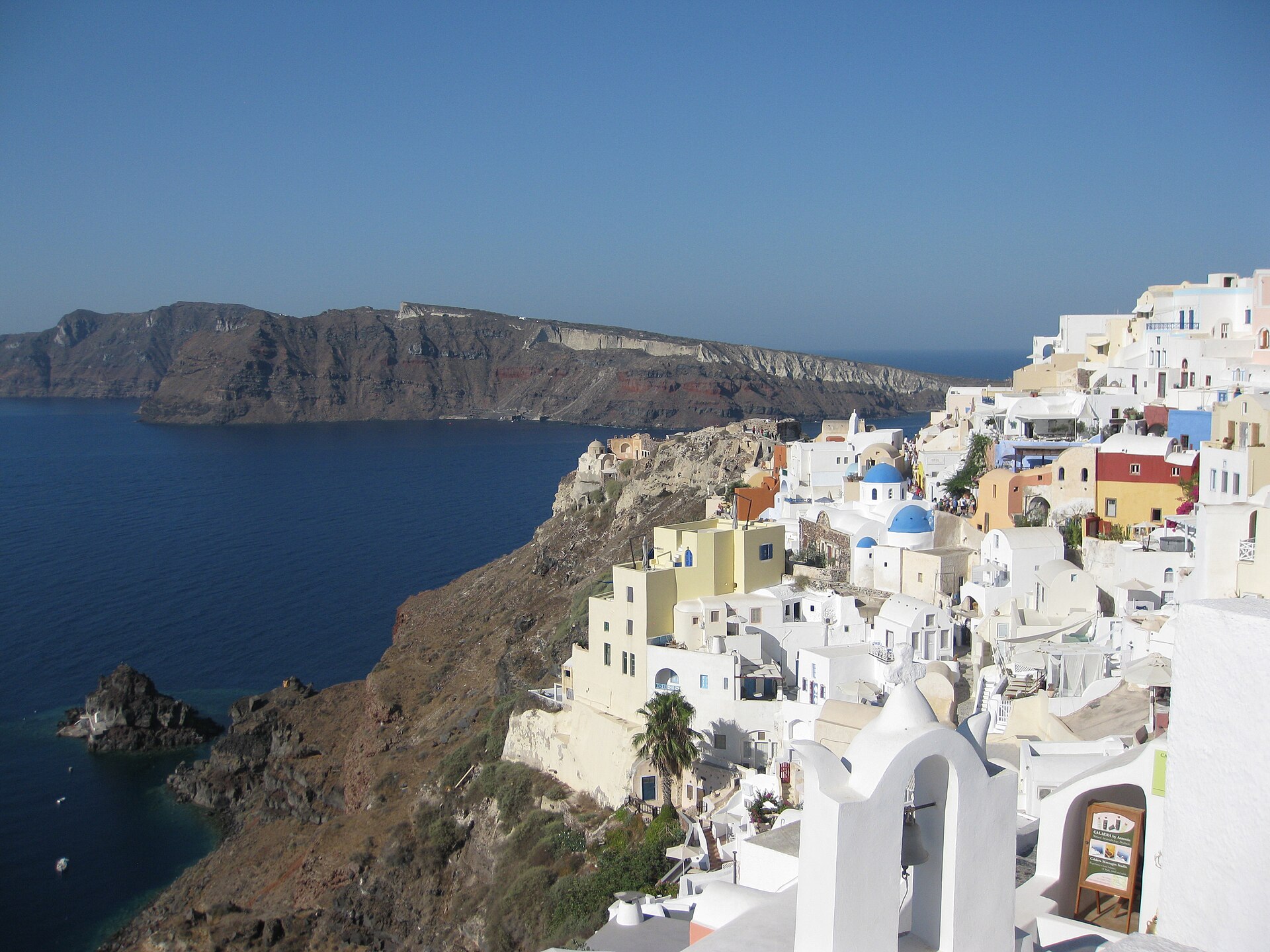
One of Imerovigli's distinctive characteristics is humanity's adaptation to terrain morphology through 'yposkafa'—typical houses carved directly from volcanic rock. Originally conceived as humble dwellings to shield from wind and heat, these structures have been transformed into charming residences and luxury hotels. Their natural thermal capacity makes them cool in summer and warm in winter. Strolling through the village streets, you notice how new architectural interventions have respected this tradition, using local materials like lava stone and pumice, integrating contemporary design and Cycladic minimalism. This unique style contributes to creating a coherent and harmonious aesthetic, where human work seems a natural extension of the cliff.
Must-see places in Imerovigli
- Skaros Rock: the excursion to the rock to explore the medieval castle ruins.
- The Fira-Oia Path: walk the section crossing Imerovigli, the most scenic stretch of the entire route.
- Church of Panagia Maltesa: admire its architecture and the view from the main square.
- Chapel of Theoskepasti: descend below Skaros to discover the church overlooking the abyss.
- The village alleys: lose yourself among staircases to discover hidden corners and colored doors.
- Monastery of Agios Nikolaos: located between Imerovigli and Firostefani, a place of peace and sacred art.
The landscape and volcanic nature
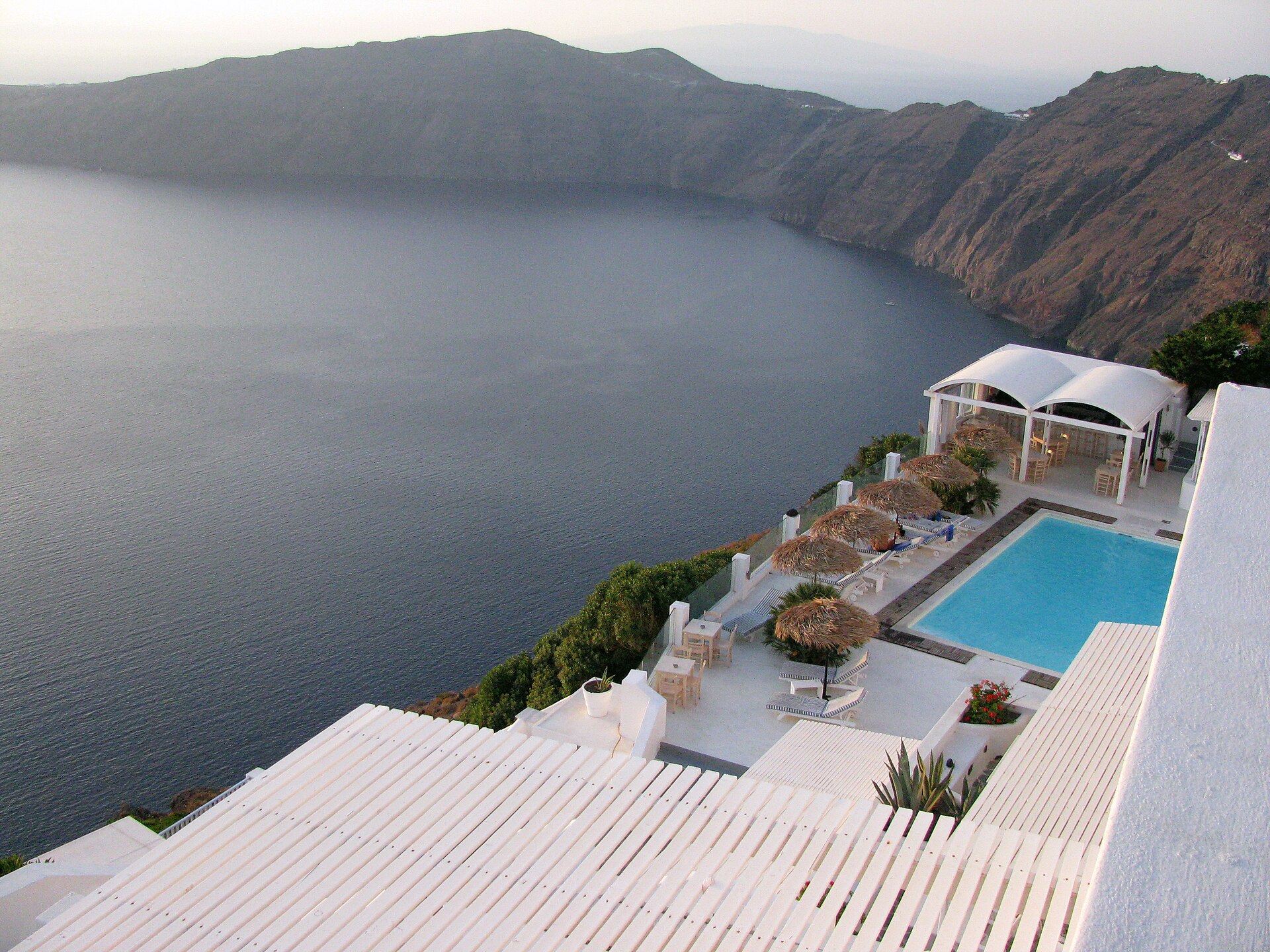
Imerovigli's landscape is dominated by the caldera, the enormous volcanic crater partially submerged following the Minoan eruption. Being located at the highest point of the rim, the view from here allows you to grasp the entire geometry of the island: the perfect curve of the cliff descending toward the sea and the contrast between the internal slope, steep and dramatic, and the external one, descending gently toward Vourvoulos's beaches. The vegetation is typical Mediterranean scrub, adapted to arid soil rich in minerals: aromatic herbs, prickly pears, and small vineyards that defy the wind. This wild and potent nature is Imerovigli's true protagonist, capable of transmitting a deep sense of connection with the primordial forces of the earth.
Traditions, flavors, and local culture
Imerovigli's culture is steeped in Santorini's agricultural and maritime traditions. Local cuisine reflects the richness of volcanic soil: the famous Santorini fava (a chickpea purée), sun-dried cherry tomatoes, and tomato meatballs (tomatokeftedes) are unmissable dishes. You cannot visit the village without tasting local wines, such as Assyrtiko, a mineral and vibrant white born from vines cultivated on the ground in basket form to protect them from wind. Religious celebrations, like the feast of Saint Nikolaos, remain to this day moments of authentic sharing, where the music of violins and lute accompanies traditional dances and communal meals, offering visitors a glimpse of the true soul of the island, beyond its tourist façade.
Living Imerovigli: tips and ideal moments
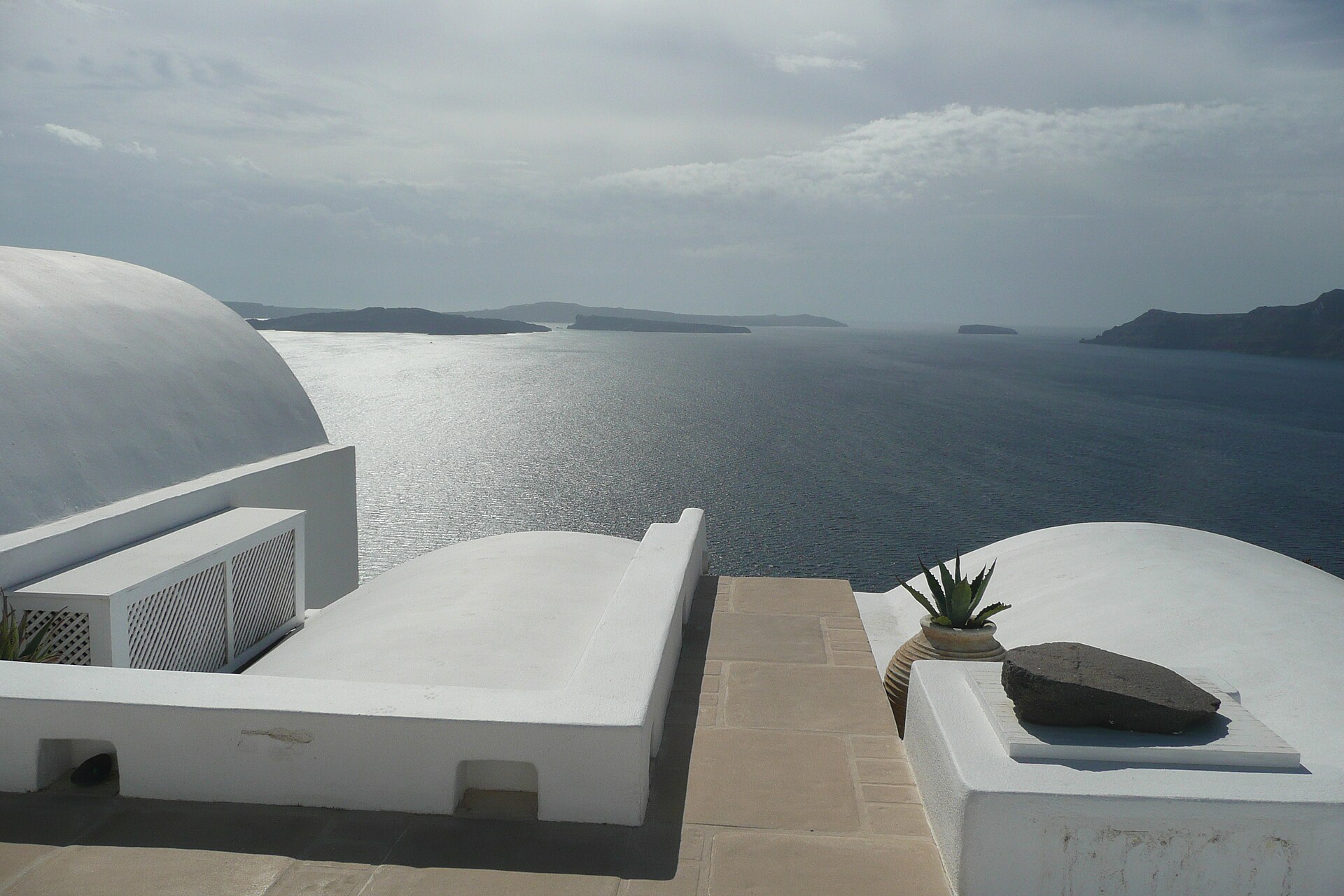
To fully enjoy Imerovigli's magic, the recommendation is to visit during shoulder seasons, such as May or October, when temperatures are mild and crowds are thinner. The best time of day is undoubtedly late afternoon: starting a walk toward Skaros as the sun begins to set allows you to see the rock change color, transitioning from gray to fiery red. Living Imerovigli also means allowing yourself the luxury of slowness: waking early to watch the sunrise illuminate the caldera in total solitude or enjoying dinner on a private terrace, far from the chaos of larger centers. It is a location perfectly suited to romantic stays or for those seeking an experience of mental and physical regeneration, immersed in a panorama that never ceases to amaze.
FAQ
Quanto tempo serve per visitare Imerovigli?
È difficile camminare a Imerovigli?
Dove si può parcheggiare?
Imerovigli è adatta alle famiglie con bambini?
Si può raggiungere Fira a piedi?
Getting there
- Aeroporto Internazionale di Santorini (JTR) - 8 km
- Non presenti sull'isola
- Da Fira seguire le indicazioni verso nord per circa 2 km lungo la strada costiera principale.
- Il modo migliore per spostarsi è il bus locale (KTEL) che collega regolarmente Imerovigli con Fira e Oia, evitando lo stress del parcheggio.
Perfect for
Perfetto per coppie in cerca di panorami mozzafiato, cene a lume di candela e tramonti indimenticabili in totale privacy.
Punto di partenza ideale per l'escursione alla Rocca di Skaros e tappa fondamentale del celebre sentiero panoramico Fira-Oia.
Un paradiso per i fotografi grazie ai contrasti cromatici tra le cupole blu, le pareti bianche e le rocce vulcaniche scure.
To see
What to see in Imerovigli
Routes · Trovido Route