Firostefani
Suspended between the crystalline blue of the sky and the cobalt blue of the Aegean, Firostefani reveals itself to the visitor as...
Updated 7 July 2026
This season · July · Summer
What to do in Firostefani now
The story
The story of Firostefani
Roots in rock: historical notes
Firostefani's history is intrinsically tied to the geological and political vicissitudes of the entire island of Thera. Arising as a residential extension northward from Fira's center, the village lived through centuries of Venetian rule, which left an indelible imprint on social organization and some architectural details, visible especially in the oldest residences. During the Middle Ages, the area was part of the Duchy of Naxos, and its elevated position served as a strategic observation point against pirate raids that plagued the Aegean. The terrible earthquake of 1956 marked a dramatic turning point: many original structures were damaged, but subsequent reconstruction was careful to preserve traditional charm, integrating ancient underground houses (the typical 'yposkafa' carved into rock) with modern solutions that respect the volcanic terrain's morphology.
The Church of Agios Theodoros and its iconic dome
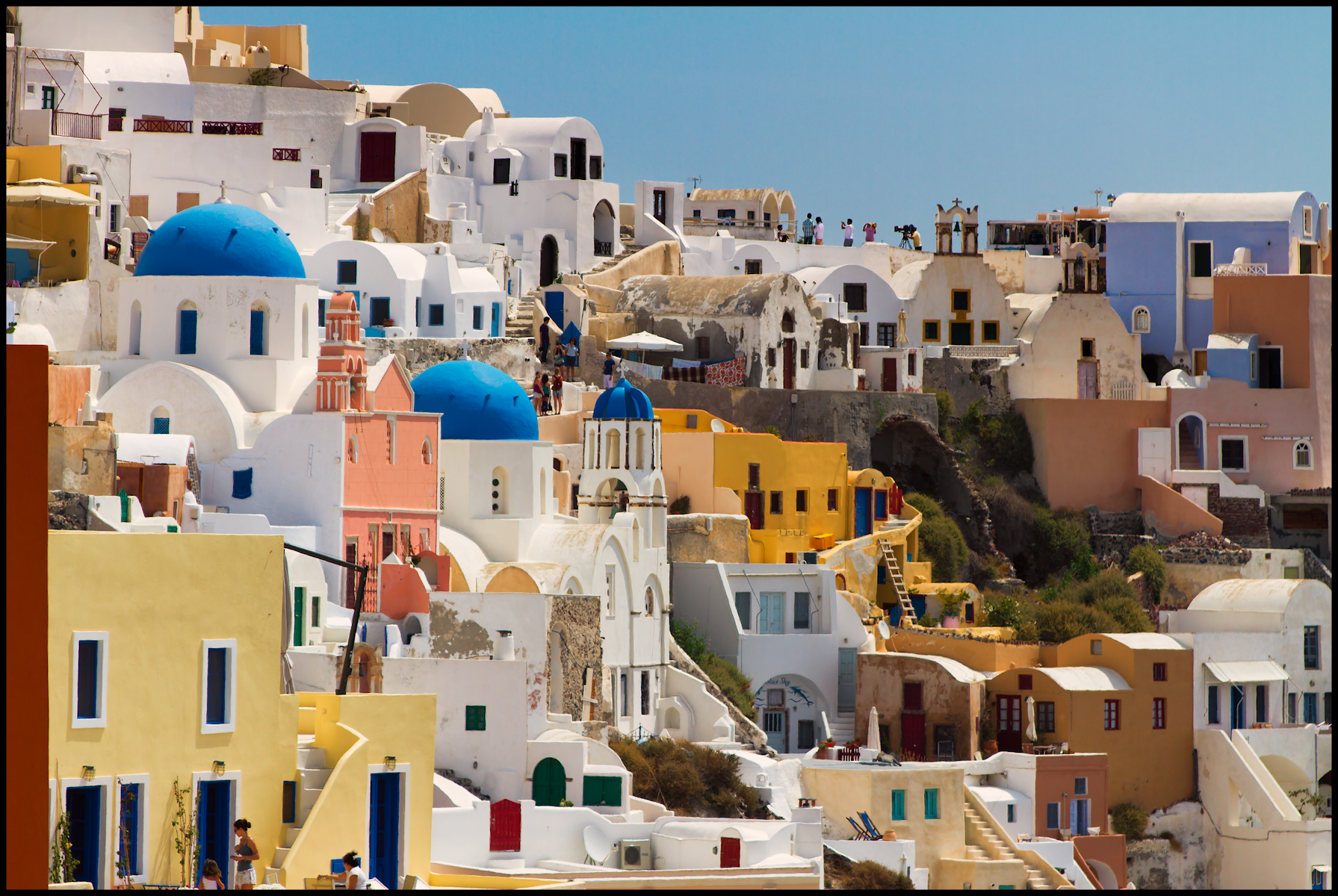
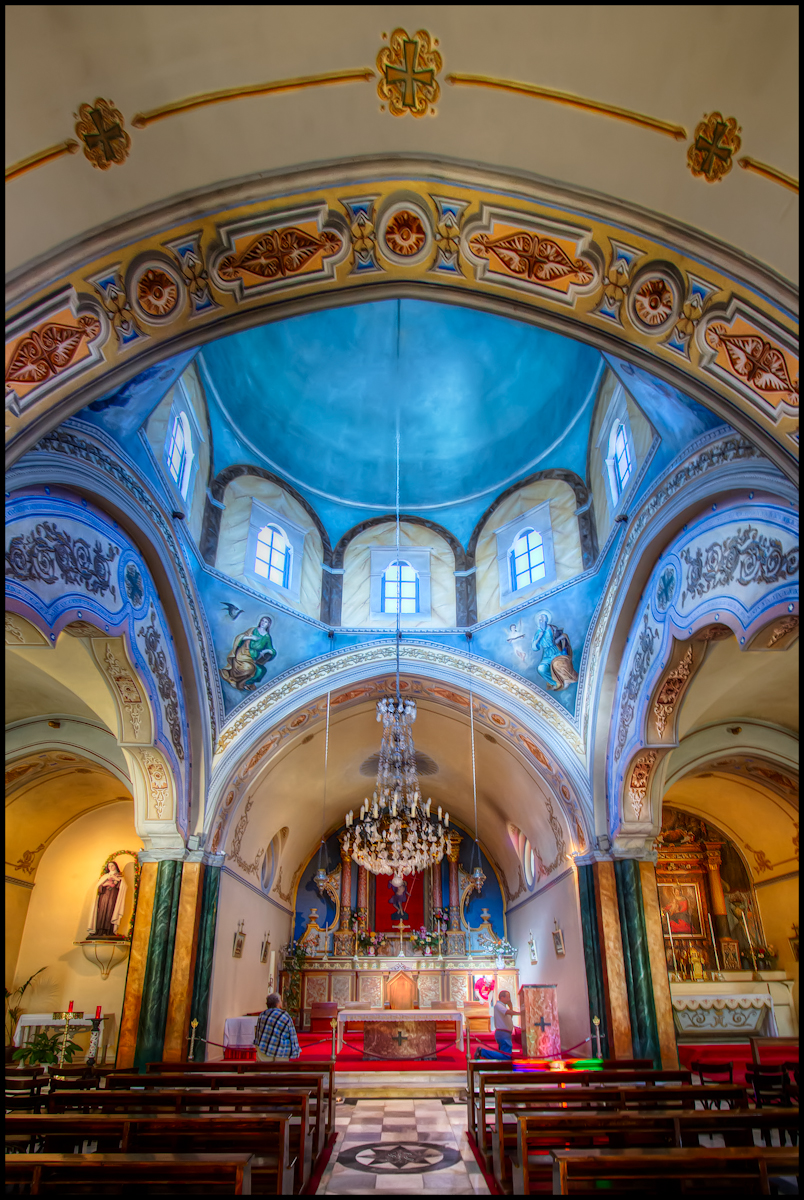
If an image exists that sums up Santorini's aesthetics worldwide, it is undoubtedly the church of Agios Theodoros in Firostefani. Characterized by a facade of delicate pastel yellow and a vibrant blue dome that stands out against the sea, this church is not merely a place of worship, but a fundamental visual landmark. Built in a position that seems to defy gravity, the church is famous for its three-bell bell tower that perfectly frames the volcano below. Despite its international fame, Agios Theodoros maintains an atmosphere of deep devotion; its clean lines and the simplicity of the interior reflect the humility of local Orthodox tradition, while simultaneously offering one of the most spectacular panoramic points of the entire caldera, especially during the golden hour, when light transforms the landscape into a living painting.
The Caldera path: the walk of the gods
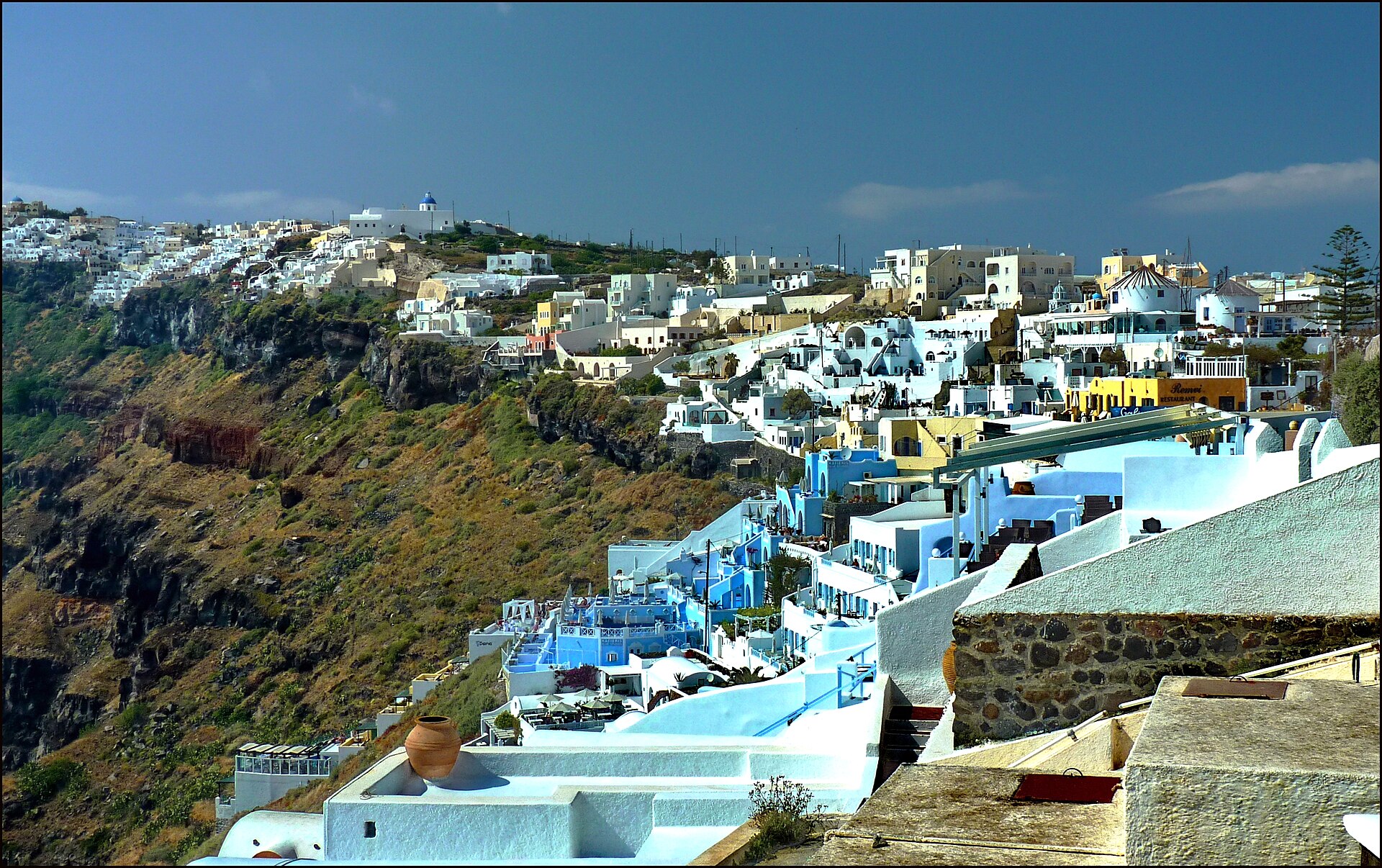
Firostefani is a crucial stop along the pedestrian path running along the caldera's edge, connecting Fira to Oia. This route is not a simple road, but a sensory experience that allows one to perceive the vastness of the volcanic collapse that occurred millennia ago. Walking along this path through Firostefani's territory, one appreciates the stratification of volcanic rocks, with their reddish, black, and gray tones contrasting with the whiteness of buildings. The path here is less crowded than central Fira, allowing for a more intimate and reflective walk. Along the way, one encounters small cafes overlooking the void and discreet boutiques, while the gaze constantly spans between Thirassia island and the black islets of Nea Kameni and Palea Kameni, tangible reminders of earth's power.
Underground architecture and historic dwellings
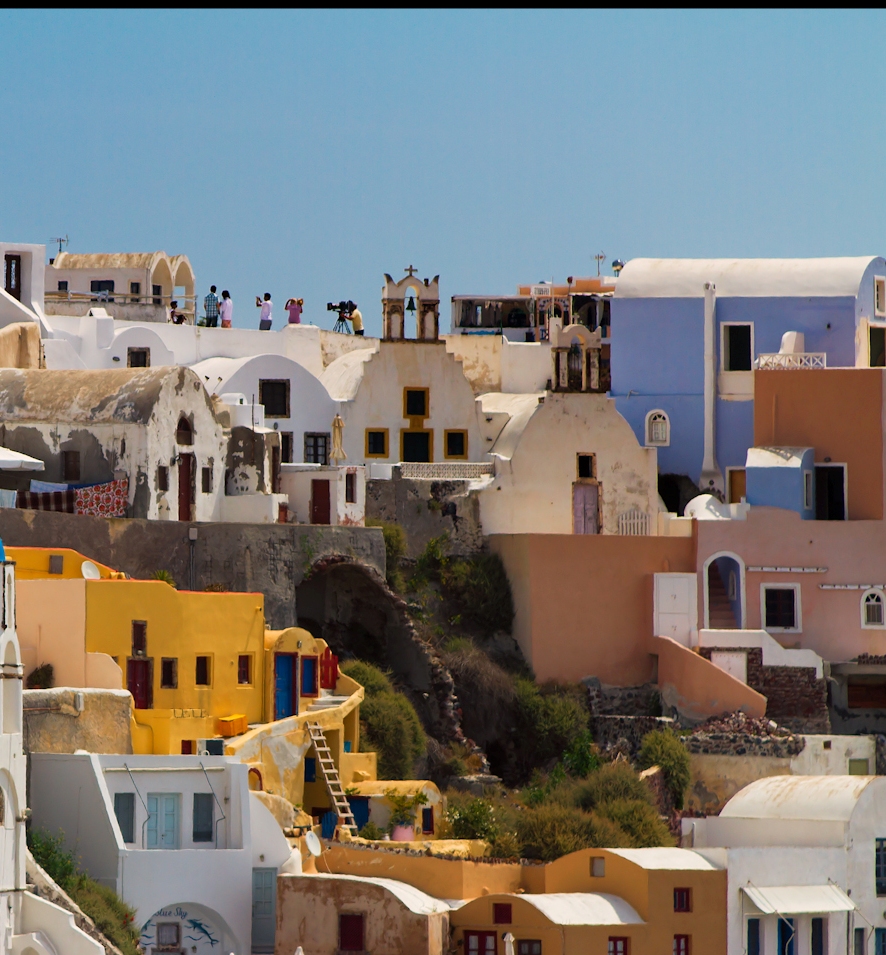
One of the most fascinating characteristics of Firostefani is the presence of 'yposkafa,' traditional dwellings carved directly into volcanic tuff. Originally born to protect inhabitants from wind and extreme temperatures, these cave houses have now been transformed into luxury hotels and charming residences. Their internal structure, characterized by barrel ceilings and irregular walls, offers natural thermal insulation and muffled acoustics that guarantee absolute peace. Beyond these humble but ingenious structures, Firostefani also hosts neoclassical palaces that testify to the wealth of shipowner and merchant families who once inhabited the area, creating a heterogeneous urban fabric where peasant simplicity meets bourgeois elegance in perfect equilibrium.
The Monastery of Agios Nikolaos
Located at the border between Firostefani and Imerovigli, the female Monastery of Agios Nikolaos is a place of silence and spirituality that deserves careful visitation. Founded in 1651 by the Gizi family, one of the few Orthodox families living in the predominantly Catholic neighborhood of the time, the monastery relocated in the 19th century to settle in its current position. Today it houses a precious collection of Byzantine icons and an interesting exhibition of ecclesiastical artifacts. The architecture of the complex, with its well-maintained interior courtyard and pristine white walls, conveys a sense of order and devotion. It is a place where tourist frenzy stops at the threshold, allowing visitors to better understand the central role that religion and monastic life played in preserving Greek identity during centuries of foreign domination.
The volcano's profile and geological landscape
Gazing from Firostefani means looking straight into the geological history of the Mediterranean. The unobstructed view of the islands of Nea Kameni and Palea Kameni is unparalleled. These dark lava formations, born from submarine eruptions following the great Minoan catastrophe, create a violent chromatic contrast with the electric blue of surrounding waters. The natural landscape here is not made of forests or rivers, but of mineral and austere beauty. The cliff beneath the village clearly shows the various overlaid lava flows, an open book for geologists and enthusiasts. This 'naked' and powerful nature conditions the atmosphere of the place, making every sunset not only an aesthetic event, but an almost mystical ritual of connection with the planet's primordial forces.
Unmissable experiences in Firostefani
- Watch the sunset from the Agios Theodoros terrace, when Oia's crowds are far away.
- Dine at one of the gourmet restaurants overlooking the caldera, sampling creative local cuisine.
- Walk the panoramic path toward Imerovigli in early morning.
- Visit the Archaeological Museum and Museum of Prehistory in nearby Fira (10 minutes on foot).
- Taste a glass of Assyrtiko wine while watching ships entering the natural harbor.
- Get lost in the interior staircases to discover hidden corners and hanging gardens blooming with bougainvillea.
Volcanic flavors: local gastronomy
The cuisine of Firostefani is a triumph of intense flavors, children of arid but generous land. Thanks to volcanic soil rich in minerals, local products possess unique organoleptic characteristics. One cannot claim to know the place without having tasted the 'Fava' of Santorini, a puree of local lentil with velvety consistency, or sun-dried cherry tomatoes, small and incredibly sweet. Firostefani's taverns often offer traditional dishes like 'tomatokeftedes' (tomato fritters) and fresh fish caught in the deep waters of the Aegean. All must be accompanied by the island's wines, such as Assyrtiko, a dry white mineral wine that encapsulates the taste of sea and ash, or the sweet Vinsanto, perfect for concluding a dinner under the stars.
When to visit and how to experience the village
The best time to visit Firostefani is undoubtedly shoulder season, in the months of May, June, September, and October. During this timeframe, the climate is mild, days are long, and most importantly, the village recovers that dimension of tranquility that makes it special, avoiding the overcrowding of July and August. Experiencing Firostefani means adopting a slow rhythm: waking with light entering eastward-facing windows, enjoying an outdoor breakfast gazing at the sea as it awakens, and dedicating the hottest hours to rest or reading. In the evening, the village is illuminated with soft lights, transforming into a romantic and muffled place, ideal for those seeking an escape from reality in a context of absolute and timeless beauty.
FAQ
Quanto dista Firostefani dal centro di Fira?
È facile trovare parcheggio a Firostefani?
Firostefani è adatta alle famiglie con bambini?
Si vede bene il tramonto da qui?
Getting there
- Aeroporto Internazionale di Santorini (JTR) - 6 km
- Dall'aeroporto o dal porto di Athinios, seguire le indicazioni per Fira e proseguire verso nord in direzione Imerovigli/Oia.
- Il modo migliore per raggiungere Firostefani dal porto o dall'aeroporto è il taxi o un transfer privato, data la conformazione delle strade e la difficoltà di parcheggio.
Perfect for
Perfetto per coppie in cerca di panorami mozzafiato, cene a lume di candela e un'atmosfera intima e raffinata.
Un vero paradiso per i fotografi, grazie ai contrasti cromatici tra le cupole blu, le pareti bianche e il tramonto vulcanico.
Ideale per chi vuole godersi Santorini lontano dal caos, preferendo il silenzio della caldera alla vita notturna frenetica.
To see
What to see in Firostefani
Routes · Trovido Route