Fira
Perched on the edge of a vertiginous precipice that plunges almost three hundred meters into the cobalt waters of the Aegean, Fira...
Updated 7 July 2026
This season · July · Summer
What to do in Fira now
The story
The story of Fira
Roots in stone: the story of Fira
Fira's history is intrinsically bound to Santorini's volcanic nature and its traumatic changes. Although the island was home to Minoan civilization, the city of Fira as we know it today began to develop only toward the end of the 18th century. In that period, inhabitants began to abandon the ancient castle of Skaros, located near present-day Imerovigli, which had been the medieval capital for centuries but had become too vulnerable to constant earthquakes. Under Venetian and later Ottoman rule, Fira grew as a center of commerce and spirituality, influenced by the presence of a strong Catholic community that left an indelible mark on the architecture of the Frankish quarter. The tragic earthquake of 1956 marked a turning point: much of the town was destroyed, but subsequent reconstruction, while modernizing infrastructure, preserved the Cycladic soul of the place, making it the tourist and administrative hub of the archipelago.
The Orthodox Metropolitan Cathedral
Dominating the southern part of the city with its imposing white mass and curved lines, the Metropolitan Cathedral of Ypapanti is one of Fira's strongest visual reference points. Originally built in 1827 and completely rebuilt after the 1956 earthquake, the church strikes visitors with its spacious exterior portico and the elegance of its bell towers. Inside, the atmosphere becomes hushed and solemn, enriched by frescoes created by local artist Christoforos Asimis, who reinterpreted Byzantine tradition with modern sensibility. The square in front is one of the favorite gathering places for visitors, not only for the religious significance of the site, but for the unparalleled view of the caldera enjoyed from its balustrades, especially during sunset hours when the whitewash takes on rosy tones.
The Catholic Quarter and the Cathedral of Saint John the Baptist
In the northern sector of Fira, a different air is felt, a legacy of the long Venetian influence on the Cyclades. Here stands the Catholic Cathedral dedicated to Saint John the Baptist, a Baroque jewel that stands out distinctly from the surrounding whiteness thanks to its cream and peach pastel tones and its elaborate bell tower with clock. Founded in 1823 and carefully restored after war and seismic damage, the cathedral represents the heart of the island's Catholic community. Strolling through the alleyways of this quarter, less crowded than the main shopping streets, allows one to discover historic palaces and convents, such as the Dominican Sisters' convent, which preserve an aristocratic and silent charm, testifying to the peaceful coexistence of different religious faiths over the centuries.
The Museum of Prehistoric Thera
For those wishing to understand the grandeur of the civilization that inhabited the island before the catastrophic eruption of the 17th century BC, the Museum of Prehistoric Thera is a must-visit destination. Located in a modern building near the bus station, the museum holds treasures found in the excavations of Akrotiri, the 'Pompeii of the Aegean'. Here are displayed the celebrated frescoes that decorated Minoan dwellings, such as the 'Blue Monkeys' or the 'Spring', which reveal surprising artistic refinement for the era. Beyond the murals, the museum displays painted ceramics, gesso furniture, and precious gold artifacts, offering a detailed glimpse into the daily life, commerce, and cosmology of a people who had dominated the sea long before Athens' rise.
Megaro Gyzi: culture and memory
Inside a lordly palazzo from the 17th century, one of the few spared by the 1956 earthquake's fury, lies the Megaro Gyzi Cultural Center. This space is not merely a museum, but a bridge between Santorini's past and present. Its rooms house permanent collections of ancient engravings, historical maps, and rare photographs documenting life on the island before and after the quake, offering a touching perspective on its inhabitants' resilience. During summer months, the palace's inner courtyard transforms into an exceptional stage for classical music, jazz concerts, and contemporary art exhibitions, making Megaro Gyzi the focal point of Fira's intellectual life and a place where architectural elegance meets modern creativity.
The Old Harbor and the staircase of 587 steps
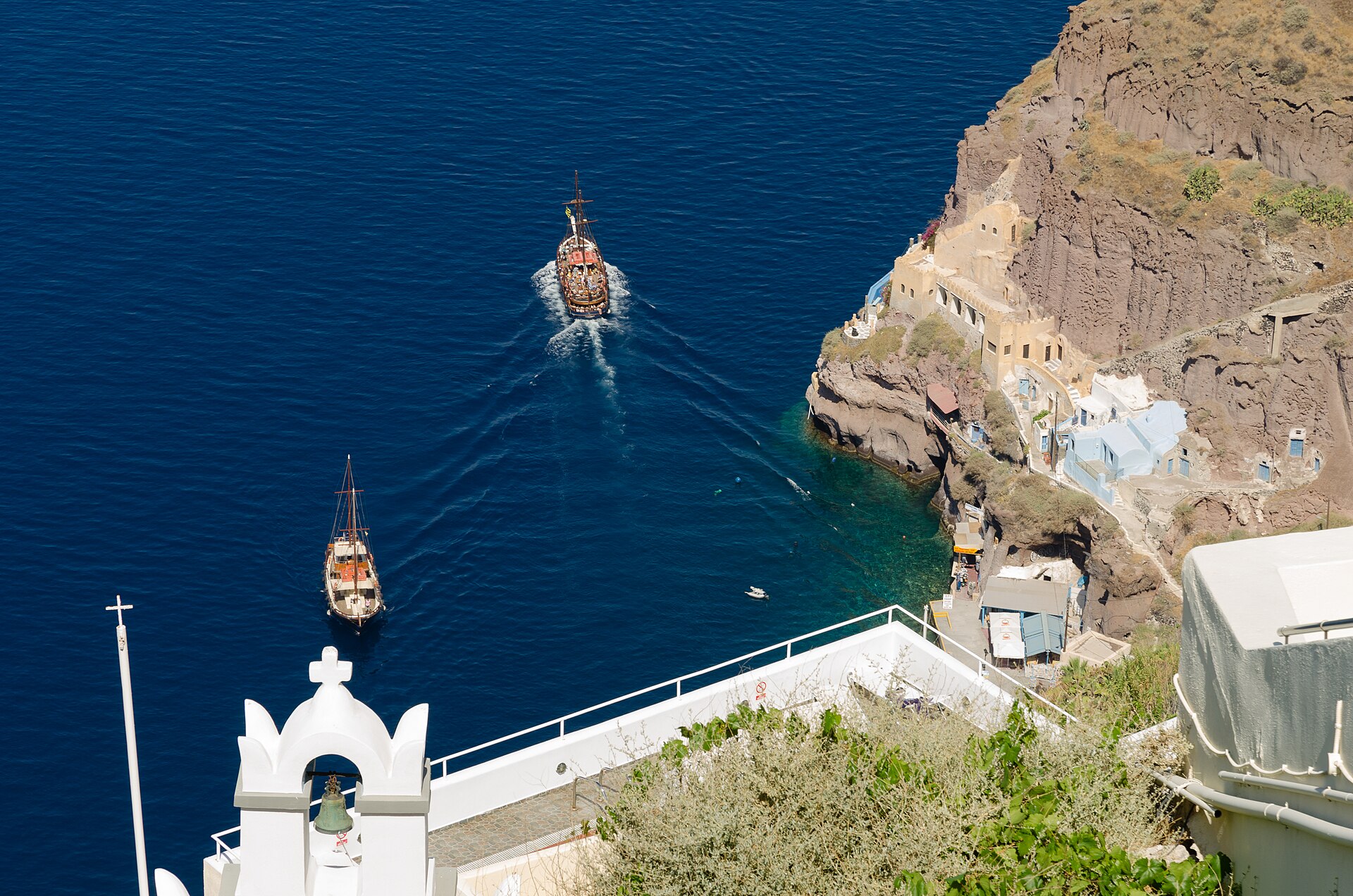
At the foot of the cliff on which Fira stands lies Gialos, the ancient commercial port today dedicated primarily to the docking of cruise ship tenders and boats carrying tourists toward the volcano. The connection between the city and harbor is an experience in itself: a long staircase of 587 stone steps that winds back and forth along the rocky wall. Historically traversed by mule, today these steps are a challenge for seasoned hikers, offering unique photographic views at every switchback. For those preferring a less strenuous ascent, the modern cable car allows one to cover the elevation in just minutes, offering a spectacular aerial view of the bay below and the geological stratifications of the cliff, which tell millions of years of volcanic activity.
The Archaeological Museum of Fira
Smaller than the prehistoric museum but equally significant, the Archaeological Museum focuses on artifacts from Ancient Thera, the city founded by Spartan colonists on Mount Mesa Vouno. The collection spans from the Archaic period to the Roman era, including sculptures, inscriptions, and vessels testifying to the island's strategic importance through the centuries. Of particular note are the large geometrical-style vases and kouroi statues, showing the influence of Cycladic and continental art. A visit here allows one to deepen understanding of the island's history, shifting focus from the Minoan era to the centuries when Santorini became a military and commercial outpost in the heart of the Aegean.
The landscape of the Caldera and panoramic trails
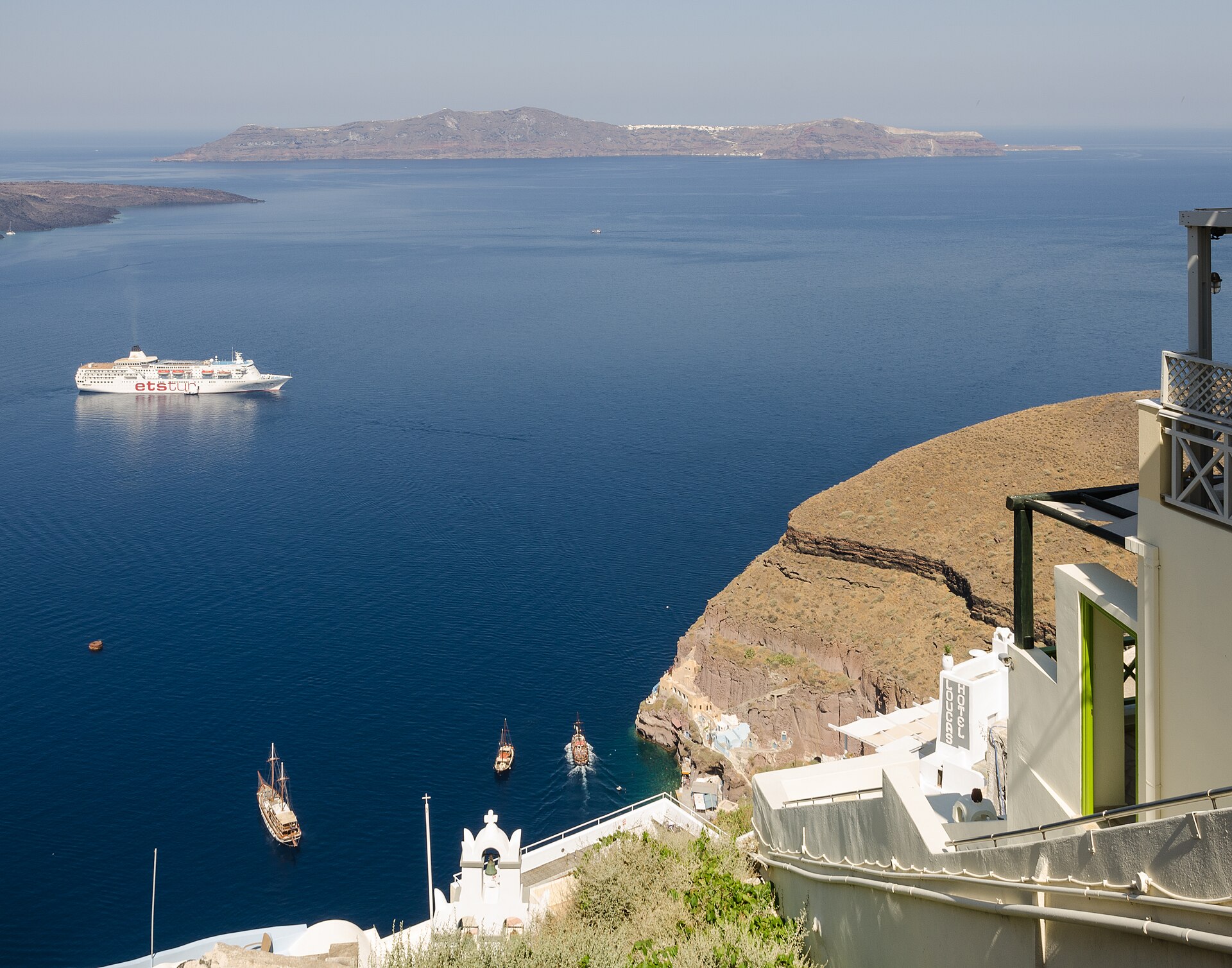
The true monument of Fira is the landscape itself. The city overlooks what is considered one of the largest and most spectacular calderas in the world, born from the collapse of the volcano's magma chamber. From Fira departs the celebrated pedestrian trail that runs along the cliff's edge, connecting the capital to Firostefani and Imerovigli in a walk of about half an hour. This path is an unfolding of breathtaking panoramas, where architecture 'carved' into the rock (the typical cave houses or yposkafa) blends with untamed nature. Looking toward the sea, one clearly distinguishes the islands of Nea Kameni, with its still-active craters, and Palea Kameni, known for its sulfurous thermal springs, ideal destinations for boat excursions allowing one to touch the primordial force of the earth.
Volcanic flavors and culinary traditions
Fira's gastronomy is the child of an arid but incredibly fertile land thanks to volcanic ash. Local products are few but excellent: Santorini's fava, a purée of cicerchia with velvety flavor; tiny cherry tomatoes, small and flavorful because grown without irrigation, stars of tomatokeftedes (tomato fritters); and white eggplant, sweet and low in seeds. One cannot say they have truly lived Fira without tasting its wines: the Assyrtiko, a mineral and vibrant white that captures the essence of sea and wind, and the Vinsanto, the sweet passito wine obtained from sun-dried grapes. Numerous wine bars overlooking the caldera offer guided tastings that are veritable sensory journeys through the island's rural culture.
Experiences not to miss in Fira
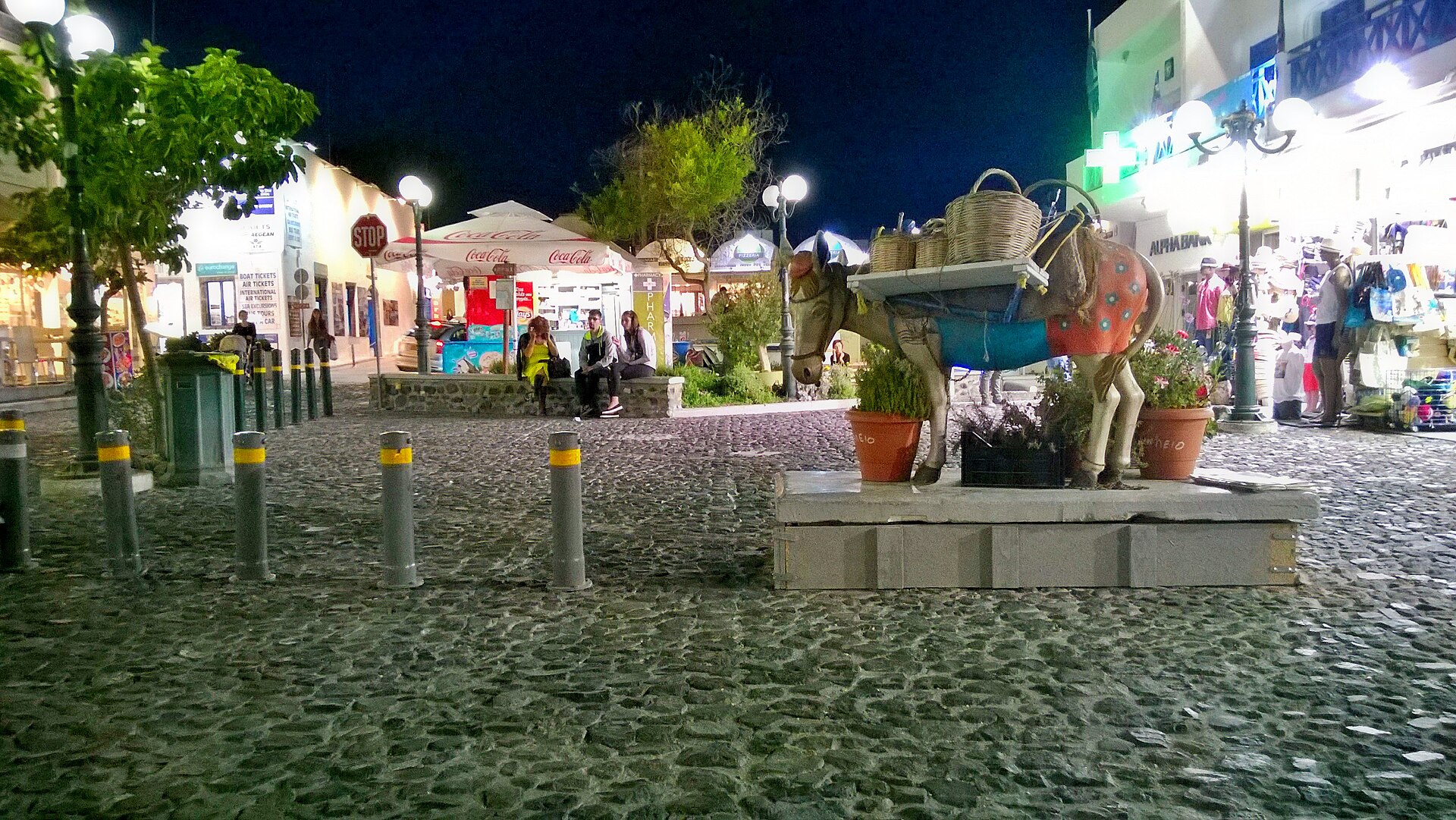
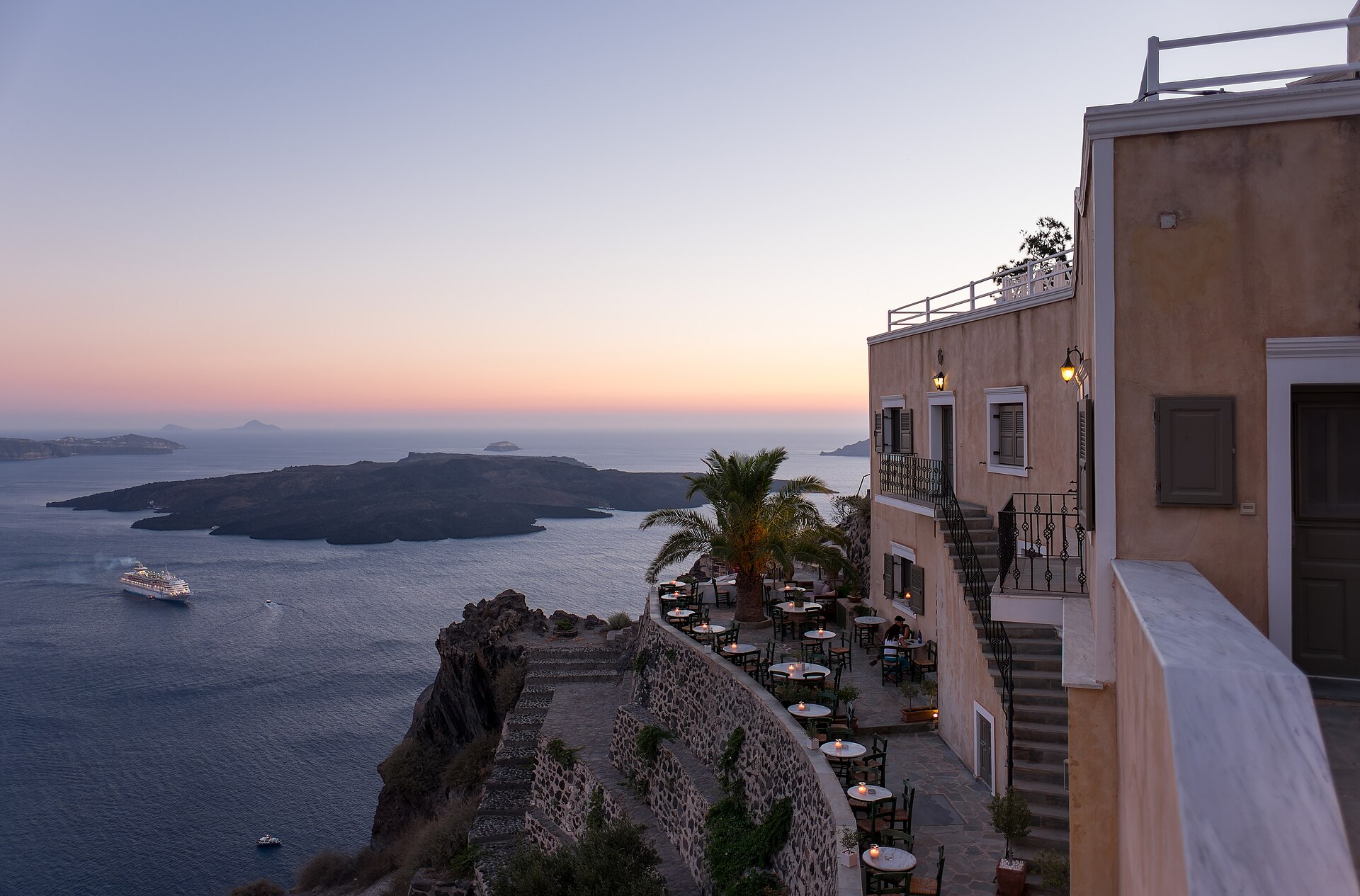
- Watch the sunset from a terrace overlooking the caldera, away from Oia's crowds.
- Walk the panoramic trail to Imerovigli to see the Skaros rock.
- Visit the Museum of Prehistoric Thera to admire masterpieces of Minoan art.
- Take the cable car down to the Old Harbor and observe the cliffs from below.
- Lose yourself in the alleys of the Catholic quarter seeking unique architectural glimpses.
- Savor a glass of Assyrtiko in one of the historic cellars or wine bars of the center.
When to visit and how to experience the city
The best time to visit Fira is late spring (May and June) or early autumn (September and October). In these months temperatures are ideal for walking, the light is clear, and crowds are manageable. High summer offers an electrifying atmosphere but can be very hot and chaotic, especially during cruise ship arrivals. To experience Fira at its best, the advice is to explore it early in the morning, when alleys are still silent and dawn colors render the landscape surreal, or late in the evening, when the lights of houses glow like thousands of candles along the cliff. Despite its tourist vocation, Fira preserves corners of authenticity if one ventures away from the main commercial streets, venturing toward residential areas where rhythms return to the slow pace of Greek islands.
FAQ
Quanto tempo serve per visitare Fira?
È difficile muoversi a piedi a Fira?
Dove si parcheggia a Fira?
Cosa vedere a Fira in un giorno?
Fira è adatta alle famiglie con bambini?
Getting there
- Aeroporto Internazionale di Santorini (JTR) - circa 5 km
- Non sono presenti linee ferroviarie sull'isola.
- Fira è il nodo centrale dell'isola; è collegata da strade asfaltate a tutti i principali centri e al porto di Athinios.
- Utilizzate gli autobus KTEL che partono dalla piazza centrale di Fira: sono economici, frequenti e collegano tutte le spiagge e i villaggi.
Perfect for
Fira offre una delle viste sulla caldera più ampie e spettacolari di tutta l'isola, perfetta per la fotografia.
Con i suoi due musei principali e le cattedrali, è il centro culturale e storico più importante di Santorini.
A differenza di altri villaggi più tranquilli, Fira è il cuore del divertimento con numerosi bar, club e ristoranti aperti fino a tardi.
To see
What to see in Fira
Routes · Trovido Route