Aliki
The name itself tells the oldest story of this place: "Aliki" comes from the Greek alykí, saltpan, the basin where sea water was o...
Updated 8 July 2026
This season · July · Summer
What to do in Aliki now
The story
The story of Aliki
From saltpans to the age of marble: the origins of Aliki
The history of Paros is a story of stone and sea. The island was inhabited from the Cycladic Bronze Age, when communities of the northern Aegean developed a refined culture known for marble idols with essential forms. In later centuries Paros became a maritime and commercial power, founded colonies such as Thasos and minted its own coinage, but its fame in the ancient world was tied above all to one resource: Parian marble, or lychnites, quarried from the island's interior and considered among the purest and most translucent in the Mediterranean. Aliki, with its sheltered natural harbor, was for centuries one of the ports from which marble blocks were shipped to the workshops of sculptors working for temples and rulers. Byzantine rule followed, then Venetian rule under the Duchy of the Archipelago, and finally Ottoman rule, until Greek independence: a succession of eras that the village passed through while remaining what it had always been, a small haven for fishermen and seafaring workers.
The harbor and the daily life of the fishermen
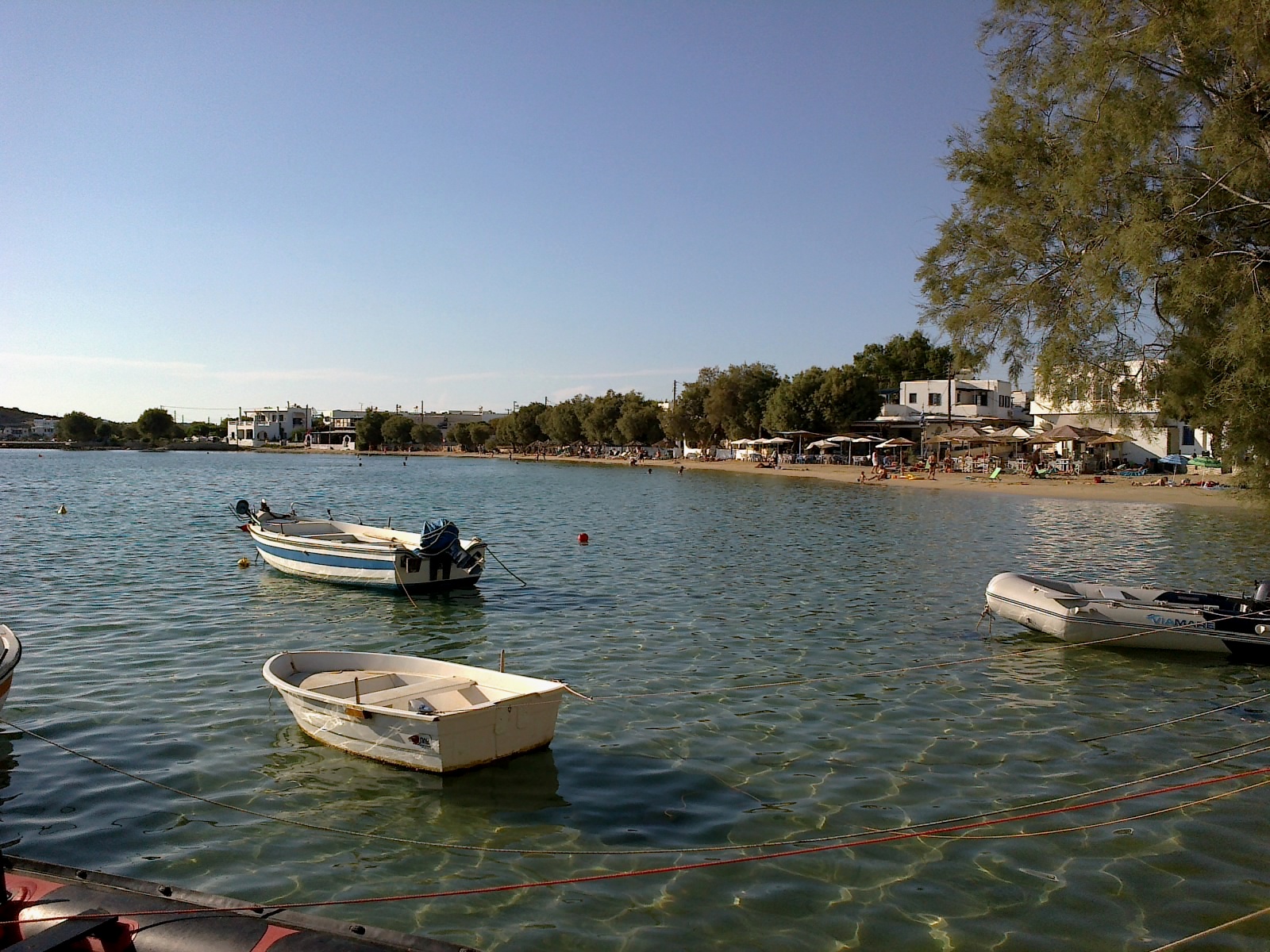
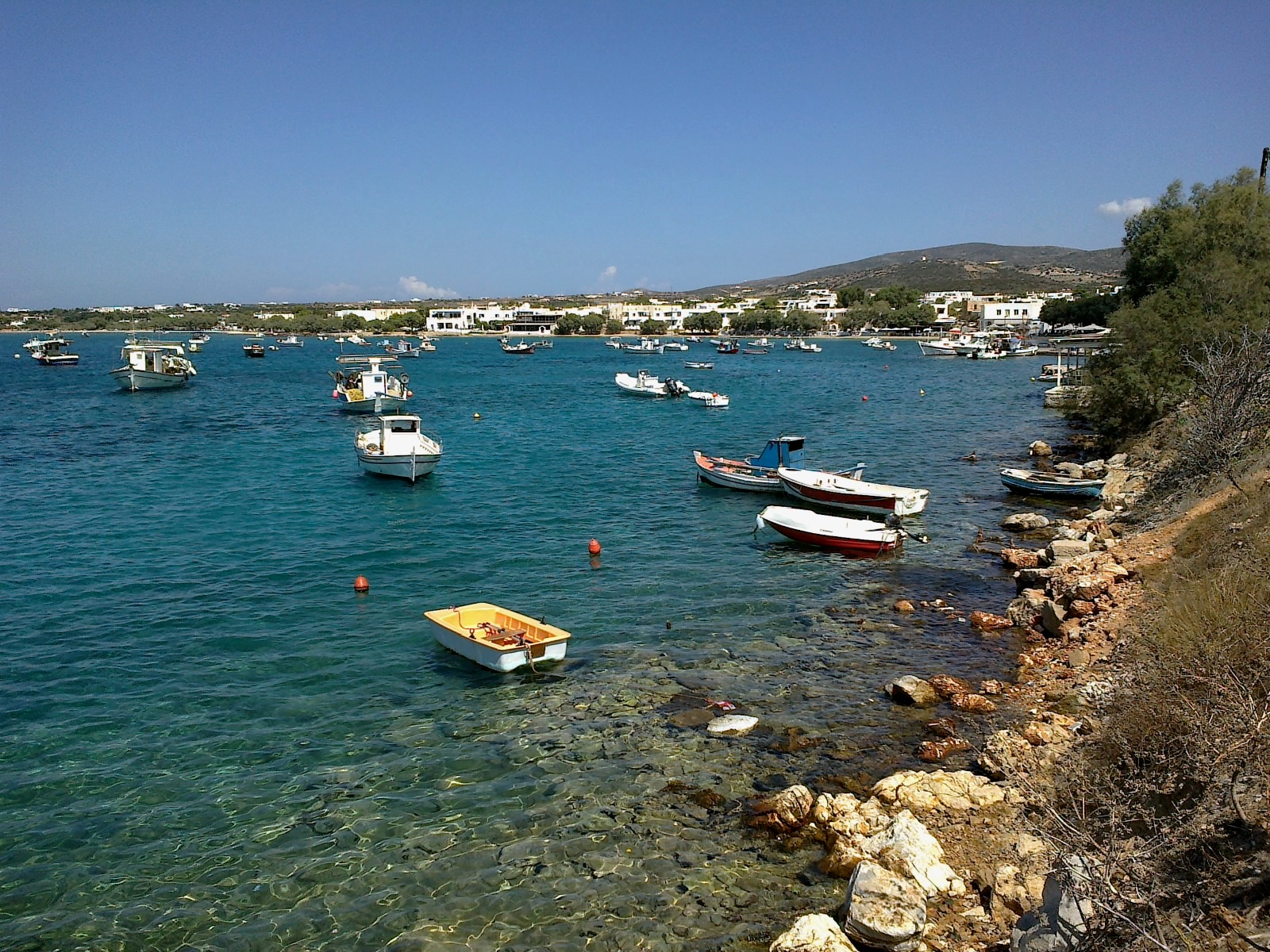
The practical heart of Aliki remains its small harbor, where every morning caïque boats return laden with fish to sell straight from the quay. This is not a scene staged for visitors: it is the same economy that has sustained the village for generations, made of nets mended by hand, engines checked at dawn, and small tavernas cooking what was caught just hours before. Walking along the pier, among boats faded by the sun and fishermen's houses with blue shutters, gives a sense of an island quite different from the one on glossy postcards. In the summer months the harbor also fills with swimmers and the occasional pleasure boat, but its identity remains tied to the work of the sea more than to leisure, and it is precisely this balance that makes Aliki a place where an authentic Greece can still be felt.
The Museum of Cycladic Folk Culture
In one of the village's old houses, a local family has over time set up a small ethnographic museum that tells how life was lived in Paros before tourism: the interior of a traditional Cycladic house, with its typical built-in raised sleeping platform, the looms for weaving, hand-embroidered festive garments, farming tools, and fishing gear. It is a modest-sized museum, run with almost family-like care, well worth a stop precisely because it is not an attraction built for mass tourism, but direct testimony to a rural and seafaring way of life that in Aliki, more than elsewhere on the island, has remained legible in the houses, courtyards, and vegetable gardens still cultivated at the edge of the village.
Cape Agios Fokas and the sanctuary of Pan and Asclepius
Just outside the village, on the Agios Fokas headland, archaeological excavations have uncovered the remains of a sanctuary dedicated to Pan, god of shepherds and wild places, and to Asclepius, god of medicine: a place of worship where in ancient times the faithful came seeking healing, set among caves and springs that must even then have felt charged with sacredness. Today the site can be visited in an informal setting, surrounded by Mediterranean scrub above the sea, and it helps to understand that Aliki was not merely a transit port for marble, but also a religious landmark for the communities scattered along the island's southern coast.
Aliki beach
The village's main beach is an arc of pale sand sloping gently into a shallow, clear sea, shaded by a row of tamarisk trees that in early afternoon offer natural shelter from the Cycladic sun. It is a modestly organized beach, without the excesses of some of the island's more touristy resorts, popular above all with families thanks to its gentle seabed and the nearby tavernas where you can lunch on the day's catch. The airport's proximity offers, for those not bothered by it, the occasional spectacle of a small aircraft landing or taking off, a detail that has become almost a distinctive trait of the place rather than a nuisance.
Faragas and the other coves of the south
A few kilometers from Aliki, further inland along the southern stretch of coast, lies Faragas beach, wilder and shaded by maritime cedars that create natural shade on the sand; it is a favorite destination for those seeking a swim more secluded than at the island's main beaches. This whole stretch of coast, less exposed to the meltemi winds than the north of Paros, alternates small rocky coves with patches of fine sand, with an inland landscape of farming terraces, dry-stone walls, and the occasional white chapel standing alone among the olive trees, a typically Cycladic landscape that here has remained less affected by intensive tourist development.
A tiny airport a step from the village
The national airport of Paros sits literally right against Aliki, its runway running parallel to the coast just meters from the first houses: an unusual coexistence that makes the village a natural air gateway for the island while keeping intact the atmosphere of a small fishing harbor. For those arriving by plane from Athens, Aliki is often the first glimpse of island Greece they encounter, and it makes a fine welcome: it takes just a few minutes on foot to go from the runway to the fishermen's quay, a concrete measure of how everything here remains within easy reach.
Parian marble, a legacy that has lasted millennia
The marble quarried from the interior of Paros, particularly at Marathi, has a history that extends well beyond the island: from here came the material chosen for some of antiquity's most celebrated sculptures, prized for its almost luminous translucence when worked into thin slabs. Aliki, with its harbor sheltered from the winds, was one of the most practical embarkation points for shipping those blocks to the workshops of the ancient Mediterranean. This marble vocation is not just a chapter of museum history: even today artisan workshops on the island still work Parian marble for sculpture and construction, keeping alive a chain that directly links Paros's present to its most illustrious past.
Flavors and table of the village
Aliki's cuisine faithfully follows the calendar of the sea: grilled fish chosen that very morning, octopus sun-dried and then cooked over coals, shrimp and small local shellfish, accompanied by inland goat cheeses and the typical honey-and-almond sweets found throughout the Cyclades. The harbor tavernas, often family-run for generations, offer a menu that changes with the day's catch rather than a fixed recipe book, and stay open until late in the evening during the summer months, when the coming and going of fishing boats mingles with that of tables set along the quay.
When to go and how to experience Aliki

The best season runs from June to September, with warmer sea and the harbor tavernas in full swing; July and August remain the most crowded months on the island in general, but Aliki, precisely because of its small size, keeps a more relaxed pace than Naoussa or Parikia even at the height of the season. May and the first half of October offer pleasant temperatures, sea still warm enough for swimming, and a quieter village, ideal for those who want to visit the ethnographic museum and the sanctuary of Agios Fokas without the intense heat of July. Experiencing Aliki means, above all, slowing down: a walk along the harbor at dawn, a peaceful swim, a fish lunch, and a sunset watched from the headland already make for a complete experience.
- Walk along the harbor at dawn to watch the fishing boats return
- Visit the small folk culture museum housed in a traditional Cycladic home
- Walk to the sanctuary of Pan and Asclepius at Cape Agios Fokas
- Swim at Aliki beach beneath the tamarisk trees
- Treat yourself to a more secluded day at Faragas beach among the cedars
- Dine at a taverna on the quay with the day's catch
- Visit an artisan workshop that still works Parian marble
FAQ
Come si arriva ad Aliki da Parikia, il capoluogo di Paros?
Qual è il periodo migliore per visitare Aliki?
Cosa vedere ad Aliki in un solo giorno?
Dove si parcheggia ad Aliki?
Aliki è adatta a famiglie con bambini?
Quanto tempo conviene dedicare ad Aliki?
Getting there
- Aeroporto Nazionale di Paros (PAS), a ridosso del villaggio di Aliki
- Da Parikia seguire la strada costiera verso sud per circa 8-9 km fino ad Aliki; il villaggio è collegato anche alla rete di autobus KTEL dell'isola.
- Paros non ha collegamenti ferroviari: si arriva in traghetto al porto di Parikia dal Pireo o da altre isole cicladiche, oppure in aereo direttamente sull'aeroporto di Aliki dai principali scali greci; da Aliki è comodo anche raggiungere Antiparos via il piccolo porto di Pounta.
Perfect for
Acque basse e trasparenti alla spiaggia di Aliki, calette più appartate a Faragas per chi cerca tranquillità.
Dalle saline che danno il nome al villaggio al santuario di Pan e Asclepio, fino alla tradizione millenaria del marmo pario.
Pesce fresco portato dai pescherecci ogni mattina, servito nelle taverne a conduzione familiare del porto.
Un villaggio di pescatori che ha conservato il proprio ritmo lontano dal turismo più intenso dell'isola.
Il piccolo museo etnografico racconta la vita cicladica tradizionale attraverso oggetti, abiti e ambienti originali.
To see